- Fatimah Abusrair runs her tours on a voluntary tip-based model
- Focus on storytelling, personal experiences, she tells Arab News
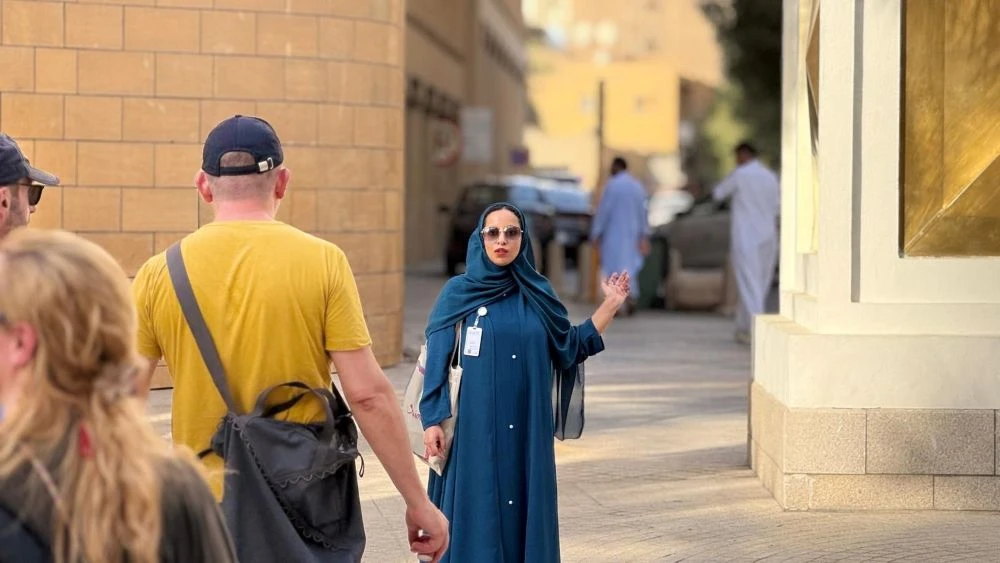
RIYADH: A Saudi woman is leading free walking tours through Riyadh’s traditional neighborhoods, blending cultural exploration with a personal, story-driven approach.
Fatimah Abusrair, a communication and marketing consultant — and a licensed guide — told Arab News she sees a growing interest in informal, community-led tours.
“I can see that people care about doing activities and interacting with locals in unofficial ways,” she said.
Abusrair runs the tours on a voluntary tip-based model, and uses a storytelling approach which she says allows her to connect more personally with participants.
“To meet the local person and speak with them, that’s part of the experience,” she said. “I speak about history and culture, but I’m also speaking about myself, my life, and how I was raised.”
She views her approach as a way to strengthen the image of Saudi Arabia and offer visitors a more grounded understanding of local life.
“It increases positivity and understanding,” she added. “They’re not getting the information only from formal resources, but they’re getting exactly the same information from the locals.”
The idea of a tip-based model, Abusrair said, was meant to make the experience more accessible.
“You truly do not want to pay that much money,” she said. “So the idea of a tip-based (model), it means that they will pay me based on their budget.”
Lawrence Eta, a Canadian participant in a recent tour, spoke about how the experience helped to bridge a cultural gap.
“For many visitors and newcomers, Saudi Arabia is still unfamiliar territory,” he said. “A personalized tour helps bridge that gap. It gives travelers a chance to experience the city beyond the headlines.”
Unlike traditional tours that focus on facts and timelines, Eta said this experience allowed for genuine connection.
“This kind of authentic, personal tour adds real depth to tourism in Saudi Arabia,” he said. “It shifts the focus from sightseeing to storytelling, from just visiting places to connecting with people.”
He added that the experience was especially meaningful because it was led by someone who lives in the city and speaks from personal experience.
“A personalized walking tour in Riyadh feels truly authentic when led by someone who brings it to life through personal stories, rather than just historical facts.”
Eta said walking alongside people from different countries all curious and open to learning, created a unique sense of community.
“The tour becomes a shared memory, not just a checklist of landmarks,” he said.
As Saudi Arabia’s tourism sector continues to grow, Abusrair sees an opportunity for more community-driven initiatives.
“There are a lot of tourists coming,” she said. “But there aren’t enough guides yet. Everything is new in the tourism industry for us in Saudi Arabia.”
Tourism is a central pillar of Saudi Arabia’s Vision 2030 economic diversification strategy. One of the initiative’s key goals is to reduce the Kingdom’s dependence on oil by turning it into a global tourism hub.
While Vision 2030 initially aimed to attract 100 million visitors annually by 2030, the Kingdom surpassed that milestone seven years ahead of schedule. The new target has now been raised to 150 million visitors per year.
Abusrair said that being a local guide contributes to how Saudi Arabia is seen.
“It will support promoting Saudi Arabia as a tourist destination because (tourists hear) people speak,” she said.