

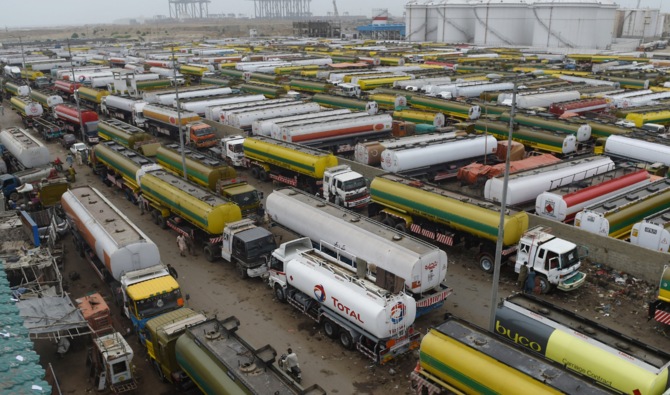

KARACHI: Pakistan currently holds adequate stocks of petroleum products and faces no immediate risk of supply disruption, the finance ministry said on Monday, while warning that continued vigilance was needed as Middle East tensions pushed oil markets into fresh volatility.
The statement came after the inaugural meeting of a committee formed by Prime Minister Shehbaz Sharif last week to monitor petroleum pricing and supply in response to an ongoing military confrontation between Israel and Iran.
Oil markets have been volatile amid the escalation, with Brent crude prices jumping about 7 percent last Friday to near $75 per barrel, but edging down on Monday, as renewed military strikes by both nations over the weekend left oil production and export facilities unaffected.
Concern is focused on potential disruptions in the Strait of Hormuz, through which roughly one‑fifth of global oil transits, and weak supply growth from Iran, which produces about 3.3 million barrels per day. Analysts caution any sustained spike could drive up global freight rates, insurance premiums and inflation, particularly in energy‑importing countries like Pakistan.
“The committee expressed satisfaction that Pakistan currently holds adequate stocks of petroleum products and there is no immediate risk of supply disruption. Nonetheless, members emphasized the need for continued vigilance given the rapidly changing regional context,” the finance ministry said after the first meeting of the committee, chaired by Finance Minister Muhammad Aurangzeb.
The ministry added that to ensure timely response and effective coordination, a working group would monitor developments on a daily basis, and the full committee would meet weekly to review the situation and submit recommendations to the prime minister.
“The Government of Pakistan remains fully committed to maintaining energy security, stabilizing markets, and protecting the national interest during this critical time,” the statement added.
The committee has been entrusted with monitoring the forward/futures prices of petroleum products and the predictability of supply chains, determining the foreign reserve implications of price volatility in the short and medium term, suggesting a plan, if and when required, to ensure there were no supply disruptions and the market was well supplied, and carrying out a detailed analysis of the fiscal impact in the event of a protracted conflict.
Pakistan relies heavily on imported oil, and any sustained spike in prices could widen its current account deficit and push inflation higher at a time when the country is struggling with low foreign reserves and slow growth.
The Israel-Iran conflict started on Friday when Israel launched a massive wave of attacks targeting Iranian nuclear and military facilities but also hitting residential areas, sparking retaliation and fears of a broader regional conflict. Over 220, mostly civilians have been killed in Iran so far, while Israel has reported 23 deaths in retaliatory strikes by Tehran.
Pakistan and Iran share a 909 kilometer (565 mile) long international boundary that separates Iran’s southeastern Sistan-Baluchestan province from Pakistan’s southwestern Balochistan province.
“Israel-Iran conflict presents complex challenges for Pakistan as rising oil prices may increase import costs and inflation, influencing monetary policy and growth, while disruptions to key routes like the Strait of Hormuz can affect energy supplies and critical projects,” Khaqan Najeeb, an economist and former finance ministry adviser, told Arab News last week.
“It can potentially affect consumer purchasing power and production costs ... Possible disruptions to shipping routes and higher freight charges might result in delays to imports and exports, thereby exerting additional pressure on Pakistan’s external sector.”


