Global energy investment to hit record $3.3tn in 2025: IEA 

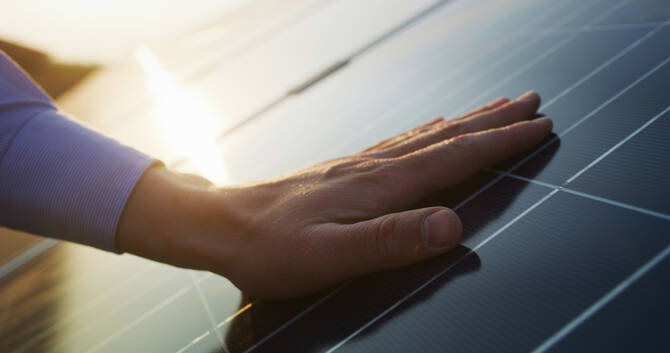
Investment in solar is expected to reach $450 billion in 2025. Shutterstock
Short Url
Updated 05 June 2025
Follow

Global energy investment to hit record $3.3tn in 2025: IEA 

RIYADH: Energy investment globally is projected to hit a record $3.3 trillion in 2025, driven by a surge in clean power spending amid economic uncertainty and geopolitical tensions, according to an analysis. 

In its latest report, the International Energy Agency said that technologies in the sector, including renewables, nuclear, and storage, are set to attract $2.2 trillion in investment. 

Investments in oil, natural gas and coal are set to reach $1.1 trillion this year. 

The uptick in clean energy spending aligns with the wider trend observed globally as most nations, including oil-rich countries in the Middle East, have set net-zero targets to reduce emissions and combat climate change. 

Saudi Arabia plans to achieve net-zero emissions by 2060, while the UAE aims to reach the goal in 2050. 

Fatih Birol, executive director of the IEA, said: “Amid the geopolitical and economic uncertainties that are clouding the outlook for the energy world, we see energy security coming through as a key driver of the growth in global investment this year to a record $3.3 trillion as countries and companies seek to insulate themselves from a wide range of risks.” 

He added: “The fast-evolving economic and trade picture means that some investors are adopting a wait-and-see approach to new energy project approvals, but in most areas we have yet to see significant implications for existing projects.” 

Electricity takes the lead 

IEA said that investment trends in the sector are being shaped by the onset of the “Age of Electricity”  and the rapid rise in demand for industry, cooling, electric mobility, data centers and artificial intelligence. 

A decade ago, investments in fossil fuels were 30 percent higher than those in electricity generation, grids and storage. 

In 2025, electricity investments are set to be some 50 percent higher than the total amount being spent bringing oil, natural gas and coal to market, reaching $1.5 trillion. 

In April, another report by the IEA also highlighted the growing demand for electricity globally driven by the rapid rollout of AI and data centers. 

At that time, the think tank said electricity consumption by data centers powered by AI is expected to double by 2030 to reach 945 terawatt-hours, creating new challenges for energy security and carbon dioxide emission goals. 

IEA added that electricity consumption by data centers has increased by 12 percent annually since 2019 to reach 1.5 percent of the global amount in 2024. 


Data centers are a growing user of electricity. Shutterstock

Clean energy surge 

According to the report, spending on low-emission power generation has almost doubled over the past five years, led by solar PV. 

The energy agency projected that investment in solar, both utility-scale and rooftop, is expected to reach $450 billion in 2025, making it the largest single item in the world’s energy investment inventory. 

“Fierce competition among suppliers and ultra-low costs are seeing imported solar panels, often paired with batteries, become an important driver of energy investment in many emerging and developing economies,” said the IEA. 

Battery storage investments are also climbing rapidly, surging above $65 billion this year. 

Saudi Arabia has also set ambitious goals to generate clean energy, primarily using solar power. 

The Kingdom plans to generate 58.7 gigawatts of renewable energy by 2030, with 40 GW from solar PV. It also plans to generate 16 GW from wind energy and 2.7 GW from concentrated solar power. 

This commitment is part of the broader National Renewable Energy Program strategy, aimed at diversifying its energy portfolio and reducing reliance on fossil fuels. 

IEA added that capital flows to nuclear power have grown by 50 percent over the past five years and are on course to reach around $75 billion in 2025. 

The US and the Middle East accounted for nearly half of a resurgent level of final investment decisions for natural gas power. 

Saudi Arabia is also planning to include nuclear energy as a key part of the Kingdom’s energy mix. 

In January, the Kingdom’s Energy Minister Prince Abdulaziz bin Salman said the nation is planning to begin enriching and selling uranium. 

Launched in 2017, Saudi Arabia’s National Atomic Energy Project is a cornerstone of the Kingdom’s strategy to diversify its energy sources. 

If investments in carbon capture, utilization and storage move ahead as planned, spending in this sector will rise more than tenfold by 2027 from current levels, the IEA added. 

“Low-emissions fuel projects are particularly prone to policy uncertainty. Some hydrogen projects have been canceled or delayed in the past 12 months, but there remains a pipeline of approved projects that require around $8 billion of investment in 2025, almost double the level seen in 2024,” said the report. 

In November, NEOM Green Hydrogen Co.’s CEO Wesam Al-Ghamdi told Arab News that Saudi Arabia is on track to begin production in the world’s largest green hydrogen project by 2026. 

The plant, located in the Kingdom’s $500-billion giga-project, will rely entirely on solar and wind energy to power a 2.2-GW electrolyzer designed to produce hydrogen continuously. 

Grid investment gap 


Spending patterns in the energy sector remain very uneven globally, according to the IEA. Shutterstock

According to the IEA, investment in grids — now at $400 billion per year — is failing to keep pace with spending on generation and electrification. 

“Maintaining electricity security would require investment in grids to rise toward parity with generation spending by the early 2030s. However, this is being held back by lengthy permitting procedures and tight supply chains for transformers and cables,” said the energy agency. 

The report further said that lower oil prices and demand expectations are set to result in the first year-on-year fall in upstream oil investment since the COVID-19 slump in 2020. 

The expected 6 percent drop is driven mainly by a sharp decline in spending on US tight oil. 

However, investment in new liquefied natural gas facilities is on a strong upward trajectory as new projects in the US, Qatar, Canada and elsewhere prepare to come online. 

The report added that the global LNG market is set to experience its largest-ever capacity growth between 2026 and 2028. 

Geographical shifts 

According to the IEA, spending patterns in the energy sector remain very uneven globally — with many developing economies, especially in Africa, struggling to mobilize capital for energy infrastructure. 

The report added that Africa accounts for just 2 percent of global clean energy investment, despite being home to 20 percent of the world’s population. 

“To close the financing gap in African countries and other emerging and developing economies, international public finance needs to be scaled up and used strategically to bring in larger volumes of private capital,” said the IEA. 

China is the largest global energy investor by a wide margin, and its share of global clean energy investment has risen from a quarter 10 years ago to almost one-third now. 

Even though well behind China, the IEA added that energy investment trends in India and Brazil stand out among emerging and developing economies. 

“Mobilising international finance for clean energy investment in emerging and developing economies will need to be combined with the development of domestic capital markets,” added the energy agency. 


World must prioritize resilience over disruption, economic experts warn

Saudi Arabia’s Finance Minister Mohammed Al-Jadaan urged policymakers and investors to “mute the noise” and focus on resilience.
Updated 23 January 2026
Follow

World must prioritize resilience over disruption, economic experts warn

  • Al-Jadaan said that much of the anxiety dominating markets reflected a world that had already been shifting for years
  • Pointing to Asia and the Gulf, Al-Jadaan said that some countries had already built models based on diversification and resilience

DAVOS: Saudi Arabia’s Finance Minister Mohammed Al-Jadaan urged policymakers and investors to “mute the noise” and focus on resilience, as global leaders gathered in Davos on Friday against a backdrop of trade tensions, geopolitical uncertainty and rapid technological change.

Speaking on the final day of the World Economic Forum in Davos, Al-Jadaan said that much of the anxiety dominating markets reflected a world that had already been shifting for years.

“We need to define who ‘we’ are in this so-called new world order,” he said, arguing that many emerging economies had been adapting to a more fragmented global system for decades.

Pointing to Asia and the Gulf, Al-Jadaan said that some countries had already built models based on diversification and resilience. In energy markets, he pointed out that the focus should remain on balancing supply and demand in a way that incentivized investment without harming the global economy.

“Our role in OPEC is to stabilize the market,” he said.

His remarks were echoed by Saudi Arabia’s Minister of Economy and Planning Faisal Alibrahim, who said that uncertainty had weighed heavily on growth, investment and geopolitical risk, but that reality had proven more resilient.

“The economy has adjusted and continues to move forward,” Alibrahim said.

Alibrahim warned that pragmatism had become scarce, trust increasingly transactional, and collaboration more fragile. “Stability cannot be quickly built or bought,” he said.

Alibrahim called for a shift away from preserving the status quo towards the practical ingredients that made cooperation work, stressing discipline and long-term thinking even when views diverged.

Quoting Saudi Arabia’s founding King Abdulaziz Al-Saud, he added: “Facing challenges requires strength and confidence, there is no virtue in weakness. We cannot sit idle.”

President of the European Central Bank Christine Lagarde stressed the importance of distinguishing meaningful data from headline noise, saying: “Our duty as central bankers is to separate the signal from the noise. The real numbers are growth numbers not nominal ones.”

Managing Director of the IMF Kristalina Georgieva echoed Lagarde’s sentiments, saying that the world had entered a more “shock prone” environment shaped by technology and geopolitics.

Director General of the World Trade Organization Ngozi Okonjo-Iweala said that the global trade systems currently in place were remarkably resilient, pointing out that 72 percent of global trade continued despite disruptions.

She urged governments and businesses, however, to avoid overreacting.

Okonjo Iweala said that a return to the old order was unlikely, but trade would remain essential. Georgieva agreed, saying global trade would continue, albeit in a different form.

Georgieva warned that AI would accelerate economic transformation at an unprecedented speed. The IMF expects 60 percent of jobs to be affected by AI, either enhanced or displaced, with entry-level roles and middle-class workers facing the greatest pressure.

Lagarde warned that without cooperation, capital and data flows would suffer, undermining productivity and growth.

Al-Jadaan said that power dynamics had always shaped global relations, but dialogue remained essential. “The fact that thousands of leaders came here says something,” he said. “Some things cannot be done alone.”

In another session titled Geopolitical Risks Outlook for 2026, former US Democratic representative Jane Harman said that because of AI, the world was safer in some ways but worse off in others.

“I think AI can make the world riskier if it gets in the wrong hands and is used without guardrails to kill all of us. But AI also has enormous promise. AI may be a development tool that moves the third world ahead faster than our world, which has pretty messy politics,” she said.

American economist Eswar Prasad said that currently the world was in a “doom loop.”

Prasad said that the global economy was stuck in a negative-feedback loop and economics, domestic politics and geopolitics were only bringing out the worst in each other.

“Technology could lead to shared prosperity but what we are seeing is much more concentration of economic and financial power within and between countries, potentially making it a destabilizing force,” he said.

Prasad predicted that AI and tech development would impact growing economies the most. But he said that there was uncertainty about whether these developments would create job opportunities and growth in developing countries.

Professor of international political economy at the University of New South Wales in Australia, Elizabeth Thurbon, said that China was driving a Green Energy transition in a way that should be modeled by the rest of the world.

“The Chinese government is using the Green Energy Transition to boost energy security and is manufacturing its own energy to reduce reliance on fossil fuel imports,” she explained.

Thurbon said that China was using this transition to boost economic security, social security and geostrategic security. She viewed this as a huge security-enhancing opportunity and every country had the ability to use the energy transition as a national security multiplier. 

“We are seeing an enormous dynamism across emerging market economies driven by China. This boom loop is being driven by enormous investments in green energy. Two-thirds of global investment flowing into renewable energy is driven largely by China,” she said.

Thurbon said that China was taking an interesting approach to building relationships with countries by putting economic engagement on the forefront of what they had to offer.

“China is doing all it can to ensure economic partnership with emerging economies are productive. It’s important to approach alliances as not just political alliances but investment in economy, future and the flourishment of a state,” she said.

The panel criticized global economic treaties and laws, and expressed the need for immediate reforms in economic governing bodies.

“If you are a developing economy, the rules of the WTO, for example, are not helpful for you to develop. A lot of the rules make it difficult to pursue an economic development agenda. These regulations are not allowing the economies to grow,” Thurbon said.

“Serious reform must be made in international trade agreements, economic bodies and rules and guidelines,” she added.

Prasad echoed this sentiment and said there was a need for national and international reform in global economic institutions.

“These institutions are not working very well so we can reconfigure them or rebuild them from scratch. But unfortunately the task of rebuilding falls into the hands of those who are shredding them,” he said.

WEF attendees were invited to join the Global Collaboration and Growth meeting to be held in Saudi Arabia in April 2026 to continue addressing the complex global challenges and engage in dialogue.