

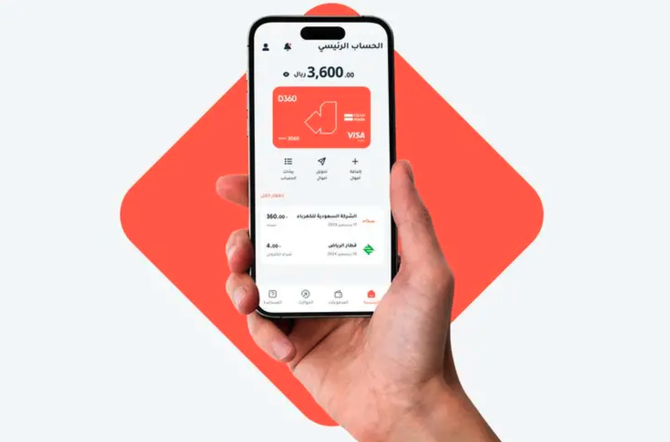
PIF-backed D360 bank eyes global investors for Series A round 

D360 currently serves over 1 million users. File
Short Url
Updated 03 June 2025
Follow

PIF-backed D360 bank eyes global investors for Series A round 

RIYADH: Saudi Arabia’s Public Investment Fund-backed digital bank D360 is in early talks with potential global investors as it prepares for a Series A funding round planned for the second half of 2025. 

The Shariah-compliant lender, which began operations in December, is targeting the first quarter of 2026 to complete the raise, CEO Eze Szafir said in an interview with Bloomberg. 

This development follows the bank’s successful securing of around $500 million from existing shareholders, including PIF and Derayah Financial Co. 

While Szafir did not disclose the size of the upcoming round, he told Bloomberg the funding will support the bank’s efforts to expand services to small and medium enterprises, aligning with the Kingdom’s broader economic diversification strategy under Vision 2030. 

“We’re looking for new investors in the international landscape, most probably from Europe or the US, with the same quality we have here with the PIF and Derayah,” Szafir was quoted as saying. 

D360 also plans to roll out full lending services for individuals and SMEs later this year. 

In preparation for the raise, the company has appointed former JPMorgan Chase & Co. banker Mohammed Nazer as chief financial officer to lead the process. Nazer said the bank expects to appoint advisers to manage the Series A round by the end of July. 

One of the first institutions to be granted a digital banking license in Saudi Arabia, D360 currently serves over 1 million users. It is targeting 4 million account holders ahead of a potential public listing within the next four years. 

By adopting data-driven strategies and modern technologies, D360 aims to contribute to the development of the Kingdom’s digital financial infrastructure and align with the goals of Vision 2030. 

The move comes as the Saudi Central Bank continues to advance regulatory frameworks that support digital transformation in the financial sector. The institution, also known as SAMA, has prioritized fostering innovation and financial inclusion through digital banking, granting licenses to new digital players in a bid to modernize the Kingdom’s banking landscape and strengthen financial resilience. 

This push has helped Saudi electronic payments account for 79 percent of all retail transactions in the Kingdom in 2024, up from 70 percent the previous year, according to SAMA. 

The central bank also reported that the total number of non-cash retail transactions reached 12.6 billion in 2024, compared to 10.8 billion in 2023, reflecting the continued growth and widespread adoption of digital payment systems nationwide.


Saudi Arabia’s cultural sector is a new economic engine between Riyadh and Paris, says ambassador

Updated 25 January 2026
Follow

Saudi Arabia’s cultural sector is a new economic engine between Riyadh and Paris, says ambassador

RIYADH: Culture has become a fundamental pillar in bilateral relations between France and Saudi Arabia, according to the French Ambassador to the Kingdom, Patrick Maisonnave.

Maisonnave noted its connection to the entertainment and tourism sectors, which makes it a new engine for economic cooperation between Riyadh and Paris.

He told Al-Eqtisadiah during the opening ceremony of La Fabrique in the Jax district of Diriyah that cultural cooperation with Saudi Arabia is an important element for its attractiveness in the coming decades.

La Fabrique is a space dedicated to artistic creativity and cultural exchange, launched as part of a partnership between the Riyadh Art program and the French Institute in Riyadh. 

Running from Jan. 22 until Feb 14, the initiative will provide an open workspace that allows artists to develop and work on their ideas within a collaborative framework.

Launching La Fabrique as a space dedicated to artistic creativity

The ambassador highlighted that the transformation journey in the Kingdom under Vision 2030 has contributed to the emergence of a new generation of young artists and creators, alongside a growing desire in Saudi society to connect with culture and to embrace what is happening globally. 

He affirmed that the relationship between the two countries is “profound, even cultural par excellence,” with interest from the Saudi side in French culture, matched by increasing interest from the French public and cultural institutions unfolding in the Kingdom.

Latest estimates indicate that the culture-based economy represents about 2.3 percent of France’s gross domestic product, equivalent to more than 90 billion euros ($106.4 billion) in annual revenues, according to government data. The sector directly employs more than 600,000 people, making it one of the largest job-creating sectors in the fields of creativity, publishing, cinema, and visual arts.

Saudi Arabia benefiting from French experience in the cultural field

Maisonnave explained that France possesses established cultural institutions, while Saudi Arabia is building a strong cultural sector, which opens the door for cooperation opportunities.

This comes as an extension of the signing of 10 major cultural agreements a year ago between French and Saudi institutions, aiming to enhance cooperation and transfer French expertise and knowledge to contribute to the development of the cultural system in the Kingdom.

He added that experiences like La Fabrique provide an opportunity to meet the new generation of Saudi creators, who have expressed interest in connecting with French institutions and artists in Paris and France.

La Fabrique encompasses a space for multiple contemporary artistic practices, including performance arts, digital and interactive arts, photography, music, and cinema, while providing the public with an opportunity to witness the stages of producing artistic works and interact with the creative process.
