


RIYADH: Startups across the Middle East and North Africa continued to attract capital, pursue strategic acquisitions, and expand regional footprints this week, underscoring the growing momentum in the region’s innovation ecosystem.
From early-stage funding rounds to regulatory milestones, founders and investors are positioning for scale amid a competitive and rapidly evolving market landscape.
On the acquisition front, UAE-based Tech Universal Ventures has taken over the majority share of FixSquad, an Emirati mobile and electronics servicing brand, and ELVA11, a Swedish AI and software consultancy, as part of its strategy to build a global network of digital infrastructure companies.
FixSquad operates across the Gulf Cooperation Council region with a hybrid consumer-enterprise model and is introducing a regional franchise framework, while ELVA11 offers software development, AI consulting, and digital education services from its offices in Malmo and Stockholm.
“These acquisitions reflect our strategy to build and back companies delivering core infrastructure for digital growth,” said Darko Atijas, chief operating officer at TUV.
Fintech startup Stitch raises $10m seed round
Riyadh-based Stitch has secured $10 million in a seed round led by Arbor Ventures, COTU Ventures, Raed Ventures, and Saudi Venture Capital, with additional support from family offices and angel investors.
Founded in 2022, the company offers an API-driven platform that allows financial institutions to build and deploy digital solutions more efficiently than legacy infrastructure.
“At Stitch, our vision is to reinvent how financial and non-financial institutions bring banking and payment products to market,” said Mohamed Oueida, founder and CEO of Stitch.
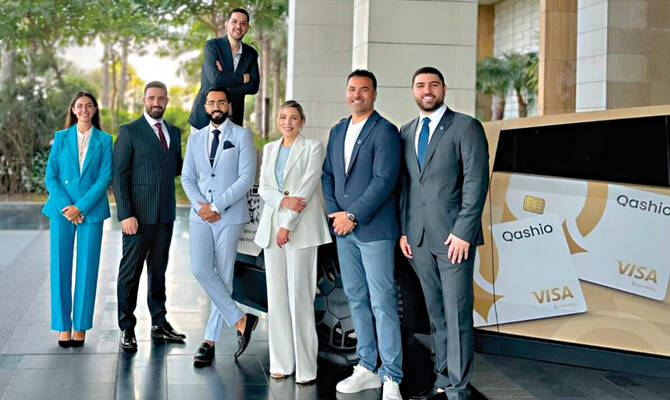
Qashio secures $19.8m to expand into KSA
UAE-based spend management platform Qashio has raised $19.8 million in equity and non-equity funding.
The round was led by Rocketship VC, with participation from MoreThan Capital, regional banks, and family offices.
Founded in 2021, Qashio plans to enter the Saudi market and enhance its B2B loyalty program across MENA.
Qashio previously raised $10 million in a seed round in 2022.
BirdEye raises $586k pre-seed
Saudi startup BirdEye has closed a $586,000 pre-seed funding round led by a private tech-focused fund.
Founded in November by Abdullah bin Omairah and Abdulrahman Al-Hassan, BirdEye offers an operations management platform tailored for small and medium-sized retailers undergoing digital transformation.
The investment will support the company’s national expansion and team growth.
Gainz closes 7-figure pre-seed round
UAE-based Gainz has raised a 7-figure US dollar pre-seed round in a mix of equity and debt led by Antler MENAP, Lithium Holdings, and Eleventh Invest Inc.
Founded in December, Gainz offers a Shariah-compliant crowdfunding platform that allows individuals to invest in vetted SMEs.
The platform leverages AI to democratize access to working capital for businesses across the region.
The new funding will go toward scaling operations and product innovation.
COREangels MEA launches $10m fund
COREangels MEA, in partnership with PTS Holdings and the Arab Academy, has launched a $10 million investment fund focused on early-stage fintech startups aligned with the UN Sustainable Development Goals.
During its 5th Investment Committee in Cairo, five startups — eMaisha Pay, RentBeta, Aqua Offers, Monak, and Reeple — were selected to receive up to $150,000 each.
The fund employs a hybrid model combining global angel networks with local innovation expertise.
Toolmart raises seed funding
Iraq-based B2B e-commerce startup Toolmart has secured seed funding from Plus VC, Oasis500, and other angel investors.
Founded in 2022, Toolmart provides a digital procurement platform that helps enterprises reduce costs and streamline sourcing.
The new capital will be used to expand its team and operations across the region.

Founded by Abdullah bin Omairah and Abdulrahman Al-Hassan, BirdEye offers a management platform for retailers. (Supplied)
Valu to begin trading on EGX in June
Egypt’s leading buy now, pay later platform Valu is set to begin trading on the Egyptian Exchange during the week of June 22, following an in-kind share distribution by parent company EFG Holding.
Official listing occurred on May 21, 2025.
Founded in 2017, Valu operates in Egypt and Saudi Arabia and reported 3.1 billion Egyptian pounds in gross revenue and 423 million Egyptian pounds in net profit for 2024.
Bloomspoon gets $218k on Shark Tank Dubai
UAE-based greentech startup Bloomspoon raised $218,000 for 49 percent equity on Shark Tank Dubai.
Founded in 2023 by Mostafa Khattab, Bloomspoon makes reusable cutlery from wheat straw embedded with seeds that can be planted after use.
The funding will help expand product lines, boost retail distribution, and work toward B Corp. certification.
Google launches second ‘AI First’ accelerator
Google has launched the second edition of its “Google for Startups Accelerator: AI First” program for the MENA and Turkiye region.
The 12-week program is aimed at Seed to series A startups using AI to develop scalable solutions.
It offers technical resources including cloud credits and mentorship.
MENA sees 31 percent increase in M&A deals in Q1, led by UAE and tech sector
According to EY’s MENA M&A Insights report, the region recorded 225 deals worth $46 billion in the first quarter of the year, a 31 percent year-on-year increase in volume and 66 percent rise in value.
Cross-border activity accounted for over half of all agreements and 81 percent of total value.
The UAE led with 63 deals totaling $20.3 billion. The technology sector dominated domestic M&A, accounting for 37 percent of deal value.
The largest domestic transaction was Group 42’s $2.2 billion acquisition of a 40 percent stake in Khazna Data Centers.


