Saudi Arabia tops MENA digital economy rankings with $132bn market

The country has invested over SR55 billion in AI technologies and data center infrastructure, contributing to a 42 percent increase in national data center capacity in 2024, reaching 290.5 megawatts. Shutterstock
Short Url
Updated 18 May 2025
Follow

Saudi Arabia tops MENA digital economy rankings with $132bn market

  • Kingdom has invested over SR55 billion in AI technologies and data center infrastructure
  • Figures released on occasion of World Telecommunication and Information Society Day

RIYADH: Saudi Arabia has emerged as the Middle East and North Africa’s largest digital economy, with a market value exceeding SR495 billion ($131.9 billion) in 2024, equivalent to 15 percent of the national gross domestic product.

The figures were shared by the Ministry of Communications and Information Technology on the occasion of World Telecommunication and Information Society Day, as reported by the Saudi Press Agency.

This comes as Saudi Arabia continues to strengthen its role as a regional and global digital powerhouse, underpinned by significant advancements in artificial intelligence, data centers, e-government, and human capital development.

“The communications and information technology market recorded record growth exceeding SR180 billion in 2024, driven by expanding private sector investments and increasing innovation, which strengthened the Kingdom’s position as the largest technology market in the Middle East,” the SPA report stated.


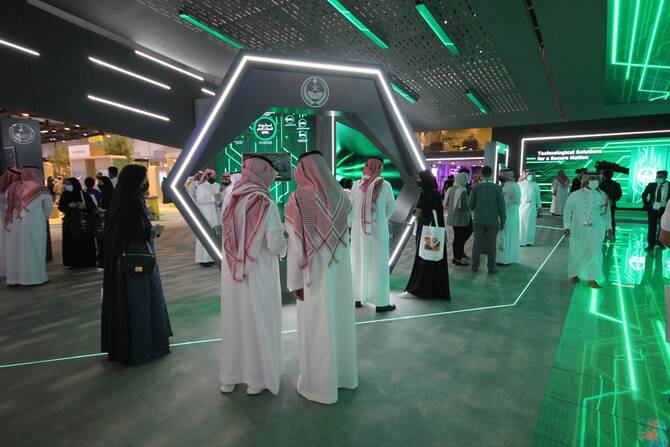
Saudi Arabia marks World Telecommunication and Information Society Day. X/@Mobily

The country has invested over SR55 billion in AI technologies and data center infrastructure, contributing to a 42 percent increase in national data center capacity in 2024, reaching 290.5 megawatts.

The Kingdom’s efforts are exemplified by the launch of Humain, a state-backed AI company, which underscores this commitment.

Humain aims to build AI technologies and infrastructure, including large data centers and Arabic-language AI models, positioning Saudi Arabia as a global AI hub.

The Kingdom has actively sought partnerships with leading global tech companies. Notably, Nvidia is set to supply 18,000 of its advanced AI chips to Saudi Arabia as part of a strategic partnership with Humain.

Fiber-optic coverage now extends to over 3.9 million homes, while internet penetration has reached 99 percent, placing Saudi Arabia among the most connected nations globally.


Saudi Arabia marks World Telecommunication and Information Society Day. X/@Mobily

This infrastructure expansion supports high-efficiency digital services and reflects the Kingdom’s readiness to support cloud computing and smart applications.

Human capital development remains a cornerstone of the digital transformation strategy.

Saudi Arabia hosts the largest concentration of digital talent in the Middle East, with over 381,000 specialized jobs in the technology sector.

Women’s participation in the sector has increased from 7 percent in 2018 to 35 percent in 2024, the highest in the region and surpassing averages in both the G20 and the European Union.

In the area of digital governance, the Kingdom has achieved top-tier global rankings. It ranked fourth globally in the UN’s Online Services Index, sixth in the E-Government Development Index, and second among G20 nations.

Regionally, it holds the number one position in digital government services. Additionally, the Kingdom secured first place worldwide in digital skills and open digital government, and seventh in e-participation.


Closing Bell: Saudi stocks slip as Tadawul falls 1% amid broad market weakness

Updated 30 December 2025
Follow

Closing Bell: Saudi stocks slip as Tadawul falls 1% amid broad market weakness

RIYADH: Saudi stocks fell sharply on Tuesday, with the Tadawul All Share Index closing down 108.14 points, or 1.03 percent, at 10,381.51.

The broader decline was reflected across major indices. The MSCI Tadawul 30 Index slipped 0.78 percent to 1,378.00, while Nomu, the parallel market index, fell 1 percent to 23,040.79.

Market breadth was strongly negative on the main board, with 237 stocks falling compared to just 24 gainers. Trading activity remained robust, with 164.7 million shares changing hands and a total traded value of SR3.19 billion ($850.6 million).

Among the gainers, SEDCO Capital REIT Fund led, rising 2.73 percent to SR6.77, followed by Chubb Arabia Cooperative Insurance Co., which gained 2.69 percent to SR20.20.

National Medical Care Co. added 1.72 percent to close at SR141.60, while Alyamamah Steel Industries Co. and Thimar Advertising, Public Relations and Marketing Co. advanced 1.57 percent and 1.13 percent, respectively.

Losses were led by Al Masar Al Shamil Education Co., which tumbled 8.36 percent to SR24.65. Raoom Trading Co.fell 6.75 percent to SR64.20, while Alkhaleej Training and Education Co. dropped 6.60 percent to SR18.12 and Naqi Water Co. declined 5.51 percent to SR54.00. Gulf General Cooperative Insurance Co. closed 5.44 percent lower at SR3.65.

On the announcement front, Chubb Arabia Cooperative Insurance Co. signed a multiyear insurance agreement with Saudi Electricity Co. to provide various coverages, expected to positively impact its financial results over the 2025–2026 period. The deal will run for three years and two months and is within the company’s normal course of business.

Meanwhile, Bupa Arabia for Cooperative Insurance Co. announced a one-year health insurance contract with Saudi National Bank, valued at SR330.2 million, covering the bank’s employees and their families from January 2026. Despite the sizable contract, Bupa Arabia shares fell 0.8 percent to close at SR137, weighed down by the broader market weakness.

In contrast, United Cooperative Assurance Co. revealed an extension of its engineering insurance agreement with Saudi Binladin Group for the Grand Mosque expansion in Makkah. The contract value exceeds 20 percent of the company’s gross written premiums based on its latest audited financials and is expected to support results through 2026. However, the stock came under selling pressure, ending the session down 4.51 percent at SR3.39.