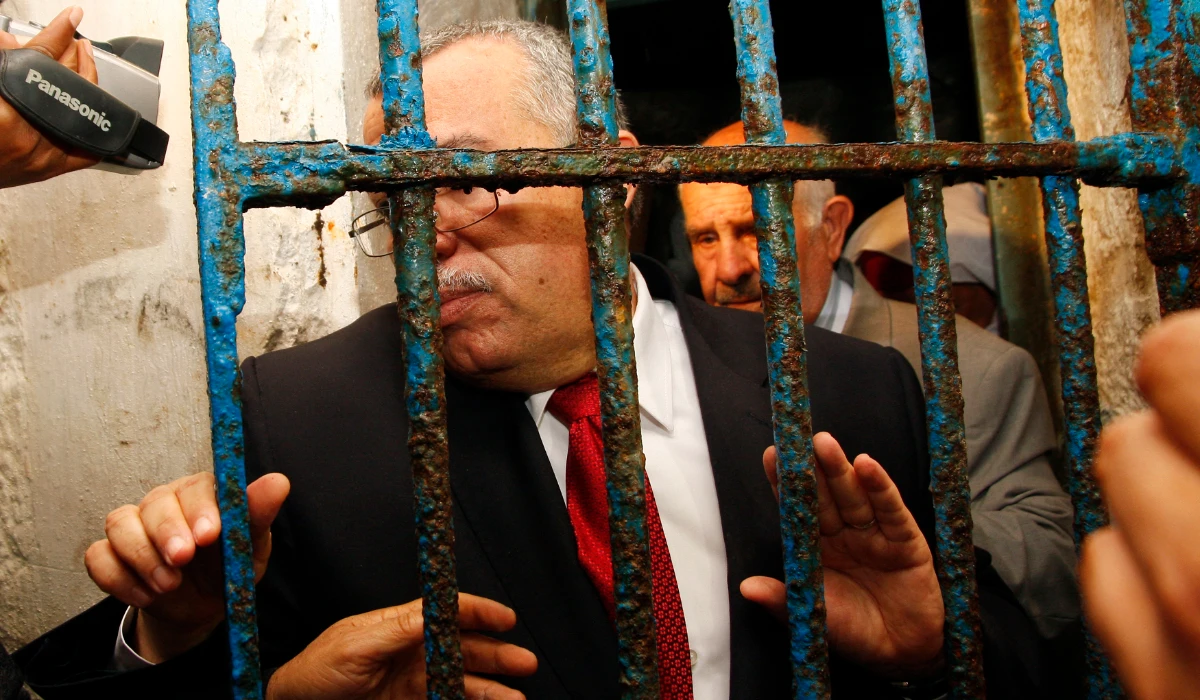
- Weekly prison visits in Tunisia allow families to bring prisoners baskets of food to last them through the week
TUNIS: Several jailed Tunisian opposition figures have been transferred without prior notice to prisons far from their families in a move their lawyers and relatives on Friday denounced as “repressive.”
At least seven political figures were moved on Thursday from Mornaguia prison near Tunis to remote facilities, lawyer Dalila Msaddek told AFP.
Prominent figure Issam Chebbi was taken to a jail in Tunisia’s northernmost city of Bizerte, while Ridha BelHajj was moved to Siliana some two hours south of Tunis.
“They were moved without any warning to their families or lawyers,” said Msaddek.
She called the transfers “a form of harassment” aimed at making it harder for their Tunis-based families and lawyers to visit.
Weekly prison visits in Tunisia allow families to bring prisoners baskets of food to last them through the week.
Msaddek said some prison inmates resisted the move but were forcibly transferred.
In a letter from prison posted on social media, BelHajj denounced what he called a forced transfer “far from my family, my children, and my lawyers, in yet another attempt to break my will.”
He said he, Chebbi and Ghazi Chaouachi were “prisoners or conscience, not criminals.”
“What is happening today is a desperate attempt to silence free voices and intimidate anyone who dares to say ‘no’ to injustice and tyranny,” he wrote.
Since President Kais Saied’s power grab in July 2021, when he dissolved parliament and began ruling by decree, rights groups have warned of a sharp decline in civil liberties in the North African country.
In a video statement, Chebbi’s wife denounced the authorities’ move as “an injustice” and “abuse.”
She said she learned of the transfer during her scheduled weekly visit, and that her husband was informed just an hour before being moved.
Once a French military bunker built in 1932, Bizerte prison — Borj Erroumi — became infamous for its harsh conditions under Tunisia’s former longtime rulers Habib Bourguiba and Zine El Abidine Ben Ali.
All of the transferred prisoners were defendants in a mass trial last month that saw around 40 public figures, some staunch Saied critics, sentenced to long terms on charges including plotting against the state.
The trial drew international criticism, from France, Germany and the United Nations, which Saied dismissed as “blatant interference in Tunisia’s internal affairs.”
During a protest in Tunis demanding the release of jailed lawyer Ahmed Souab, public figures also condemned the prison transfers.
Souab had been a member of the defense team during the mass trial. He was detained on terrorism-related charges after claiming that judges were under political pressure to hand the defendants hefty sentences.
“We’re seeing a return to the old practices of the Ben Ali dictatorship which aimed at breaking the morale of political prisoners by moving them from one prison to another,” opposition figure Chaima Issa told AFP during the protest.
Also attending the rally, Chebbi’s wife said he was now detained in “inhumane” conditions after visiting him.
She said he was being held in the same room as 60 other inmates, deprived of even “basic standards of detention.”