Riyadh hosts a world of jewels

1 / 4
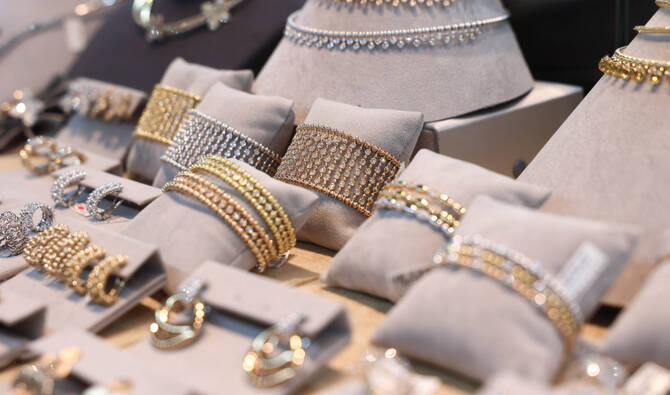
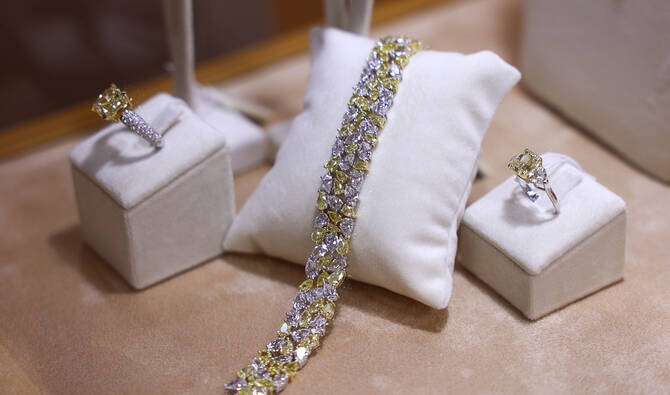
Jewels of the World offered the opportunity to explore new collections debuting in Saudi Arabia, from everyday jewelry to ornate bridal sets. (Supplied)
2 / 4
Jewels of the World offered the opportunity to explore new collections debuting in Saudi Arabia, from everyday jewelry to ornate bridal sets. (Supplied)
3 / 4
Jewels of the World offered the opportunity to explore new collections debuting in Saudi Arabia, from everyday jewelry to ornate bridal sets. (Supplied)
4 / 4
Jewels of the World offered the opportunity to explore new collections debuting in Saudi Arabia, from everyday jewelry to ornate bridal sets. (Supplied)
Short Url
Updated 19 May 2025
Follow

Riyadh hosts a world of jewels

  • Jewelry exhibition showcasing Saudi designers and global luxury pieces dazzles visitors

RIYADH: Under the chandelier-lit halls of Riyadh’s Mandarin Oriental Al-Faisaliah Hotel, the Jewels of the World exhibition gathered more than 60 brands for an eager crowd of jewelry and watch enthusiasts.

The exhibition, which ended on Monday, featured notable global names including Bil Arabi, Yoko London, Scavia and FerriFirenze.

Local talent was also spotlighted, notably Renad Al-Amoudi’s striking Marque Legacy collection, which draws inspiration from the flora of the Saudi deserts, including Ruby Lily and Petit Iris.

Nader Freiha, director and organizer of Jewels of the World, said that the exhibition this year is “the culmination of a journey that began in 2016.”

He added that hosting the event in Riyadh reflects “the remarkable growth of the jewelry market in the Kingdom, which has become a destination for global brands thanks to its discerning clientele.”

The exhibition offers the opportunity to explore new collections debuting in Saudi Arabia, from everyday jewelry to ornate bridal sets, many of which are inspired by global artistic and cultural heritage, Freiha said.

“The exhibition is a benchmark for ensuring both quality and luxury simultaneously,” he added.

Ahmed Al-Shirazi, director of SJC Saudi Arabia, a destination for luxury jewelry, said that the exhibition is an opportunity to strengthen brands and attract new customers through showcasing designs and engaging directly.

The Bahraini jeweler observed a rising inclination among clients to use luxury jewelry as a form of self-expression and personal style, highlighting a heightened appreciation for the finer details in their overall look.

Nezar Mukhtar, a member of the Precious Metals and Gemstones National Committee at the Saudi Chambers Federation, observed visitors’ keen interest in renowned brand names.

“Hosting exhibitions locally spares enthusiasts and designers the hassle of traveling and saves them valuable time,” he said.

Mukhtar added that events like Jewels of the World support the national economy and spotlight the sophisticated taste of Saudi consumers.

“Such an exhibition addresses the expectations of many discerning clients seeking specific quality standards in jewelry,” he said.


What makes the Taif Rose such a precious fragrance product?

Perfume artisan involvement aligns with Jazan Festival’s initiative repositioning traditional crafts as dynamic. (SPA)
Updated 58 min 46 sec ago
Follow

What makes the Taif Rose such a precious fragrance product?

  • These farms produce nearly 550 million roses annually, all harvested during a brief season of no more than 45 days, from early March to the end of April

TAIF: Taif roses, renowned for their exceptional aroma and the meticulous care required in cultivation, harvesting, and processing, are among the Kingdom’s most valuable natural perfume products and stand out as prominent agricultural and cultural symbols deeply connected to the region’s heritage and tourism.

Taif rose farms, numbering over 910 and spread across Al-Hada, Al-Shafa, Wadi Muharram, Al-Wahat, Al-Wahit, and Wadi Liya, are home to approximately 1,144,000 rose bushes covering about 270 hectares of agricultural land. 

FASTFACT

Taif rose farms, numbering over 910 and spread across Al-Hada, Al-Shafa, Wadi Muharram, Al-Wahat, Al-Wahit, and Wadi Liya, are home to approximately 1,144,000 rose bushes covering about 270 hectares of agricultural land.

These farms produce nearly 550 million roses annually, all harvested during a brief season of no more than 45 days, from early March to the end of April.

This harvest yields around 20,000 tolas of Taif rose oil. Producing a single tola requires approximately 12,000 roses, which are picked manually at dawn and distilled within 24 hours to preserve the purity and quality of the scent before reaching the market.