Islamabad to launch nationwide polio campaign on May 26 to immunize 45 million children

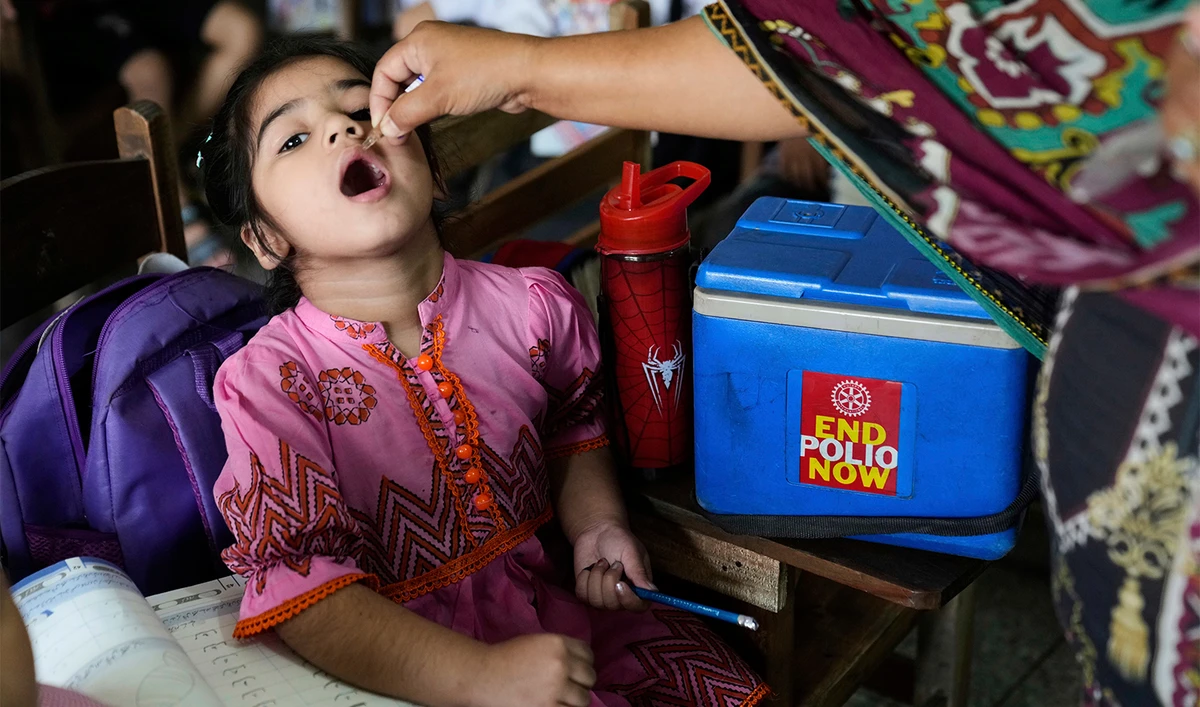
A health worker administers a polio vaccine to a child in a school in Lahore, Pakistan, on April 21, 2025. (AP/File)
Short Url
Updated 19 May 2025
Follow

Islamabad to launch nationwide polio campaign on May 26 to immunize 45 million children

  • Pakistan has reported seven polio cases this year, while 74 cases were confirmed in 2024
  • Pakistan, Afghanistan are the only countries in the world where polio remains an endemic

ISLAMABAD: Pakistan will launch a third nationwide anti-polio vaccination campaign to immunize 45.4 million children under the age of five years, the Pakistani health ministry said on Monday.

The statement came after Health Minister Mustafa Kamal’s meeting with Dr. Chris Elias, president for global development at the Gates Foundation, to discuss Pakistan’s fight against the disease, according to the health ministry.

Polio is a paralyzing disease with no cure. Multiple doses of the oral polio vaccine, along with the completion of the routine immunization schedule for all children are essential to ensure strong immunity against the disease.

Pakistan has reported seven polio cases so far this year and has conducted two major vaccination campaigns in the first half of 2025. Last year, the South Asian country had reported 74 cases of the virus.

“The fight against polio has required tremendous sacrifice from all stakeholders including law enforcement personnel who have rendered invaluable services,” Kamal was quoted as saying by the ministry.

“This mission will continue until we reach complete eradication.”

The minister underscored the ongoing close cooperation between Pakistan and Afghanistan, including synchronized national immunization campaigns across both countries, as well as successful nationwide anti-polio campaigns carried out in February and April.

He shared that improved community engagement has led to a reduction in vaccine refusals among parents, expressing optimism that Pakistan is on track to achieve complete polio eradication by the end of 2025.

Pakistan and Afghanistan are the only two countries in the world where polio remains an endemic.

Dr. Elias commended Pakistan for its sustained efforts and reaffirmed the Gates Foundation’s commitment to supporting the country’s journey toward a polio-free future.

“He expressed hope that the 2025 eradication target would be successfully achieved.” the health ministry said.

In the early 1990s, Pakistan reported around 20,000 polio cases annually. However, by 2018, the number had dropped to just eight. In 2023, six cases were reported, and only one case was recorded in 2021.

Pakistan’s polio program began in 1994, but efforts to eradicate the virus have been repeatedly undermined by vaccine misinformation and resistance from some religious hard-liners who claim that immunization is a foreign plot to sterilize Muslim children or a cover for Western espionage.

Militant groups have also frequently targeted polio vaccination teams and the security personnel assigned to protect them, often resulting in deadly attacks.
Pakistan, China to sign multiple MoUs at major agriculture investment conference today

Updated 18 January 2026
Follow

Pakistan, China to sign multiple MoUs at major agriculture investment conference today

  • Hundreds of Chinese and Pakistani firms to attend Islamabad event
  • Conference seen as part of expanding CPEC ties into agriculture, trade

KARACHI: Islamabad and Beijing are set to sign multiple memorandums of understanding (MoUs) to boost agricultural investment and cooperation at a major conference taking place in the capital today, Monday, with hundreds of Chinese and Pakistani companies expected to participate.

The conference is being billed by Pakistan’s Ministry of National Food Security and Research as a platform for deepening bilateral agricultural ties and supporting broader economic engagement between the two countries.

“Multiple memorandums of understanding will be signed at the Pakistan–China Agricultural Conference,” the Ministry of National Food Security said in a statement. “115 Chinese and 165 Pakistani companies will participate.”

The conference reflects a growing emphasis on expanding Pakistan-China economic cooperation beyond the transport and energy foundations of the flagship China-Pakistan Economic Corridor (CPEC) into agriculture, industry and technology.

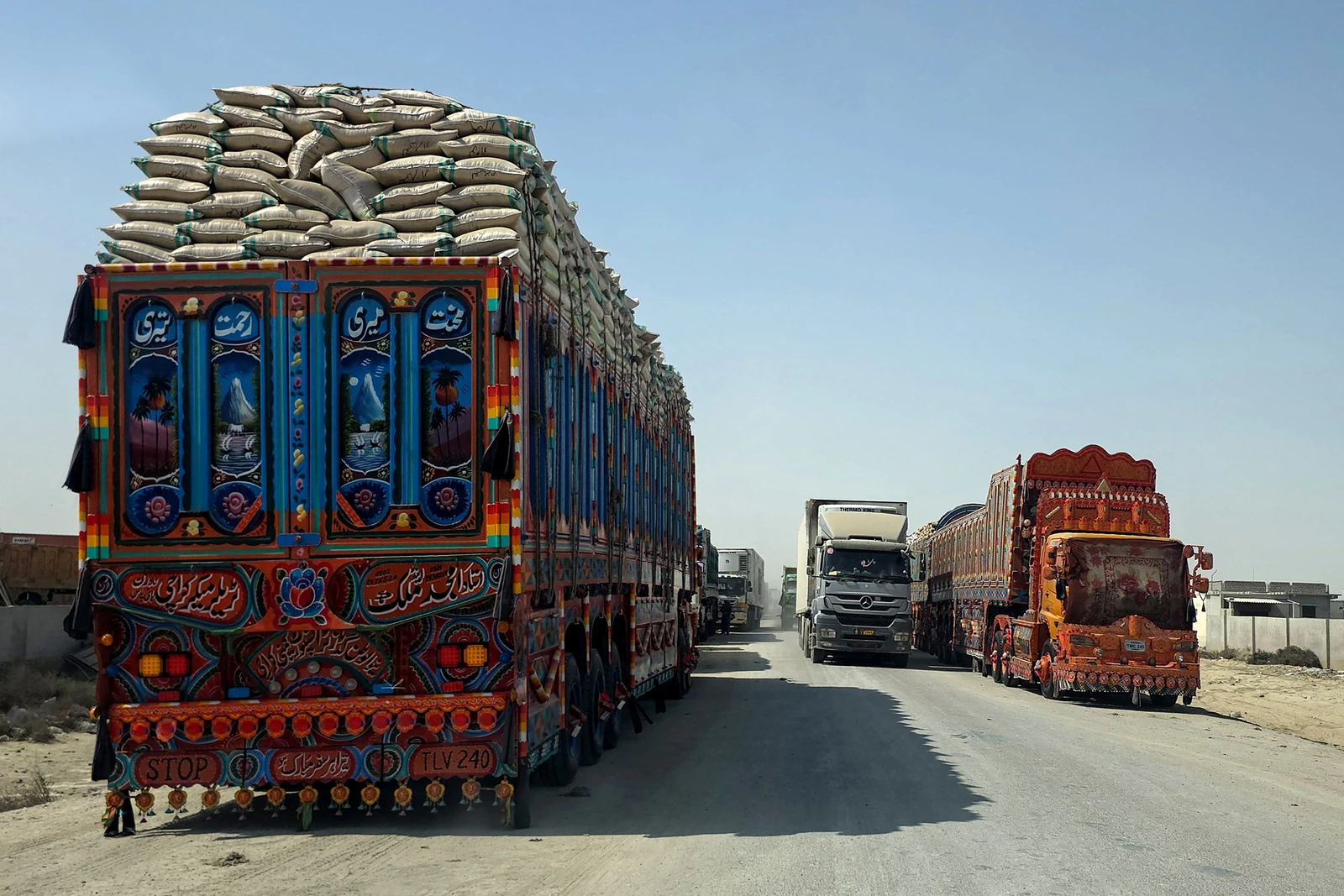
Under its first phase launched in 2015, CPEC, a core component of China’s Belt and Road Initiative, focused primarily on transportation infrastructure, energy generation and connectivity projects linking western China to the Arabian Sea via Pakistan. That phase included motorways, power plants and the development of the Gwadar Port in the country's southwest, aimed at helping Pakistan address chronic power shortages and enhance transport connectivity.

In recent years, both governments have formally moved toward a “CPEC 2.0” phase aimed at diversifying the corridor’s impact into areas such as special economic zones, innovation, digital cooperation and agriculture. Second-phase discussions have highlighted Pakistan’s goal of modernizing its agricultural sector, attracting Chinese technology and investment, and boosting export potential, with high-level talks taking place between planning officials and investors in Beijing.

Agri-sector cooperation has also seen practical collaboration, with joint initiatives examining technology transfer, export protocols and value-chain development, including partnerships in livestock, mechanization and horticulture.

Organizers say the Islamabad conference will bring together government policymakers, private sector investors, industry associations and multinational agribusiness firms from both nations. Discussions will center on investment opportunities, technology adoption, export expansion and building linkages with global buyers within the framework of Pakistan-China economic cooperation.