ISLAMABAD: Pakistani women filmmakers, along with their colleagues from Egypt, Lebanon, and other countries, this week showcased short films focusing on powerful themes such as grief, resistance, and patriarchal oppression at the ninth edition of the Women International Film Festival (WIFF) in Islamabad.
Organized by the Women Through Film community organization that aims to empower women filmmakers by promoting their art, the ninth edition of the festival was hosted at the Islamabad Community Library at the capital city’s I-8 sector on Saturday night.
The open-air event showcased 11 short films from filmmakers hailing from eight countries, namely Pakistan, Canada, Spain, Iran, Lebanon, Egypt, Sweden, and France. Three of the films were Pakistani productions while the rest were helmed by international filmmakers.
Each film explored profound themes of grief, resistance and patriarchal oppression.
“This was a dream more than a plan— to encourage women to tell their stories,” Madeeha Raza, WIFF’s curator, told Arab News.
“We try to prioritize locally made films, and I am glad we have three Pakistani films this year. The films from Iran and Lebanon touched upon resistance and war and how that affects the lives of normal people,” she said.
“I could resonate with that a lot, which made me choose them.”
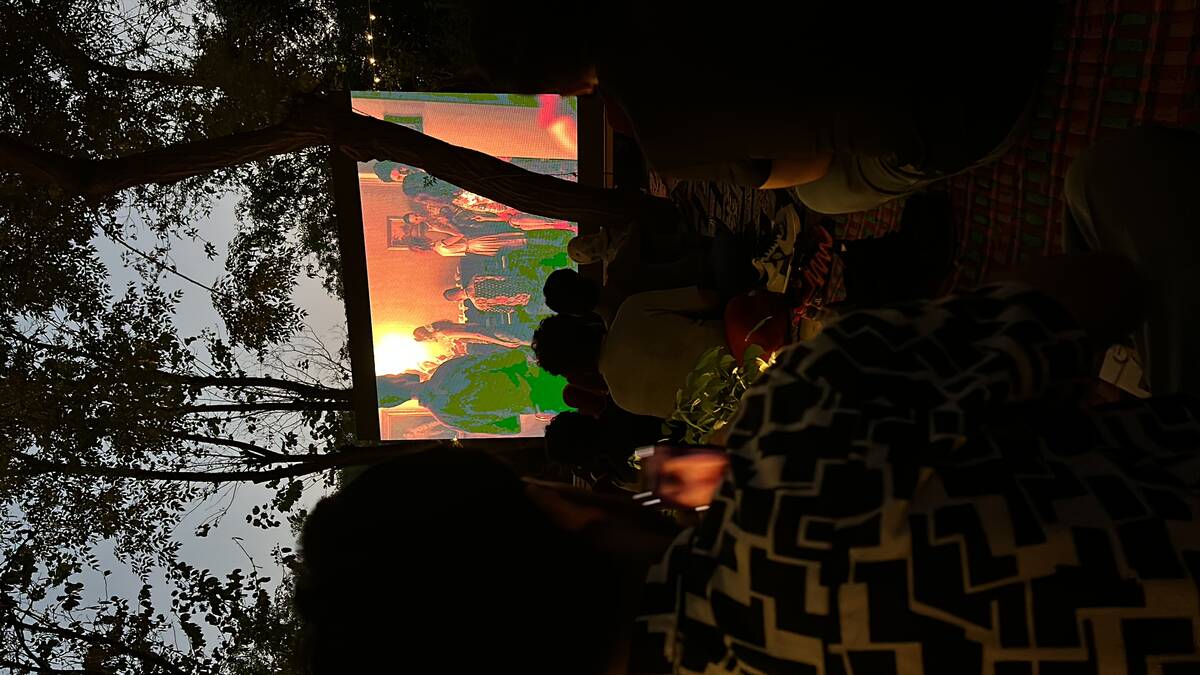
People watch a film at the Women International Film Festival (WIFF) in Islamabad, Pakistan, on May 17, 2025. (AN Photo)
The festival also featured panel discussions on filmmaking and the role of women in it. Anya Raza, whose film about an Afghan teacher dealing with the horrors of conflict, was one of the highlights of the festival.
Alongside her on a panel discussion were filmmakers Marya Javad and Nargis Moneeb, co-founder of the Pakistan Film Society of Islamabad. The conversation delved into the power of storytelling to challenge narratives and provide a voice to marginalized communities.
“This platform was created to give women a space to make films and submit them,” Raza explained. “The stories seen as controversial need to be shown more because they break the status quo. They shatter the concept of normalcy and allow people to take meaningful lessons.”
For Ayesha Siddiqa, a 25-year-old marketing professional, WIFF was an “eye-opener.” The Egyptian film ‘If The Cat Is Gone,’ which explored the complexities of friendship and societal judgments, stood out for Siddiqa the most.
“It was a simple story, but it was so relatable,” she told Arab News. “The way it showcased stereotypes we face every day was impressive.”
‘CREATING A COMMUNITY’
The event also offered a valuable networking opportunity for filmmakers. Jawad Sharif, a seasoned award-winning filmmaker, said festivals such as the WIFF are essential for the creative community.
“Such events motivate artists. In a society where stories of grief and struggle are often ignored, festivals like this ensure they are heard,” he said.
“It’s not just about watching films, it’s about creating a community.”
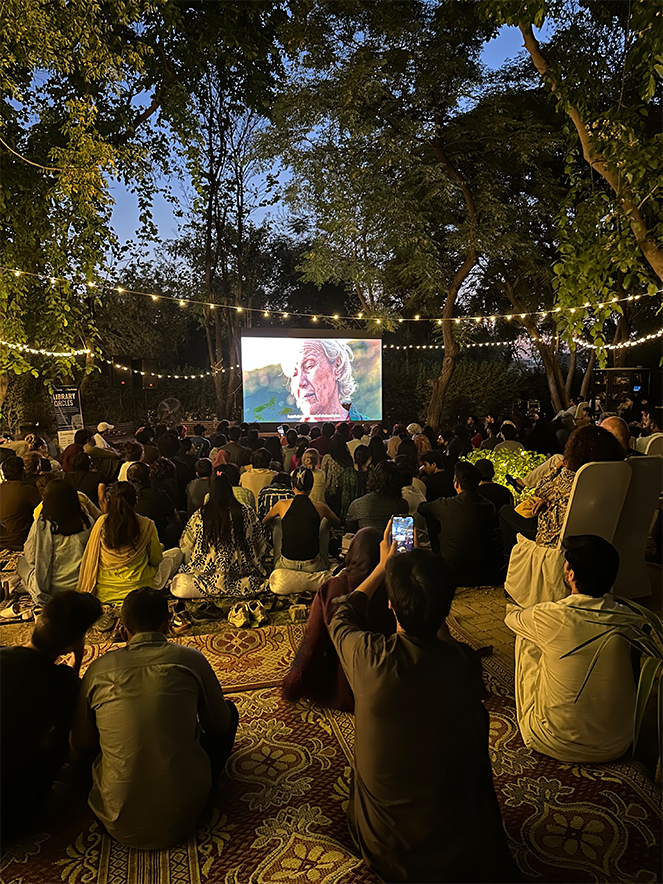
People watch a film at the Women International Film Festival (WIFF) in Islamabad, Pakistan, on May 17, 2025. (AN Photo)
Waghma Feroz, a documentary filmmaker from Khyber Pakhtunkhwa, said events such as WIFF are crucial for women to highlight their issues.
“If women create films, they often focus on women’s issues or human rights, which are rarely highlighted in mainstream media,” she pointed out. “Events like WIFF allow these stories to be told.”
Raza, whose film ‘On the Mountain’ touched upon the struggles of Afghan refugees, agreed.
“Stories about refugees and the human cost of conflict are rarely given space,” she said. “But they need to be told, and festivals like this ensure they reach the audience.”
Due to limited sponsorship this year, the festival was reduced to a three-hour event, which was far shorter than its previous editions.
Despite the challenges, Raza remained optimistic about the future.
“We’ve had highs and lows. Some editions were very well-supported,” she noted.
“This time we couldn’t garner much support and had to rely on partners. But next year will be our tenth edition, and we hope to make it grand,” she added.