

Norway’s ambassador underlines need to scale up and find new ways of working together

1 / 4
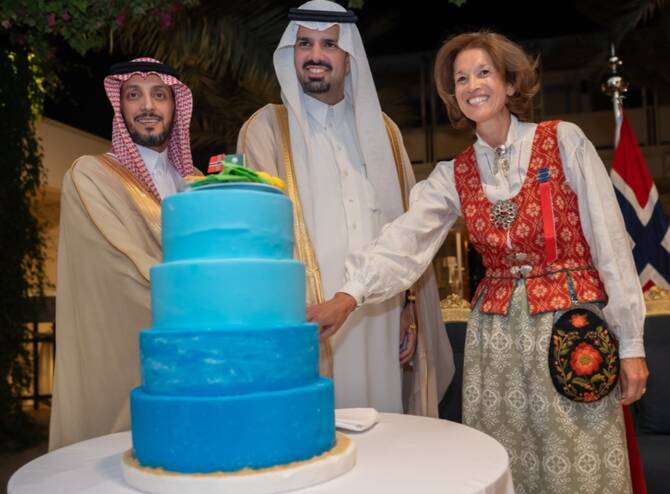
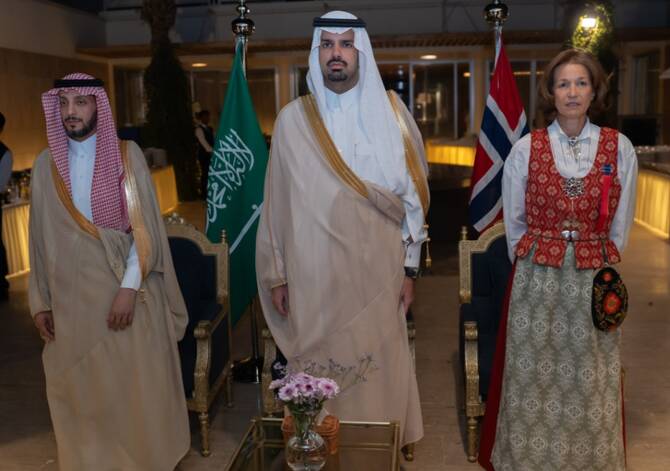
Prince Faisal bin Abdulaziz bin Ayyaf, Riyadh’s mayor, alongside Kjersti Tromsdal, Norwegian ambassador to the Kingdom, during the National Day reception hosted at the Norwegian Embassy in the Diplomatic Quarter. (AN Photo by Huda Bashatah)
2 / 4
Prince Faisal bin Abdulaziz bin Ayyaf, Riyadh’s mayor, alongside Kjersti Tromsdal, Norwegian ambassador to the Kingdom, during the National Day reception hosted at the Norwegian Embassy in the Diplomatic Quarter. (AN Photo by Huda Bashatah)
3 / 4
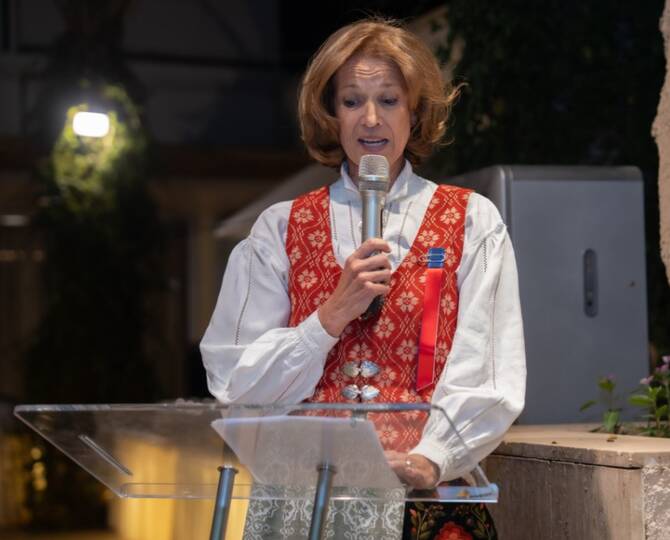
Kjersti Tromsdal, Norwegian ambassador to the Kingdom, speaking on Thursday during the National Day reception hosted at the Norwegian Embassy in the Diplomatic Quarter. (AN Photo by Huda Bashatah)
4 / 4
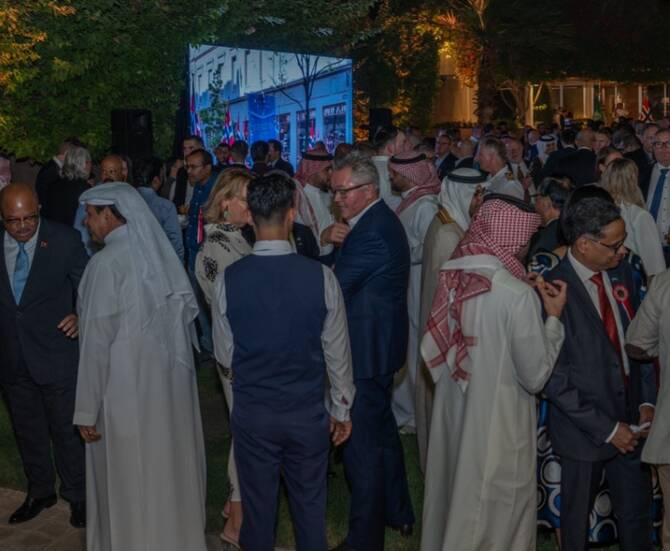
Visitors attending the National Day reception hosted at the Norwegian Embassy in the Diplomatic Quarter. (AN Photo by Huda Bashatah)
Short Url
Updated 17 May 2025
Follow

Norway’s ambassador underlines need to scale up and find new ways of working together

  • Envoy reaffirms commitment to strengthen ties with Saudi Arabia at National Day celebration
  • The ambassador said: “Our two countries are committed to a rules-based international order”

RIYADH: Kjersti Tromsdal, Norwegian ambassador to the Kingdom, on Thursday night confirmed her country’s determination to further strengthen bilateral cooperation with Saudi Arabia by finding new ways of cooperation as Norway celebrated its National Day in Riyadh.

The mayor of Riyadh, Prince Faisal bin Abdulaziz bin Ayyaf, attended the National Day reception hosted at the Norwegian Embassy in the Diplomatic Quarter.

Speaking at the reception, Tromsdal said: “Today, we celebrate the signing of the Norwegian constitution on May 17th, 1814. In Norway, the National Day, or the Constitution Day, is huge — a day full of children parading with flags and happy cheers in the streets. It’s a day when we celebrate tradition, pride and unity.

“The bilateral relationship between Saudi Arabia and Norway goes back to 1961. The two kingdoms have proud histories and ambitious futures. For decades, we have had fruitful exchanges in the energy sector as major oil and gas producers. Saudi Arabia and Norway are also maritime nations with an interest in safeguarding the marine environment,” she said.

“Both our countries are committed to accelerating the green transition. There is a need to develop and scale up new technologies and find new ways of working. This is an area where we see an increased number of partnerships between Norwegian and Saudi companies,” she added.

Norwegian companies that contribute to the implementation of Vision 2030 are an important part of the solid bilateral relations between our two countries, Tromsdal said, adding that the small Norwegian community in the Kingdom is growing, and that she was happy to see an increasing number of Saudi citizens visiting Norway.

The ambassador said: “Our two countries are committed to a rules-based international order, and see the value of mediated solutions to conflict. Norway believes in dialogue and constructive engagement for conflict resolution and appreciates the important role Saudi Arabia is taking in the region, and beyond, today.

“We value very much the close cooperation with Saudi Arabia in the Global Alliance for the Implementation of a Two-State Solution and we commend the efforts of Saudi Arabia in finding a path to fulfilling the rights of the Palestinian people,” she added.

Norway is a country renowned for its crisp air, green mountains, deep blue fjords and clear water.

“Today, we invite you to have a taste of Norway. And we know Saudis love Norwegian salmon. Together with the Norwegian Seafood Council and our sponsors we have brought high-quality Norwegian seafood to Riyadh. Our renowned chef Daniel and his assistants have travelled all the way from Norway to prepare the dishes for us. Our history as a seafood nation stems back to long before the Viking era with fishing, catching and trading of seafood,” the ambassador said.

Norway today, she said, is the world’s largest exporter of seafood, despite being a small country with a smaller population than Riyadh city.

Norway’s natural resources combined with one of the world’s longest coastlines, are the reasons for its lengthy traditions and practices in the seafood industry.

Atlantic salmon farming was “invented” in Norway 60 years ago and is today the world leader in salmon farming and aquaculture technology, she added.

“I am also glad to see many Norwegian companies and their Saudi partners here. Jotun, who celebrate 40 years in the Kingdom this year; Hydro Technal; DNV; Interwell; Corporater; Bravo Seafood; Norsk Sjomat; Pelagia; Arabian Fisheries; Tine; and Eira Water; and not least, our partnership with the Norwegian Seafood Council.”

The ambassador thanked her colleagues at the embassy with the words: “This is my first national day as ambassador in Riyadh, and I am so grateful to be here and to be part of this fabulous team.”


Saudi Arabia has told Iran not to attack it, warns of possible retaliation, sources say

Updated 08 March 2026
Follow

Saudi Arabia has told Iran not to attack it, warns of possible retaliation, sources say

Saudi Arabia has told Tehran that while it favors a diplomatic settlement to Iran’s conflict with the United States, continued attacks on the kingdom and ​its energy sector could push Riyadh to respond in kind, four sources familiar with the matter told Reuters.

The message was conveyed before a speech on ‌Saturday in which Iranian President Masoud Pezeshkian apologized to neighboring Gulf states for Tehran’s actions – an apparent attempt to defuse regional anger over Iranian strikes that hit civilian targets.

Two days earlier, Saudi Foreign Minister Prince Faisal bin Farhan spoke to Iranian Foreign Minister Abbas Araghchi and set out Riyadh’s position with clarity, the sources said.

Saudi Arabia is open to any form of mediation aimed at de‑escalation and a negotiated settlement, the sources quoted ​the minister as saying, underlining that neither Riyadh nor other Gulf states had let the US use their airspace or territory to launch airstrikes on Iran.

But Prince ​Faisal was also quoted by the sources as saying that if Iranian attacks persisted against Saudi territory or energy infrastructure, Saudi Arabia would ⁠be forced to permit US forces to use their bases there for military operations. Riyadh would retaliate if attacks on the kingdom’s critical energy facilities continued, he said.

The sources said ​the kingdom had remained in regular contact with Tehran through its ambassador since the US and Israeli military campaign against Iran began on February 28 following the collapse of talks on ​Iran’s nuclear program.

The Saudi and Iranian foreign ministries did not respond to requests for comment.

Drone and missile attacks on Gulf states

The United Arab Emirates, Kuwait, Qatar, Bahrain and Saudi Arabia have all come under heavy drone and missile fire from Iran over the past week.

Iran’s Supreme Leader, Ayatollah Ali Khamenei, was killed on the first day of the war. Tehran responded by hitting Israel and Gulf Arab states hosting US military installations, ​and Israel has attacked Lebanon’s Iran-backed Hezbollah armed group.

Araghchi said in an interview on Saturday that he remained in constant contact with his Saudi counterpart and other Saudi officials, adding ​that Riyadh had assured Tehran it was fully committed to not allowing its territory, waters or airspace to be used for attacks against Iran.

Pezeshkian said Iran’s temporary leadership council had approved suspending attacks on ‌nearby countries – unless ⁠an attack on Iran came from those nations.

“I personally apologize to neighboring countries that were affected by Iran’s actions,” he said.

To what extent Pezeshkian’s remarks signal a change is unclear. There were further reports of strikes directed at Gulf states on Saturday.

Also, in a sign of possible divisions within Iran’s leadership, Khatam Al-Anbiya Central Headquarters – the unified combatant command of the Iranian armed forces – said in a statement afterwards that US and Israeli bases and interests across the region would remain targets.

The command said Iran’s armed forces respected the sovereignty and interests of ​neighboring states and had not taken action against ​them so far. But it said US ⁠and Israeli military bases and assets on land, at sea and in the air across the region would be treated as primary targets and face “powerful and heavy” strikes by Iran’s forces.

US President Donald Trump said in a social media post that Iran had “apologized and surrendered to its Middle ​East neighbors, and promised that it will not shoot at them anymore. This promise was only made because of the relentless US ​and Israeli attack.”

Two Iranian ⁠sources confirmed that a call had taken place in which Riyadh warned Tehran to halt attacks on Saudi Arabia and neighboring Gulf states. Iran, they said, reiterated its position that the strikes were not aimed at Gulf countries themselves but at US interests and military bases hosted on their territory.

One Iranian source said that Tehran had in response demanded that US bases in the region be ⁠closed and ​some Gulf states stop sharing intelligence with Washington that Iran believes is being used to carry out attacks against it.

Another ​Iranian source said some military commanders were pressing to continue the strikes, accusing the US of using bases in Gulf states and these countries’ airspace to conduct operations against Iran.

Iran had in recent years mended fences with its ​Gulf neighbors, including former regional archrival Saudi Arabia. The diplomatic campaign imploded in the blitz of drones and missiles launched by Iran’s Revolutionary Guards in the past week.