Saudi Arabia weekly POS transactions remain above $3bn: SAMA

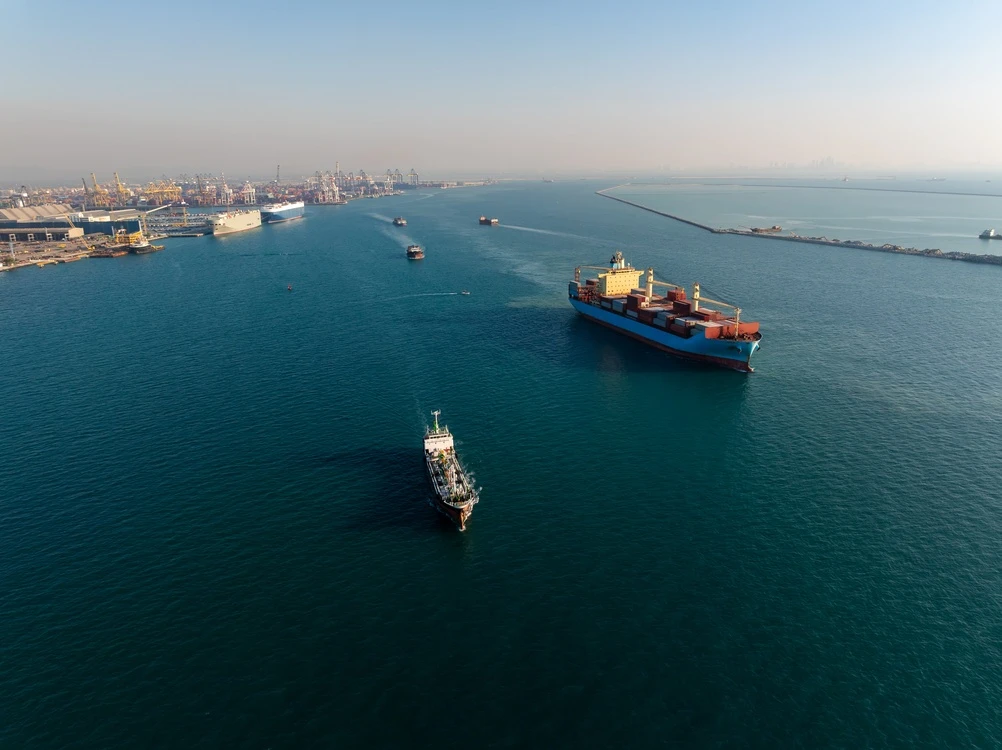
Riyadh dominated POS transactions, with expenditure in the capital coming in at SR4.6 billion over the week. Shutterstock
Short Url
Updated 14 May 2025
Follow

Saudi Arabia weekly POS transactions remain above $3bn: SAMA

RIYADH: Saudi Arabia’s point-of-sale transactions remained above SR13 billion ($3.47 billion) for the second week in a row, according to the latest official figures.

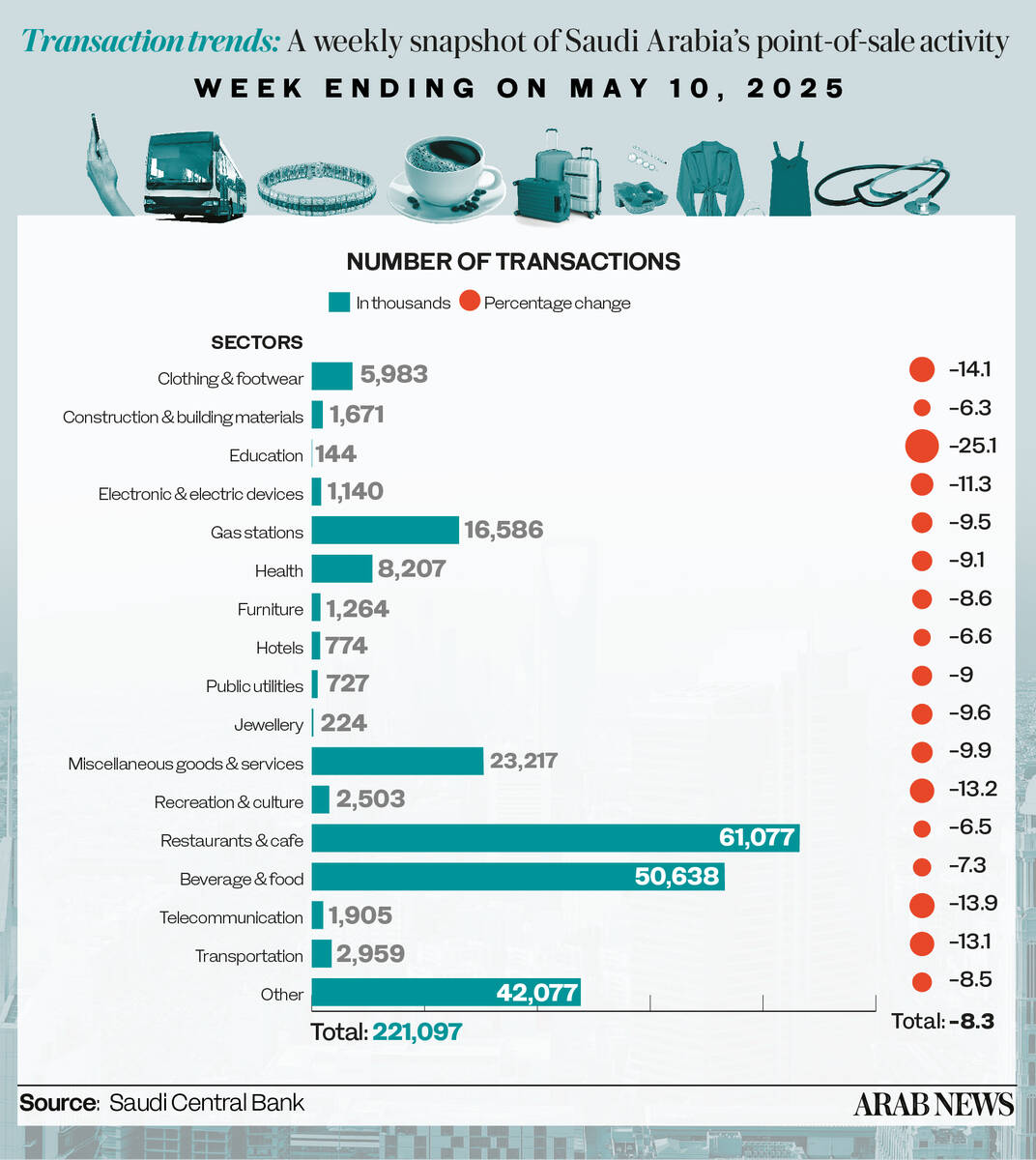
Data from the Saudi Central Bank, also known as SAMA, showed a weekly dip of 15.4 percent to SR13.1 billion over the seven-day period to May 10, with decreased spending across all sectors.

Education registered the largest decrease in transaction value — down 32.3 percent to SR162.1 million. 

The sector also saw a 25.1 percent downturn in the number of transactions, reaching 144,000. 
 

The telecommunication sector followed, recording a 23.7 percent decrease in transaction value to SR104.1 million. Food and beverage spending ranked next, dropping by 21.2 percent to SR1.8 billion, accounting for the second-largest share of the week’s POS.  

Transportation spending edged down 14.6 percent to SR727.5 million, while restaurants and cafes saw a 10.1 percent decrease, totaling SR1.9 billion and claiming the biggest share of the overall POS. 

The smallest expenditure drop was in spending on construction and building material, down by 5.4 percent to SR335.7 million. 

The health and public utilities sectors also saw downward changes decreasing by 12.9 percent and 13 percent to reach SR830.1 million and SR49.1 million, respectively. 
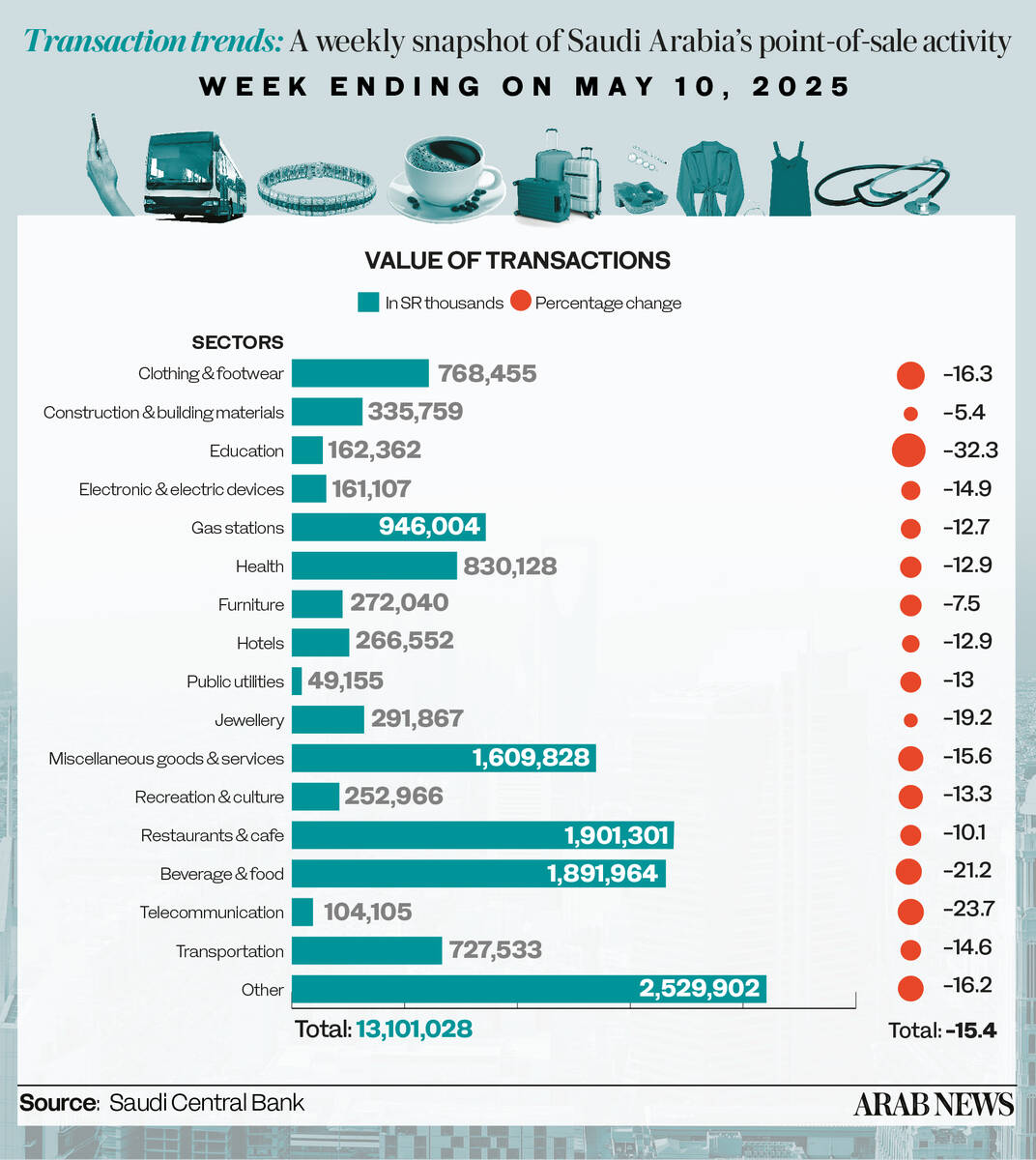
Spending on electronics followed the trend dropping 14.9 percent to SR161.1 million, and recreation and culture edging down by 13.3 percent to SR252.9 million. 

Miscellaneous goods and services claimed the third-largest share, with a decrease of 15.6 percent to SR1.6 billion. 

The top three categories — food and beverages, miscellaneous goods and services, and restaurants and cafes — accounted for 41.2 percent of the week’s total spending, amounting to SR5.4 billion. 

Geographically, Riyadh dominated POS transactions, with expenditure in the capital coming in at SR4.6 billion — an 11.8 percent decrease from the previous week. 

Jeddah followed with a 10.9 percent dip to SR1.8 billion, while Dammam ranked third, down 12 percent to SR679.3 million. Tabuk saw the biggest decrease, inching down 24.9 percent to SR244.1 million, followed by Hail with a 23.7 percent downtick to SR205.1 million. 

In transaction volume, Hail recorded 3.8 million deals, down 14.8 percent, while Tabuk reached 4.7 million transactions, dropping 13.3 percent. 

Makkah and Dammam experienced the smallest declines in transaction numbers, with Makkah seeing a 4.3 percent drop to 9 million deals and Dammam recording a 6.6 percent decrease to 9.2 million transactions. 

Saudi Arabia ranks 2nd globally in digital government, World Bank 2025 index shows


Updated 18 December 2025
Follow

Saudi Arabia ranks 2nd globally in digital government, World Bank 2025 index shows


WASHINGTON: Saudi Arabia has achieved a historic milestone by securing second place worldwide in the 2025 GovTech Maturity Index released by the World Bank.

The announcement was made on Thursday during a press conference in Washington, DC, which evaluated 197 countries.

The Kingdom excelled across all sub-indicators, earning a 99.64 percent overall score and placing it in the “Very Advanced” category.

It achieved a score of 99.92 percent in the Core Government Systems Index, 99.90 percent in the Public Service Delivery Index, 99.30 percent in the Digital Citizen Engagement Index, and 99.50 percent in the Government Digital Transformation Enablers Index, reflecting some of the highest global scores.

This includes outstanding performance in digital infrastructure, core government systems, digital service delivery, and citizen engagement, among the highest globally.

Ahmed bin Mohammed Al-Suwaiyan, governor of the Digital Government Authority, attributed this achievement to the unwavering support of the Saudi leadership, strong intergovernmental collaboration, and effective public-private partnerships.

He highlighted national efforts over recent years to re-engineer government services and build an advanced digital infrastructure, which enabled Saudi Arabia to reach this global standing.

Al-Suwaiyan emphasized that the Digital Government Authority continues to drive innovation and enhance the quality of digital services, in line with Saudi Vision 2030, supporting the national economy and consolidating the Kingdom’s transformation goals.

The 2025 GTMI data reflects Saudi Arabia’s excellence across key areas, including near-perfect scores in core government systems, public service delivery, digital citizen engagement, and government digital transformation enablers. This balanced performance places the Kingdom firmly in the “Grade A” classification for very advanced countries, demonstrating the maturity of its digital government ecosystem.

Saudi Arabia’s progress in the index has been remarkable: from 49th place in the 2020 edition, to third in 2022, and now second in 2025, confirming its status as a global leader in digital transformation and innovation.

The achievement also reflects the Kingdom’s focus on putting people at the center of digital transformation, enhancing user experience, improving government efficiency, and integrating artificial intelligence and emerging technologies across public services.