Saudi Arabia’s Tourism Development Fund eyes global bank partnerships to boost financing

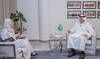
Khalid Al-Shareef, director of large institutions coverage at Saudi Arabia’s Tourism Development Fund. AN
Short Url
Updated 13 May 2025
Follow

Saudi Arabia’s Tourism Development Fund eyes global bank partnerships to boost financing

RIYADH: Saudi Arabia’s Tourism Development Fund is pursuing partnerships with global banks to secure additional financing for large-scale hospitality and infrastructure projects, as interest in the Kingdom’s fast-growing travel market intensifies. 

Speaking to Arab News on the sidelines of the Future Hospitality Summit in Riyadh, Khalid Al-Shareef, director of large institutions coverage at TDF, stated that the fund is looking beyond its own capital base and local banking partnerships to support major developments.

This comes as the fund has supported more than 2,400 direct and indirect tourism projects, representing a total investment of over SR35 billion ($9.33 billion). These initiatives are contributing to the development of more than 9,200 hotel rooms and villas across the country. 

The drive aligns with Saudi Arabia’s broader Vision 2030 objective of increasing tourism’s contribution to gross domestic product from 3 percent to 10 percent and creating 1 million new jobs within the industry. 

Al-Shareef told Arab News: “We are also bringing inbound international banks to help us support, whether it’s equity investments or in terms of financing.” 

He added: “We look forward to expanding, and it all depends on where we are headed. We have a roadmap, which is the national tourism strategy, and wherever we find the gap, you will find us there participating.” 

The spokesperson revealed that TDF met with a couple of banks and received strong interest across the board. “The Saudi market is growing at a fast pace; the numbers are talking for themselves. So, everyone is interested to join and be part of this growth,” he added. 

According to Al-Shareef, TDF participates in projects through three key financing mechanisms: debt, equity, and guarantees in partnership with banks. He emphasized the importance of de-risking projects, particularly for small and medium enterprises. 

“Some projects have high risk, especially for SMEs. We have partnered with a couple of local banks to provide guarantees for them to mainly cater to the mass market all across the Kingdom,” he said. 

The fund also supports entrepreneurship through its TDF Grow platform, aimed at empowering startups and tour guides through education and training. 

“We have supported more than 8,800 participants, all world-class education classes from international and well-known entities to offer their courses here in Saudi Arabia,” the TDF spokesperson said. 

Beyond financing, TDF is positioning itself as a facilitator within the tourism ecosystem, simplifying processes and enhancing access to support services. 

“As we have mentioned, financial support is there, but non-financial support is also important, especially for SMEs. You have to give the right education and guidance for them to thrive and hopefully become bigger companies over time,” he said. 

Al-Shareef emphasized that the guidance component is crucial and noted that non-financial support also involves connecting SMEs with various entities. 

“Today, rather than going to 10 or 15 entities to operate a hotel or what have you, we are basically trying to be a one-stop shop that will guide you on where to go to get your licenses and permits,” the spokesperson added. 

Al-Shareef noted the diversity of Saudi Arabia’s tourism landscape, ranging from beaches in the Eastern Province and Jeddah to mountainous regions in the south and desert terrain in the north. TDF is focusing efforts on underdeveloped areas that require more government incentives. 

“Currently, we are focusing more on tier two and tier three cities. Big cities like Riyadh and Makkah are carrying themselves, especially with the banks supporting them heavily,” the spokesperson said. 

He cited Abha, Al Baha, and AlUla as examples of regions receiving increased attention to ensure more balanced tourism development across the Kingdom. 


Cruise Saudi strengthens global ties as Celestyal makes maiden calls to Jeddah

Updated 10 December 2025
Follow

Cruise Saudi strengthens global ties as Celestyal makes maiden calls to Jeddah

JEDDAH: Saudi Arabia is accelerating its push to become a global cruise hub, with Cruise Saudi — a wholly owned Public Investment Fund subsidiary — expanding international partnerships to draw more travelers to the Kingdom’s Red Sea and Arabian Gulf ports.

The latest milestone came as award-winning Greek cruise line Celestyal completed its first-ever calls to Jeddah, signaling rising global interest in Saudi Arabia’s cultural and natural attractions.

The visits form part of Cruise Saudi’s strategy to build a year-round cruise ecosystem that supports tourism growth, boosts local supply chains, and contributes to the Kingdom’s broader economic diversification.

Three UNESCO World Heritage Sites — AlUla, Jeddah Historic District, and Al-Ahsa Oasis — are now accessible by sea, with curated shore excursions designed to deepen visitor engagement.

Cruise Saudi aims to welcome 1.3 million cruise passengers annually by 2035, creating 50,000 direct and indirect jobs and positioning the Kingdom as a premier international cruise destination.

The 1,360-passenger Celestyal Discovery arrived in Jeddah on Dec. 5, following the 1,260-passenger Celestyal Journey, which made its maiden call on Nov. 29. The Journey concluded a seven-night Athens–Jeddah itinerary with stops in Turkiye and Egypt, marked by a traditional plaque exchange ceremony attended by Cruise Saudi executives, port officials and Celestyal representatives.

Passengers were welcomed with traditional Saudi hospitality and toured Jeddah’s historic Al-Balad district, bustling souks, and cultural sites. Some Muslim travelers also visited Makkah to perform Umrah.

“We are honored to celebrate our maiden call in Jeddah alongside our partners at Cruise Saudi, marking the beginning of a long and effective relationship,” said Lee Haslett, chief commercial officer at Celestyal.

He added that Jeddah’s role as “the cultural heart of Saudi Arabia” presents strong potential for cruise tourism.

Barbara Buczek, chief destination experiences officer at Cruise Saudi, told Arab News: “This maiden Red Sea sailing highlights the strong appeal of the region and aligns with Cruise Saudi's commitment to developing seamless, high-quality cruise experiences in Saudi Arabia.”

She noted that Celestyal’s expanded itineraries reflect rising demand for distinctive Red Sea and Arabian Gulf voyages.

Since its launch in 2021, Cruise Saudi has activated five cruise ports, introduced Aroya Cruises, the Kingdom’s first homegrown cruise line, and established Aman at Sea, an ultra-luxury JV with Aman Group set to launch in 2027. The company manages the full value chain — from terminals and berths to curated excursions — and has already welcomed more than 600,000 passengers of over 120 nationalities.

Celestyal, which carries more than 140,000 passengers annually across two refurbished vessels, is aligning with the Kingdom’s Vision 2030 ambition to transform coastal tourism. After departing Jeddah, both Celestyal ships continued to Abu Dhabi to begin the company’s second Arabian Gulf season.

Aroya Cruises has also launched a new seasonal program featuring stops in Mykonos, Athens, Crete, and coastal cities in Turkiye, expanding on a successful inaugural season that attracted over 95,000 guests.

The growing activity underscores Saudi Arabia’s emergence as a world-class cruise destination, supported by modern infrastructure, expanding routes, and experiences that highlight the Kingdom’s culture, heritage and hospitality.