


RIYADH: Saudi Arabia’s tourism sector is projected to grow by 8 percent in 2025, building on a year of record-breaking performance and continued progress under Vision 2030, according to a top official.
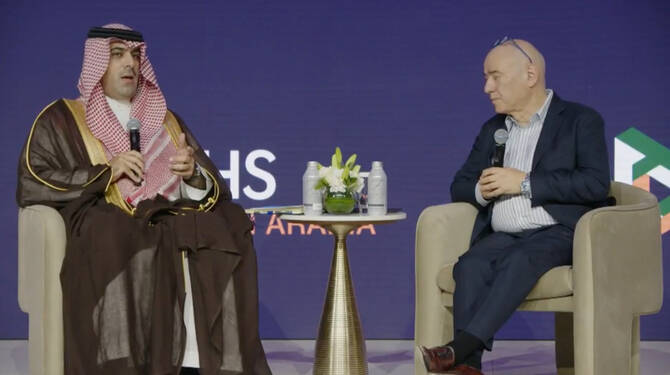
Speaking at the Future Hospitality Summit in Riyadh, Mahmoud Abdulhadi, deputy minister for destination enablement at the Ministry of Tourism, said direct tourism spending rose 14 percent in 2024, compared to the SR256 billion ($68.26 billion) recorded in 2023.
“2023 was our first year that we hit 100 million. While I can’t tell you the exact numbers, hopefully, some of you can do the math. We are going to see growth this year. We’re talking 8 percent growth in the number of visitors,” he said. “We delivered SR256 billion worth of direct spend in 2023, and from 2023 to 2024, we’re looking at roughly 14 percent growth in spend.”
He added, “There was some healthy skepticism around some of the objectives and what we wanted to do. But I think, as Saudis, we have proven time and time again that when we make promises, we deliver, and Vision 2030 is no exception to this.”
Abdulhadi noted the Kingdom’s broader economic shift, stating that 50-51 percent of Saudi Arabia’s gross domestic product now comes from the non-oil sector, with 47 percent contributed by the private sector.
“Hospitality is in our DNA — something we’ve been doing for thousands of years,” he said.
He further emphasized the growing role of leisure tourism in driving sectoral change, stating: “Leisure today accounts for, if we’re looking at our domestic visitors, over 35 percent of visitors and over 30 percent of spend.”
For international visitors, he noted that leisure contributes over 20 percent of both arrivals and spending. “We’ve had a major shift in how we do things, what we do, and it’s delivering in terms of the numbers,” Abdulhadi said.
Structural reforms have played a key role, he said, including a 70 percent reduction in hotel operation fees since 2019 and streamlined licensing procedures, which led to a 168 percent increase in licensed tour guides.
A new hospitality incentive program targeting emerging destinations has attracted nearly SR3 billion in private sector investment.
“It is our ambition that tourism investment happens without somebody talking to the ministry or a government entity saying how, where, and help,” Abdulhadi said. “So, once we reach that position of maturity, our role moves from facilitator to pure regulator.”
Opening the second day of the summit, Jonathan Worsley, chairman and CEO of The Bench, a hospitality investment and aviation development business events organizer, underscored the sector’s momentum, citing the launch of Riyadh Air, which aims to serve 100 international destinations by 2030.
“They’re playing a crucial role in developing the tourism strategy for Vision 2030,” he said.
Prince Bandar bin Saud bin Khalid, secretary general of the King Faisal Foundation and chairman of Al Khozama Investment Co., emphasized the cultural transformation driving the sector.
“Saudi Arabia is no longer just about infrastructure and service,” he said. “It’s about identity, culture, talent, and future leadership.”
He added: “In the coming days, we will explore many of the challenges and opportunities ahead — and most importantly, how to develop the human capital needed to sustain this extraordinary momentum.”
From the private sector, Sultan Bader Al-Otaibi, CEO of Taiba Investments, announced plans to open over 2,000 rooms across Saudi cities in 2025. “We believe hospitality is more than business — it’s a way to connect with people and create a memory,” he said.
The company’s first opening will be the soft launch of Saudi Arabia’s first Rixos hotel in Jeddah, followed by Makarem Burj Al Madinah and Novotel Al Madinah, two flagship properties expanding the group’s domestic and international brand partnerships.
Coinciding with the summit, Knight Frank released its Saudi Arabia Hospitality Market Review 2025, offering fresh insight into the industry’s trajectory. According to the report, the Kingdom’s hospitality market is expected to reach 362,000 hotel keys by 2030. Currently, 167,500 keys are in operation, with an additional 99,500 under construction or in the final planning stages.
Of the pipeline, 78 percent is expected to fall into the luxury, upper-upscale, or upscale categories, while 61 percent of existing inventory already fits within those segments.
Saudi Arabia recorded its highest-ever travel surplus in 2024 at SR49.8 billion, up from SR46.2 billion in 2023, driven by a 13.8 percent increase in inbound visitor spending. Average hotel occupancy in March stood at 70 percent, with Madinah leading at 81 percent.
Religious tourism also surged, with 35.8 million pilgrims performing Umrah in 2024 — a 33 percent year-on-year increase — including 16.9 million international pilgrims. The Hajj quota for 2025 has been raised to 2 million, up 11 percent from 2024.
Giga-projects such as NEOM, Rua Al Madinah, Jabal Omar, and the Red Sea Project are projected to deliver 252,000 hotel keys in the Holy Cities by 2030, with 64 percent of them in the four- and five-star categories.
With a national target of 150 million annual visits by 2030, Saudi Arabia is integrating its tourism, religious, and hospitality strategies to cement its status as a leading global destination.


