- Shehbaz Sharif tells Adel Al-Jubeir Pakistan is determined to defend its sovereignty against India
- The Saudi minister calls for peaceful resolution of issues between the South Asian nuclear states
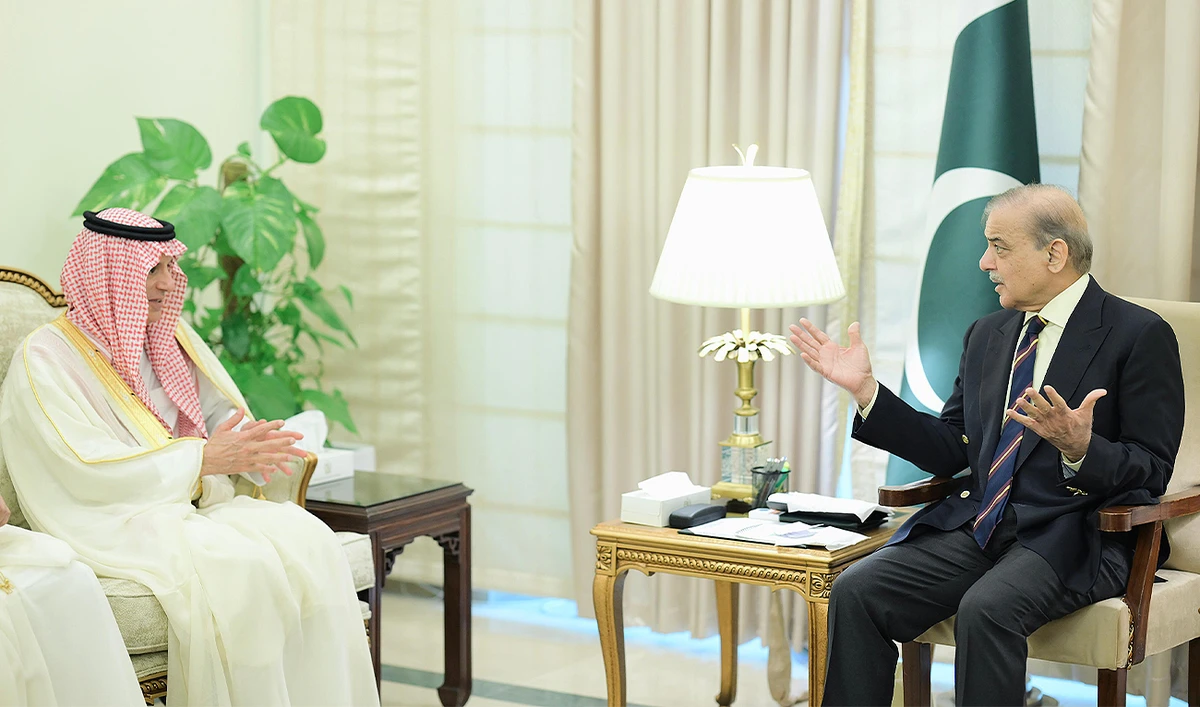
KARACHI: Prime Minister Shehbaz Sharif on Friday condemned India’s missile and drone strikes against Pakistan that killed civilians this week while appreciating Saudi diplomatic efforts to de-escalate tensions with its nuclear neighbor in a meeting with the Kingdom’s Minister of State for Foreign Affairs Adel Al-Jubeir.
The Saudi minister’s daylong visit follows India’s military strikes inside Pakistan in response to a gun attack in the disputed Kashmir region that left 26 tourists dead, with New Delhi blaming Islamabad for the incident, though Pakistani authorities have repeatedly denied any involvement.
With the two archrivals teetering on the edge of a full-scale war, the United States announced on Thursday that Secretary of State Marco Rubio had discussed regional de-escalation with Saudi officials.
The same day, Al-Jubeir made a surprise stop in New Delhi for talks with Indian officials before arriving in Pakistan on Friday.
“While discussing the prevailing situation in South Asia [with the visiting dignitary], the Prime Minister strongly condemned India’s missile and drone strikes against Pakistan that had resulted in the martyrdom of scores of innocent civilians, including women and children, as well as damage to civilian infrastructures,” said a statement issued by his office after the meeting.
“He said Pakistan was fully determined to defend its sovereignty and territorial integrity, in accordance with Article 51 of the UN Charter,” it added. “He appreciated the Kingdom’s diplomatic efforts to de-escalate the situation and bring peace in the region.”
Sharif conveyed warm regards to Salman bin Abdulaziz and Crown Prince Mohammed bin Salman and expressed satisfaction at the positive trajectory of Pakistan-Saudi relations.
He also maintained that India’s “unprovoked and unjustified acts of aggression” had violated Pakistan’s sovereignty and territorial integrity and seriously endangered regional peace and stability.
The statement said Al-Jubeir offered condolences over the loss of civilian lives and said the Kingdom was “deeply concerned” about the current situation in South Asia.
He reiterated Saudi Arabia’s call for de-escalation and the peaceful resolution of disputes between Pakistan and India in accordance with international law.
Saudi Arabia and Pakistan share close diplomatic and strategic relations.
The Kingdom has extended significant support to Pakistan during prolonged economic challenges faced by Islamabad in recent years, including external financing and assistance with International Monetary Fund (IMF) loan programs.
Saudi Arabia has also contributed to global peacemaking efforts by hosting talks and mediating prisoner exchanges between Russia and Ukraine.