

What’s the matcha with everyone? The beloved green tea powder hits mainstream in Saudi Arabia

1 / 3
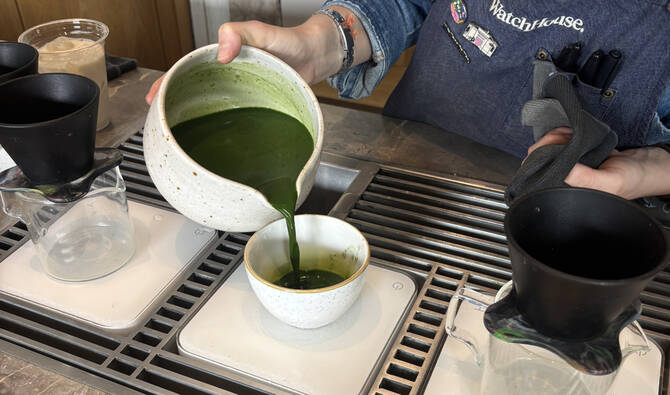
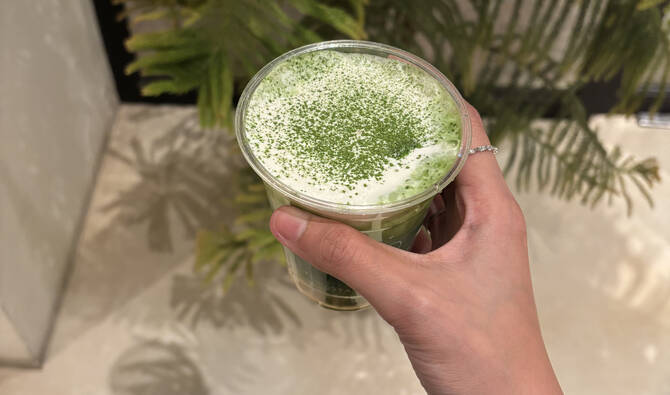
Once a niche ceremonial tea in Japan, matcha is now gaining mainstream popularity in Saudi Arabia. (AN Photo by Waad Hussain)
2 / 3
Once a niche ceremonial tea in Japan, matcha is now gaining mainstream popularity in Saudi Arabia. (AN Photo by Waad Hussain)
3 / 3
Once a niche ceremonial tea in Japan, matcha is now gaining mainstream popularity in Saudi Arabia. (AN Photo by Waad Hussain)
Short Url
Updated 07 May 2025
Follow

What’s the matcha with everyone? The beloved green tea powder hits mainstream in Saudi Arabia

  • The Japanese tea’s rise in the Kingdom is a cultural shift, one green cup at a time

RIYADH: Once a niche ceremonial tea in Japan, matcha is now gaining mainstream popularity in Saudi Arabia, thanks to a growing interest in wellness trends, evolving taste preferences, and the rise of mindful living.

The data backs the trend. According to a recent report by IMARC Group, Saudi Arabia’s green tea market, which includes matcha, was valued at $140.14 million and is projected to grow to $229.24 million by 2033.

Imports of packaged green tea nearly doubled in value between 2020 and 2023, suggesting a growing appetite for premium, health-focused drinks.

That growing demand is reflected on cafe menus and social media feeds across the Kingdom. Matcha lattes, once limited to specialty coffee shops, are now a fixture at trendy cafes and home kitchens alike.

Whether it’s served iced in sleek glass cups or whisked at home with oat milk, matcha is more than a drink. It’s a mood, a personal statement, and for many, a healthier way to start the day.

In Dammam, 19-year-old Sara Anas remembers her first taste of matcha back in 2019. “My dad likes trying new things,” she said. “It didn’t taste that great at first, but when matcha became popular in 2021, I got excited to try it again from local cafes.”

Now, she drinks it almost daily. “It might sound strange, but I don’t feel like it’s heavy on my body like coffee. It makes me feel more relaxed and gives me energy in a better way.”

Anas is part of a growing demographic. In Riyadh, 26-year-old Amal Al-Mutairi starts every morning with matcha. “I prefer it iced with vanilla milk to make the flavor smoother and lighter,” she said.

For her, the appeal began with reading about its benefits. “It gives me calm energy without the jitters or crash I usually feel after drinking coffee. It also helps me focus for longer periods.”

That calm, focused energy — often described as a “cleaner” caffeine experience — has made matcha especially popular among students and professionals.

For Anas, it’s a campus essential. “It’s a must before classes! It gives me the energy to continue my day at uni,” she said.

But matcha is more than functional. It’s become a lifestyle, embraced for both its wellness claims and its visual charm.

Globally, matcha’s rise is part of a broader wellness boom. Japan’s matcha production rose 185 percent from 2010 to 2023, and demand is now so high that suppliers are warning of shortages. Japan’s top growers have begun limiting exports to meet domestic needs.

Matcha’s health appeal is not just hype. Rich in antioxidants — especially a compound called EGCG — studies suggest it may reduce inflammation, support cardiovascular health, and aid cognitive function.

A recent Saudi study also found that over half of the participants believed matcha could help with weight management and blood sugar balance.

Still, experts note that moderation matters. Excessive matcha consumption may interfere with iron absorption and isn’t recommended for everyone.

The ritual of preparing matcha, especially for those who make it themselves, has become part of a broader shift toward slow, intentional living — something many young Saudis are leaning into.

That ritual is deeply personal for 27-year-old Leen Al-Zamil, who turned matcha from curiosity into a daily indulgence. “I was curious at first and honestly, I hated it so much, but I think (that’s) because it was hot,” she said. “I liked it cold with vanilla syrup and oat milk. I definitely can’t drink it alone.”

Now, she can’t go a day without it. “Sometimes twice or more,” she said. “I like its color … I enjoy every step of making it, and it just tastes so good. It brightens my mood.”

Al-Zamil is not the only one who sees matcha as more than just a drink.

For 28-year-old Mona Abdullah, matcha represents healing. “As someone who suffers from IBS, coffee tends to affect me for a while, whereas matcha provides steady energy without causing any discomfort,” she said. “I’ve stopped drinking coffee for the past three months. I now believe that matcha is a better source of caffeine compared to black coffee.”

Irritable bowel syndrome is a common digestive condition. Many people with IBS find that coffee, with its acidity and high caffeine content, can trigger discomfort, making gentler alternatives like matcha a preferred choice. 

Abdullah drinks it twice a day, iced, and without any added flavors. “Health,” she says, is what made her switch.

Still, matcha’s appeal goes beyond health — it’s also about aesthetics and culture. “I think it’s a mix of everything,” said Al-Mutairi. “The health benefits, the taste, and yes, the aesthetic.”

Anas echoed that idea, noting that people’s motivations vary. “For me, it’s for its health benefits and for the taste. You don’t usually get a healthy drink with a good taste,” she said. “But I think there are a lot of people who drink it just for the aesthetic. You see them adding hundreds of syrups just to say they drink matcha.”

That blend of wellness and image — serious health meets playful branding — has fueled matcha’s surge on social media. With its bright green hue, minimalist packaging, and frequent cameos in cafe selfies, matcha has become the drink of the “soft life” movement, one that prioritizes peace, balance, and pleasure.

“It’s definitely the vibe and the taste,” said Al-Zamil.

In a country where coffee culture runs deep, matcha is not replacing tradition; it’s offering something new: a blend of taste, lifestyle, and personal meaning, one bright green cup at a time.


‘We see eye to eye’: Ambassador hails Saudi-Portuguese connection

Speaking to Arab News, Portuguese Ambassador to Saudi Arabia Nuno Mathias reflects on his time in the Kingdom. (AN photo)
Updated 12 sec ago
Follow

‘We see eye to eye’: Ambassador hails Saudi-Portuguese connection

  • Nuno Mathias reflects on 4 transformative years, cultural ties, economic cooperation 

RIYADH: As he concludes a four-year tenure defined by the rapid transformation of Vision 2030, Portuguese Ambassador to Saudi Arabia Nuno Mathias has reflected on the deepening economic ties and the profound “eye-to-eye” cultural connection between the two countries.

“Saudi energy and the implementation of Vision 2030 have given me a great boost and interest in my work here, and to some extent pushed me to do more,” he said.

Speaking to Arab News, the official reflected on his time in the Kingdom, recalling when the previous ambassador told him: “Saudi Arabia is not what you think.”

Mathias arrived in the Kingdom in January 2022 and said he had had the “privilege to witness firsthand the transformations of the Kingdom and the implementation of Vision 2030.”

He highlighted the cultural and people-to-people connections he had observed between the Saudi and Portuguese people immediately on his arrival.

He said: “Throughout our history — architecture, language, culinary traditions, music — we have inherited so much from the Arab world that it brings our two peoples closer.”

Mathias added that the two countries and their populations see “eye to eye faster than others, probably.”

The ambassador focused his mission on bridging the two cultures and enhancing the relationship between the nations, beginning with people-to-people connections.

He said: “We see eye to eye on many things, and I dare say we become fast friends. Diplomacy is all about that — listening and understanding.

“In my four years it has always been about approaching or showcasing the connectivities that exist between Portugal and the Arab world.”

Mathias highlighted one key takeaway he will remember from his tenure in the Kingdom: Saudi hospitality.

He added: “You guys make it much easier. I feel very grateful for the way I was received and hosted in your country.”

As a result of Vision 2030, the ambassador also felt compelled to further Saudi-Portugal cooperation in economic and commercial areas.

Speaking about the evolution of diplomatic relations, he said that in 2022 the countries had “potential.” Throughout his four-year tenure he had worked “to bridge that gap or tried to make that potential more tangible.”

He added: “I think we did. We have, like I mentioned earlier, now some major Portuguese companies, especially in construction and civil construction, that are engaged in the Kingdom.”

Highlighting the expansion of Saudi-Portuguese ties, the ambassador underlined that the “potential is enormous.”

Mathias said: “I think in the last four years we have witnessed a lot of Portuguese companies coming to the Kingdom with a real interest to help implement Vision 2030.”

He noted that business cooperation was further strengthened through the creation of the Saudi-Portuguese Business Council, formalized in 2024.

Moving forward, he emphasized his desire to attract Saudi investors to Portugal, adding: “I think Portugal can offer great opportunities; again, because it’s a place where Saudis will feel at home, and I think that will be important.

“Wherever you do business, you want to feel welcomed, and because we share the same commonalities in terms of our values, this is important to highlight.”

One of the key milestones he pointed out was the official visit of Portugal’s Foreign Minister Paulo Rangel to Riyadh in October 2025.

And during his own time in the Kingdom Mathias traveled to various areas, including AlUla, the Eastern Province, Hofuf, and Jeddah.

He said: “I must say I fell in love with Jeddah. I know it’s hard for Riyadh people to hear this, but I am a person of the sea, so for me the presence of the sea was fantastic. And I fell in love with Al-Balad.”

The ambassador described Al-Balad as the “pinnacle of his stay,” and added: “Every time I go to Jeddah, I just love to get lost in Al-Balad — just to stroll the streets without any agenda, just to take in the atmosphere.

“To take in the prayers you hear in the background, the people, the street life, the old-town commerce.”

Mathias said his wife had also fallen in love with the place, and added: “We had probably one of the most extraordinary moments when we visited King Abdulaziz’s house.”

The ambassador went to Naseef House — the residence of King Abdulaziz in 1925 — with his family, where he witnessed the Maghrib call to prayer from the top-floor window.

He said: “At the end of the day, just before prayer time, we were there and suddenly you hear from all around Jeddah the call to prayer.

“It gives you goosebumps. This medley of voices that come … that was extraordinary.”

He described it as one of the “greatest experiences in his life.”

The experience was extended when he visited a 300-year-old home in Al-Balad and ate hamour fish.

He added: “Deep-fried hamour fish, sliced, for my kids — it was an extraordinary experience. It had cilantro, it had lemon, and we picked those pieces of fish. Incredible, incredible, incredible. So, that was one of my greatest experiences.”

Looking to the future, the ambassador hopes to see the implementation of direct flights between Saudi Arabia and Portugal.

He said: “I think once we have direct flights between our two countries, it is going to be a game changer.

“It is going to change the people-to-people connection, which is fundamental to any relationship. It will be much more intertwined. You will discover Portugal and the Portuguese will discover Saudi Arabia.”

Mathias offered words of wisdom to his successor Luisa Fragoso, Portugal’s next ambassador to Saudi Arabia.

He said: “I would let her be guided by the Saudi hospitality. I’m sure she will be in very good hands. I want to wish her all the best.

“I was very happy here and I’m sure she will be very happy.”