


JEDDAH: Saudi Arabia is positioning itself as a leader in the hydrogen economy, with significant investments in both green and blue versions of the fuel with the aim to generate half of the Kingdom’s electricity from renewable sources by 2030.
With its commitment to achieving net-zero emissions by 2060, strategic partnerships, and projects like NEOM’s hydrogen initiative, Saudi Arabia is paving the way for a sustainable, hydrogen-powered future.
Saudi energy giants, including Aramco and ACWA Power, are leading major projects in this area aligned with the country’s sustainability goals.
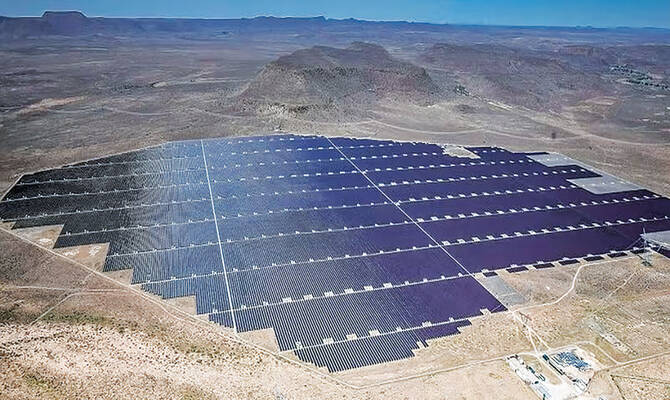
ACWA Power’s Sudair solar plant, with a 1,500 megawatt capacity, will offset 2.9 million tonnes of carbon emissions annually. Aramco is also involved in $30 billion renewable energy projects with the Public Investment Fund and other partners.
Yaseen Ghulam, associate professor of economics and director of research at the Riyadh-based Al-Yamamah University, told Arab News that Saudi Arabia plans to invest up to $10 billion in green hydrogen manufacturing firms, aiming to be responsible for 15 percent of the world’s blue hydrogen production. “Aramco aims to generate 11 million tonnes of blue ammonia annually by 2030. In a well-established plan, Saudi Arabia is aggressively investigating the application of hydrogen in many fields. More specifically, the country is also exploring hydrogen applications in industrial, power generation, and transportation, and car fuel for fuel cell-powered vehicles,” Ghulam said.
He added that the country’s Vision 2030, smart trade relationships with Europe and Asia, technological advancements, and government support are driving these plans and progress in the hydrogen energy sector.
The expert noted that integrating hydrogen into Saudi Arabia’s blue economy is a key strategy for sustainable growth, with green hydrogen set to transform industries like transportation, steel production, and heavy-duty vehicles.
“The global green hydrogen market is expected to see annual growth of more than 40 percent by 2030, reaching $72 billion. By 2050, the demand for green hydrogen could replace 37 percent of the world’s oil production. Saudi Arabia, with its focus on the blue economy since the start of Vision 2030, is making efforts to transition to this next stage by producing and using green hydrogen,” he said.
The academic emphasized that Saudi Arabia’s natural environment — specifically its sunny, windy desert landscapes — creates favorable conditions for green hydrogen production. Youssef Saidi, a research fellow at the Economic Research Forum and a member of the Saudi Economic Association, agreed with Ghulam, adding that the abundant renewable energy resources, including solar, wind, and geothermal, make the Kingdom an ideal location for green hydrogen production.

The global green hydrogen market is expected to see annual growth of more than 40 percent by 2030, reaching $72 billion. By 2050, the demand for green hydrogen could replace 37 percent of the world’s oil production. Saudi Arabia, with its focus on the blue economy since the start of Vision 2030, is making efforts to transition to this next stage by producing and using green hydrogen.
Yaseen Ghulam, Associate professor of economics and director of research at Al-Yamamah University
Ghulam noted that green hydrogen has potential applications in numerous industries that are expected to play a prominent role in the success of Vision 2030, including transportation, steel production, ammonia manufacturing, and heavy-duty vehicles.
“It can also be used for energy storage, powering transportation, and stabilizing the electrical grid. Currently, many industries that are vital for the blue economy are ready to accept hydrogen, and some industries, such as shipping, transportation, and heavy industry, are preparing for it in the near future,” he said.
Discussing the cost of hydrogen energy production, Ghulam stated that global prices are expected to range between $2 and $7 per kilogram, while Saudi Arabia’s cost is projected to be just $2.16 per kilo.
He noted, however, that if domestic natural gas prices remain stable, the cost of producing blue hydrogen could drop to $1.13 per kilogram. “This will, of course, help the Kingdom’s blue economy progress steadily in the next few decades and beyond,” he said.
According to the International Energy Agency, global hydrogen investments have surged, with the NEOM Hydrogen Project leading the way as the largest to reach a final investment decision, boasting 2.2 gigawatts of electrolyzer capacity.
Ghulam pointed out that Saudi Arabia’s success in the hydrogen sector is also driven by strong international collaborations, such as joining the International Partnership for Hydrogen and Fuel Cells in the Economy, a global initiative aimed at advancing hydrogen and fuel cell technologies.
He added that NEOM, ACWA Power, and Air Products have also formed a $500 billion renewable energy-powered NEOM Green Hydrogen Co.
“The facility is expected to produce 650 tonnes of green hydrogen daily by 2026,” he said, adding that Aramco, MIG, and IE have partnered to establish new green hydrogen and ammonia production facilities.
“Germany and the Kingdom are collaborating to develop clean hydrogen technology. King Abdullah University of Science and Technology, NEOM’s Education, Research, and Innovation Foundation along with Enowa, NEOM’s sustainable energy and water systems subsidiary, have recently made agreements to promote the hydrogen economy,” he said.
According to Saidi, the King Salman Energy Park, the Blue Ammonia Supply Chain project, Hydrogen City within the NEOM megaproject, and the NEOM Green Hydrogen Co. are all ambitious renewable power initiatives.
He added that these are not the only developments, as the Kingdom has all the resources needed to position itself as a global leader in the renewable energy market and play a key role in achieving long-term global carbon neutrality goals.
Ghulam noted that the demand and supply of hydrogen energy are expected to grow exponentially due to the growing focus on clean energy, as Saudi Arabia is distinguishing itself compared to major global hydrogen producers.

He noted that 10 percent of the world’s energy may come from hydrogen by 2050, resulting in a market value of up to $700 billion. “The clean hydrogen market is expected to increase to $640 billion in 2030, compared to the $160 billion in 2022,” the associate professor said.
He explained that while the EU aims to produce 10 million tonnes of green hydrogen and import an additional 10 million tonnes, Saudi Arabia is aiming to become the world’s largest exporter of the fuel by 2030, producing 1.2 million tonnes of green hydrogen.
“The Kingdom’s location along trade routes allows for fast shipping of hydrogen to markets in Northern Europe, South Korea, Japan, and Singapore,” he said.
He said that the Kingdom’s expertise as a major international oil producer — and the existing related infrastructure — offer a strong basis for developing and expanding green hydrogen export capabilities.
“King Abdullah Petroleum Studies and Research Center estimates that financing costs in the Kingdom are at least 200 basis points less than those in Germany, with green hydrogen costing between $1- $2/kg, making it the cheapest producer with clear comparative advantage in international trade of this vital product,” the associate professor said.
More importantly, he concluded, the Kingdom’s ambition to retain its dominance in the international energy trade remains strong, driven by substantial investments and advancements in the hydrogen energy sector.
Meanwhile, Saidi told Arab News that Saudi Arabia is set to play a key role in the global energy transition, leveraging its expertise to develop and scale hydrogen production.
He added that the Kingdom’s abundant hydrocarbon resources can support blue hydrogen production through Steam Methane Reforming with carbon capture and storage.
Saidi explained that international partnerships and private investment are driving Saudi Arabia’s hydrogen sector growth. He noted that the Kingdom aims to become a global hydrogen supplier and has established several joint ventures to develop the necessary infrastructure. “These include partnerships between Air Products and ACWA Power, SABIC and ExxonMobil, and Air Liquide and Tasnee,” he said.
He emphasized that international partnerships enable Saudi Arabia to access cutting-edge technologies and expertise in hydrogen production, storage, and transportation.
Saidi added that these deals also provide market access, which is crucial for scaling up hydrogen production and positioning the Kingdom as a global leader in clean energy.


