Saudi official rejects ‘baseless’ reports Pakistani Hajj pilgrims’ funds sent to wrong account

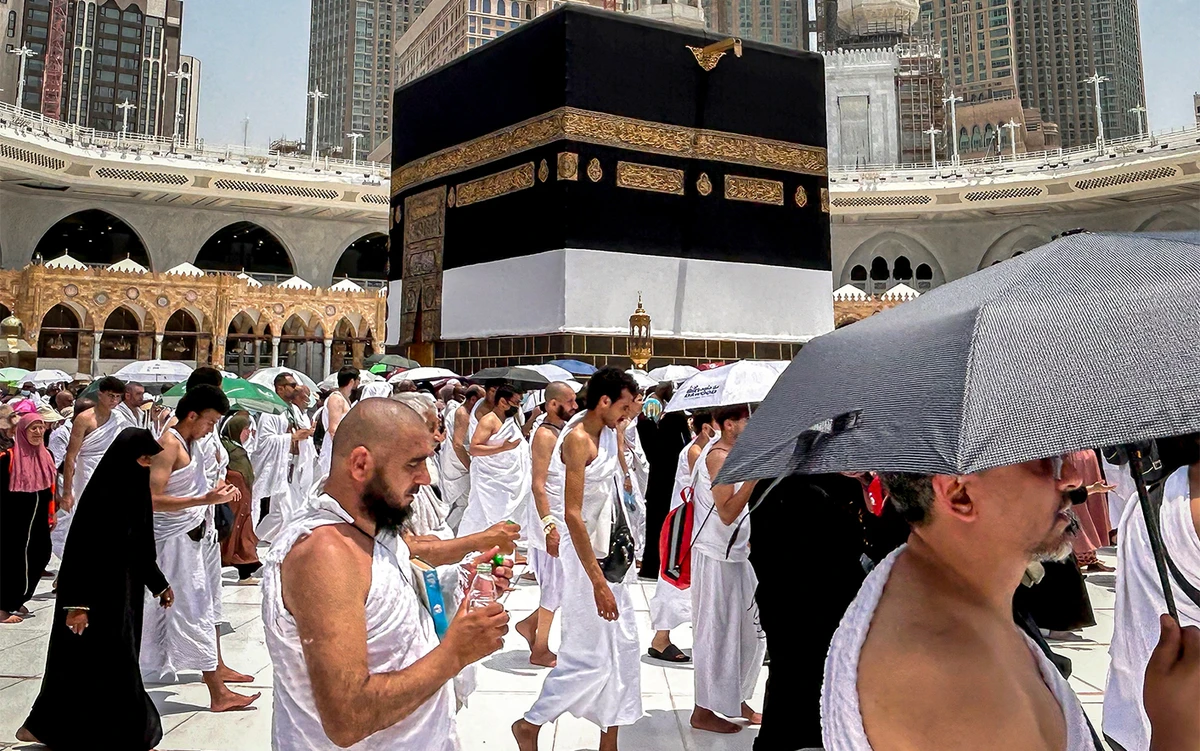
Muslim worshippers walk around the Kaaba, Islam's holiest shrine, at the Grand Mosque in Saudi Arabia's holy city of Makkah on June 13, 2024. (AFP/File)
Short Url
Updated 30 April 2025
Follow

Saudi official rejects ‘baseless’ reports Pakistani Hajj pilgrims’ funds sent to wrong account

  • News reports claimed thousands of Pakistani pilgrims’ funds mistakenly sent to an account linked to OPEC
  • Saudi official says Kingdom’s electronic Hajj platform ensures “highest standards of transparency and accuracy“

ISLAMABAD: An official at Saudi Arabia’s Ministry of Hajj and Umrah on Tuesday rejected reports that Hajj funds of thousands of Pakistani pilgrims had been transferred to the wrong bank account, reiterating that the Kingdom’s electronic Hajj system operated with the “highest standards of transparency.”

Local news outlets this month published reports that Pakistani pilgrims could face delays in the Hajj journey as millions of Saudi Riyals meant for their expenses were mistakenly sent to an account linked to the Organization of the Petroleum Exporting Countries (OPEC) instead of Saudi Arabia’s Ministry of Hajj. 

This year’s annual pilgrimage will take place in June, with nearly 89,000 Pakistanis expected to travel to Saudi Arabia under the government scheme and 23,620 Pakistanis through private tour operators. The total quota granted to Pakistan was 179,210, which could not be met. 

“Recent claims in some Pakistani media outlets about ‘Hajj funds being sent to the wrong Saudi account’ are baseless and stem from a misunderstanding of the Hajj account management system and the ministry’s official electronic Hajj platform, which ensures the highest standards of transparency and accuracy,” the Saudi official said in a statement. 

Pakistani Prime Minister Shehbaz Sharif has formed a committee to investigate why the total Hajj quota granted by Saudi authorities to Pakistan could not be utilized, particularly by private tour operators.

The Saudi official said the Hajj ministry had announced arrangements for this year’s pilgrimage at the end of last year’s Hajj season, emphasizing the importance of adhering to timelines for finalizing contracts and services. In meetings with Pakistan’s religious affairs ministry and private Hajj companies, it was agreed that all contracts would be completed according to the approved schedule.

“While Pakistan’s Ministry of Religious Affairs successfully completed all its pilgrims’ contracts without any notable challenges, a number of Pakistani [private] companies failed to finalize their pilgrims’ contracts within the designated time frame,” the Saudi official said.

“This has been observed in past seasons as well and resulted in the inability to complete entry procedures for these pilgrims to perform Hajj in the Kingdom.”

The Saudi official said it is working in “high-level coordination” with Pakistani authorities to complete Hajj arrangements.

Pakistan kicked off its Hajj flight operations on Tuesday morning with the first batch of 442 pilgrims departing from Islamabad for Madinah.
Pakistan orders four-day workweek, shuts schools to save fuel amid Middle East oil crisis

Updated 32 min 13 sec ago
Follow

Pakistan orders four-day workweek, shuts schools to save fuel amid Middle East oil crisis

  • The development comes as ongoing US-Israeli strikes on Iran disrupt oil supplies in Strait of Hormuz, push prices past $119 a barrel
  • Islamabad bans government purchases, cuts fuel allocation for vehicles as well as workforce in public and private offices by 50 percent

ISLAMABAD: Prime Minister Shehbaz Sharif on Monday announced austerity measures, including a four-day work week, cuts in government expenditures and closure of schools, to offset the impact of rising global oil prices due to an ongoing conflict in the Middle East.

Global fuel supply lines have been disrupted in the Strait of Hormuz, which supplies nearly a fourth of world oil consumption, after Tehran blocked it following United States-Israeli strikes on Iran and counterattacks against US interests in the Gulf region.

Oil prices surged more than 25 percent globally on Monday to $119.50 a barrel, the highest levels since mid-2022, as some major producers cut supplies and fears of prolonged shipping disruptions gripped the market due to the expanding US-Israeli war with Iran.

In his televised address on Sunday night, Sharif said global oil prices were expected to rise again in the coming days but vowed not to let the people bear their brunt, announcing austerity measures to lessen the impact of fuel price hikes.

“Fifty percent staff in public and private entities will work from home,” he announced, adding this would not be applicable to essential services. “Offices will remain open for four days a week. One-day additional off is being given to conserve oil, but it would not be applicable to banks.”

Sharif didn’t specify working days of the week and the government was likely to issue a notification in this regard.

He said a decrease of 50 percent was being made in fuel allocation for government vehicles immediately for the next two months, but they would not include ambulances and public buses.

“Cabinet members, advisers and special assistants will not draw salaries for the next two months, 25 percent salaries of parliamentarians are being deducted, two-day salaries of Grade 20 and above officers, or those who are paid Rs300,000 ($1,067) a month, are being deducted for public relief,” he said.

Similarly, there will be 20 percent reduction in public department expenses and a complete ban on the purchase of cars, furniture, air conditioners and other goods, according to the prime minister.

Foreign trips of ministers and other government officials will also be banned along with government dinners and iftar buffets, while teleconferences and online meetings will be given priority.

“All schools will be off for two weeks, starting from the end of this week, and all higher education institutions should immediately begin online classes,” he said.

Sharif’s comments were aired hours after Pakistani authorities said the country had “comfortable levels” of petroleum stocks and the supply chains were functioning smoothly, despite intensifying Middle East conflict.

Petroleum Minister Ali Pervaiz Malik said three oil shipments were due to reach Pakistan this week, state media reported.

Meanwhile, Pakistan Navy (PN) launched ‘Operation Muhafiz-ul-Bahr’ to safeguard national energy shipments, the Pakistani military said on Monday, amid disruptions to critical sea lanes due to the conflict.

The navy is conducting escort operations in close coordination with the Pakistan National Shipping Corporation (PNSC), according to the Inter-Services Public Relations (ISPR), the military’s media wing. It is fully cognizant of the prevailing maritime situation and is actively monitoring and controlling the movement of merchant vessels to ensure their safe and secure transit.

“With approximately 90 percent of Pakistan’s trade conducted via sea, the operation aims to ensure that vital sea routes remain safe, secure, and uninterrupted,” the ISPR said on Monday. “Currently, PN ships are escorting 2 x Merchant Vessels, one of which is scheduled to arrive Karachi today.”