



ISLAMABAD: Pakistan kicked off its Hajj flight operations on Tuesday morning with the first batch of 442 pilgrims departing from Islamabad for Madinah under the Makkah Route Initiative, the country’s national airline said in a statement.
Over 89,000 pilgrims will travel under the government’s scheme during Pakistan’s 33-day-long Hajj flight operations. Pilgrims will travel to Makkah and Madinah via 342 flights in total, with the last one departing from Pakistan on May 31.
“The first Hajj flight for this year, Pakistan International Airlines (PIA) flight PK-713 carrying 442 pilgrims, departed under the Route to Makkah scheme from Islamabad International Airport today (Tuesday) at 4:45 am,” a PIA spokesperson said.

Pakistan’s Minister for Religious Affairs Sardar Muhammad Yousaf (left) and Saudi Ambassador Nawaf bin Said Al-Malki (right) arrive at the New Islamabad International Airport to bid farewell to Hajj pilgrims in Islamabad on April 29, 2025. (Photo courtesy: MORA/Handout)
Federal Minister for Religious Affairs Sardar Muhammad Yousaf and Saudi Ambassador to Pakistan Nawaf bin Said Al-Malki bid farewell to the pilgrims at the airport.
The Makkah Route Initiative is designed to streamline immigration processes by enabling pilgrims to complete official travel formalities at their departure airports. Initially tested in Islamabad in 2019, the program was later expanded to Karachi, benefitting tens of thousands of Pakistani travelers. This saves pilgrims several hours upon arrival in the Kingdom, as they can simply enter the country without having to go through immigration again.
Around 50,500 Pakistani pilgrims will travel to Saudi Arabia under the initiative this year. The scheme was launched in 2019 by the Saudi Ministry of Hajj and Umrah and has been implemented in five countries: Pakistan, Malaysia, Indonesia, Morocco and Bangladesh.
A total of 28,400 pilgrims will leave for Saudi Arabia through 100 flights from the Islamabad airport, Pakistan’s religious affairs ministry said. Seven special immigration counters have been set up at the Islamabad airport to facilitate pilgrims under the Makkah Route Initiative.
The remaining 22,500 pilgrims will avail the scheme at the Jinnah International Airport in Karachi.
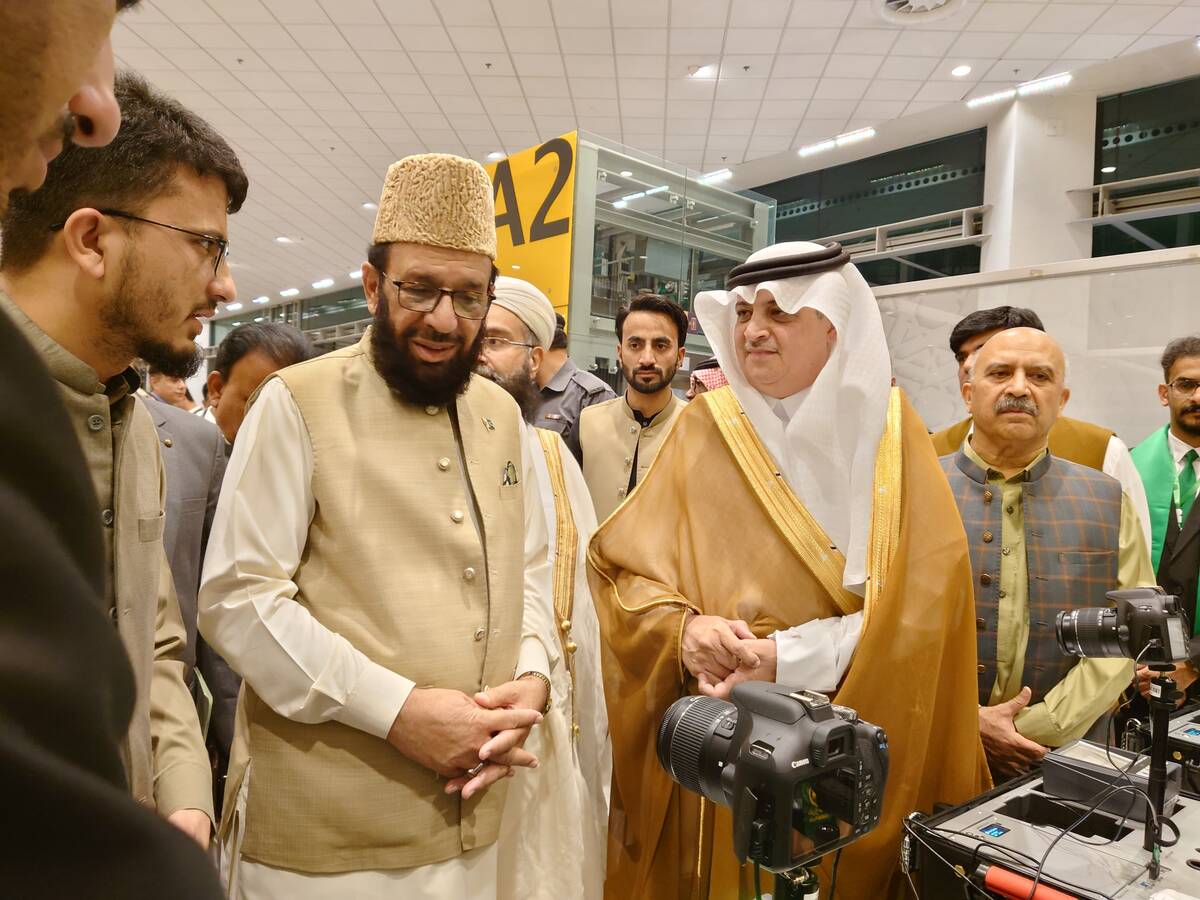
Officials brief Pakistan’s Minister for Religious Affairs Sardar Muhammad Yousaf (2R) and Saudi Ambassador Nawaf bin Said Al-Malki (3R) on the immigration process as they arrive at the New Islamabad International Airport to bid farewell to Hajj pilgrims in Islamabad on April 29, 2025. (Photo courtesy: MORA/Handout)
Yousaf advised Pakistani pilgrims to strictly adhere to Saudi Arabia’s laws and respect the local culture during the annual Islamic pilgrimage.
“As Hajj pilgrims, you are traveling to the sacred land as the guests of Allah and ambassadors of Pakistan, and you are urged to respect the laws and culture of Saudi Arabia,” the minister said in a televised address, as he bid farewell to the pilgrims.
Yousaf said he would “soon” travel to Saudi Arabia to review Hajj arrangements.
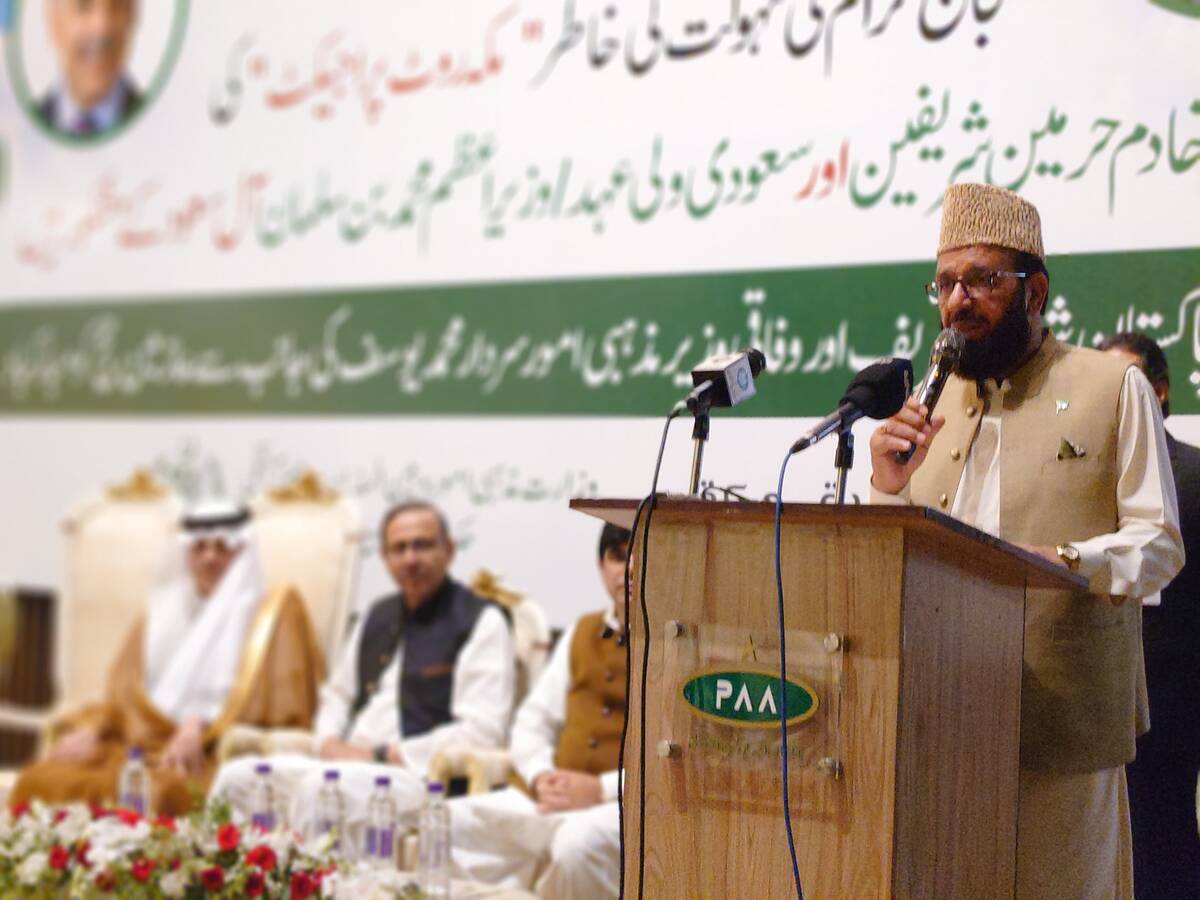
Pakistan’s Minister for Religious Affairs Sardar Muhammad Yousaf speaks to pilgrims ahead of their departure for Madinah for Hajj 2025, at the New Islamabad International Airport in Islamabad on April 29, 2025. (Photo courtesy: MORA/Handout)
“I will take every possible measure to resolve the issues faced by Pakistani pilgrims in Saudi Arabia and will personally be among them to provide facilities,” he added.
Yousaf said the government was striving to extend the Makkah Route Initiative facilities to more Pakistani cities in the future.
“I am thankful to the Custodian of the Two Holy Mosques, King Salman bin Abdulaziz Al Saud, and Crown Prince Mohammed bin Salman bin Abdulaziz, for the excellent arrangements,” he added.
Yousaf said each pilgrim was provided a mobile SIM card that contains an application, which can be used to guide pilgrims with directions in case they lose their way in Mina.

Pakistan’s Minister for Religious Affairs Sardar Muhammad Yousaf and Saudi Ambassador Nawaf bin Said Al-Malki with other officials gesture for a group photo at the New Islamabad International Airport in Islamabad on April 29, 2025, as they bid farewell to pilgrims for Hajj 2025. (Photo courtesy: MORA/Handout)
Meanwhile, the second Hajj flight of the day departed from Pakistan’s eastern city of Lahore, carrying 150 pilgrims to Madinah at 8:00 am via AirSial airline’s flight PF-7700.
Six flights are scheduled to depart from Pakistan for the Kingdom on Tuesday: two from Lahore and one each from Islamabad, Karachi, Quetta and Multan.
This year’s annual pilgrimage will take place in June, with nearly 89,000 Pakistanis expected to travel to Saudi Arabia under the government scheme and over 23,620 Pakistanis expected to perform Hajj through private tour operators.


