

Pakistan Navy launches ‘Operation Muhafiz-ul-Bahr’ to safeguard energy shipments

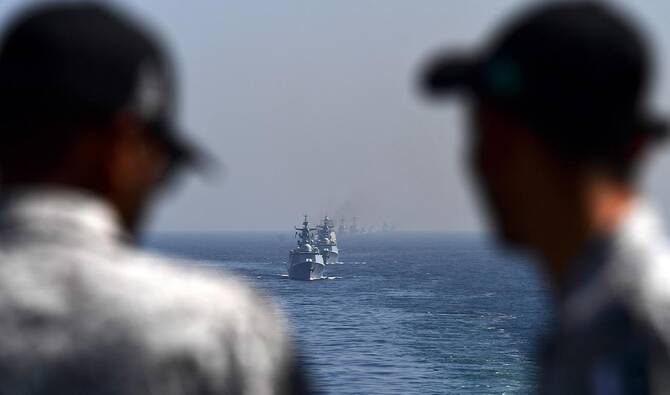
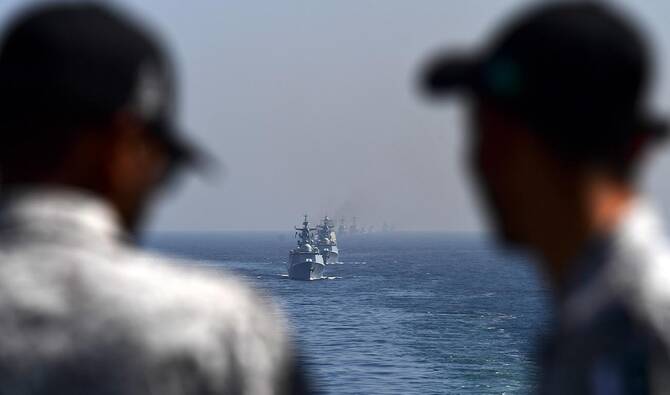
China's Navy Ship (CNS) Baotou and others vessels from participating countries take part during the multinational naval exercise AMAN-25 in the Arabian Sea near Pakistan's port city of Karachi on February 10, 2025, as more than 50 countries participating with ships and observers. (AFP/ file)
Short Url
Updated 09 March 2026
Follow

Pakistan Navy launches ‘Operation Muhafiz-ul-Bahr’ to safeguard energy shipments

  • Petroleum Minister Ali Malik said three oil shipments were due to reach Pakistan this week amid disruptions due to Middle East conflict
  • Pakistani military says naval ships are currently escorting two merchant vessels, one of which is scheduled to arrive in Karachi on Monday

ISLAMABAD: Pakistan Navy (PN) has launched ‘Operation Muhafiz-ul-Bahr’ to safeguard national energy shipments, the Pakistani military said on Monday, amid disruptions to critical sea lanes due to the ongoing Middle East crisis.

Global fuel supply chains have been affected by disruptions in the Strait of Hormuz, a strategic waterway between Iran and Oman and a key transit route, that has been blocked by Tehran amid ongoing United States-Israeli strikes on Iran and its counter attacks against several Gulf states.

Oil prices surged more than 25 percent past globally on Monday to $119.50 a barrel, the highest levels since mid-2022, as some major producers cut supplies and fears of prolonged shipping disruptions gripped the market due to the expanding US-Israeli war with Iran.

Pakistan’s Petroleum Minister Ali Pervaiz Malik said that three oil shipments were due to reach Pakistan this week, state media reported, as Islamabad grappled with a potential fuel shortage and the impact of surging oil prices worldwide.

“In view of the evolving regional maritime security environment and potential disruptions to critical sea lanes, Pakistan Navy has launched Operation Muhafiz-ul-Bahr to counter multidimensional threats to national shipping and maritime trade,” the Inter-Services Public Relations (ISPR), the military’s media wing, said in a statement.

“The initiative has been undertaken to ensure the uninterrupted flow of national energy supplies and the security of Sea Lines of Communication (SLOCs).”

The statement came hours after Pakistani authorities said the country has “comfortable levels” of petroleum stocks and the supply chains are functioning smoothly, despite intensifying Middle East conflict.

The navy is conducting escort operations in close coordination with the Pakistan National Shipping Corporation (PNSC), according to the ISPR. It is fully cognizant of the prevailing maritime situation and is actively monitoring and controlling the movement of merchant vessels to ensure their safe and secure transit.

“With approximately 90 percent of Pakistan’s trade conducted via sea, the operation aims to ensure that vital sea routes remain safe, secure, and uninterrupted. Currently, PN ships are escorting 2 x Merchant Vessels, one of which is scheduled to arrive Karachi today,” the ISPR said on Monday.

“Pakistan Navy remains fully prepared to respond emerging maritime security challenges and is committed to ensuring the safety of national shipping and regional maritime security.”


Pakistan reviews austerity measures amid Middle East crisis, urges strict nationwide implementation

Updated 11 March 2026
Follow

Pakistan reviews austerity measures amid Middle East crisis, urges strict nationwide implementation

  • Deputy Prime Minister Ishaq Dar chairs review meeting of austerity steps
  • Officials briefed on salary cuts, school closures, four‑day week, petrol conservation

ISLAMABAD: Pakistan’s government on Wednesday assessed progress on a sweeping set of austerity measures introduced to mitigate the country’s economic strain from sharply rising global oil prices and supply disruptions linked to the ongoing war in the Middle East.

Prime Minister Shehbaz Sharif this week announced a series of austerity steps, including a four‑day work week for government offices, requiring 50  percent of staff to work from home, cutting fuel allowances for official vehicles by half, grounding up to 60  percent of the government fleet and closing all schools for two weeks to conserve fuel amid the global oil crisis.

The measures were unveiled in response to global oil market volatility triggered by the conflict involving the United States, Israel and Iran, which has disrupted supply routes such as the Strait of Hormuz and pushed crude prices sharply higher, straining Pakistan’s heavily import‑dependent energy sector.

“The meeting stressed the importance of strict and transparent adherence to the austerity measures, promoting fiscal responsibility and prudent use of public resources,” Deputy Prime Minister and Foreign Minister Senator Mohammad Ishaq Dar said in a statement.

He was chairing a meeting of the Committee for Monitoring and Implementation of Conservation and Additional Austerity Measures, constituted under the directions of the PM, bringing together federal and provincial officials to review execution of the broad cost‑cutting plan. 

Dar emphasized the government’s commitment to enforcing the PM’s austerity steps nationwide. The committee’s review also covered reductions in departmental expenditure, deductions from salaries of senior officials earning over Rs. 300,000 ($1,120), and coordination with provincial administrations to ensure uniform implementation of the plan.

Participants at the meeting reiterated that all ministries and divisions must continue strict monitoring and reporting, with transparent oversight mechanisms, as Pakistan navigates the economic pressures from the prolonged Middle East crisis and its fallout on global energy and trade markets.