



ISLAMABAD: Pakistani Foreign Office Spokesman Shafqat Ali Khan said on Thursday the country’s armed forces were “fully prepared” to defend its sovereignty as troops from Pakistan and India exchanged fire overnight across the Line of Control in disputed Kashmir.
Relations have plunged to their lowest level in years, with India accusing Pakistan of supporting “cross-border terrorism” after gunmen carried out the worst attack on civilians in Indian-administered Kashmir for a quarter of a century. Pakistan has rejected India’s accusations as being “devoid of rationality,” saying they were made without any “credible investigation” or “verifiable evidence.”
Both nations have since announced tit-for-tat measures, including closing the only open land border they share, and suspending special South Asian visas that enabled people to travel between them. They have declared each other’s defense advisers in missions in New Delhi and Islamabad persona non grata and reduced the strength of their embassies.
India has also suspended a critical treaty that regulated the sharing of water from the Indus River and its tributaries, with Pakistan warning that any attempt to stop or divert its water would be considered an act of war and met with “full force.” Pakistan has paused all bilateral agreements, suspended all trade with India, including to and from any third country and closed its airspace to all Indian-owned and Indian-operated airlines.
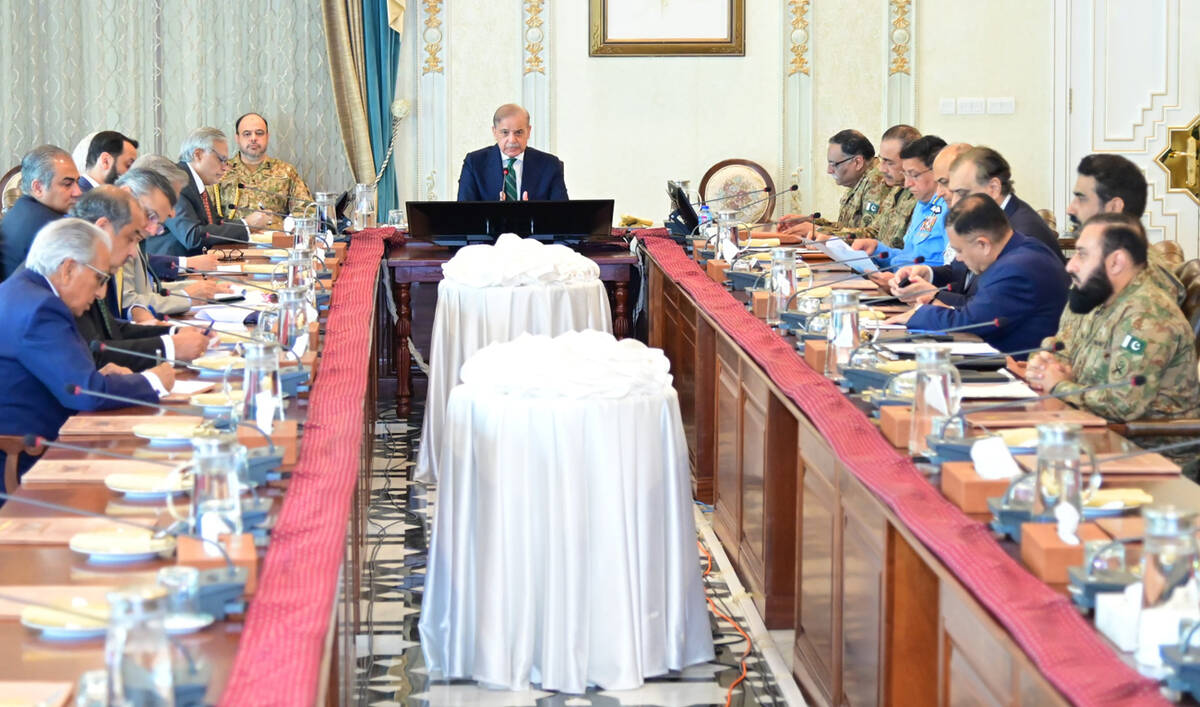
Prime Minister Shehbaz Sharif chairs a meeting of the National Security Committee in Islamabad, Pakistan on April 24, 2025. (PID)
“The National Security Committee underscored that Pakistan, its armed forces, remain fully capable and prepared to defend its sovereignty and territorial integrity against any misadventure,” the foreign office spokesman told a weekly news briefing, referring to Thursday’s meeting of top Pakistani military and civilian officials to finalize Islamabad’s response to India’s accusations and escalatory actions.
“The Pakistani nation remains committed to peace, but will never allow anyone to transgress its sovereignty, security, dignity and their inalienable rights.”
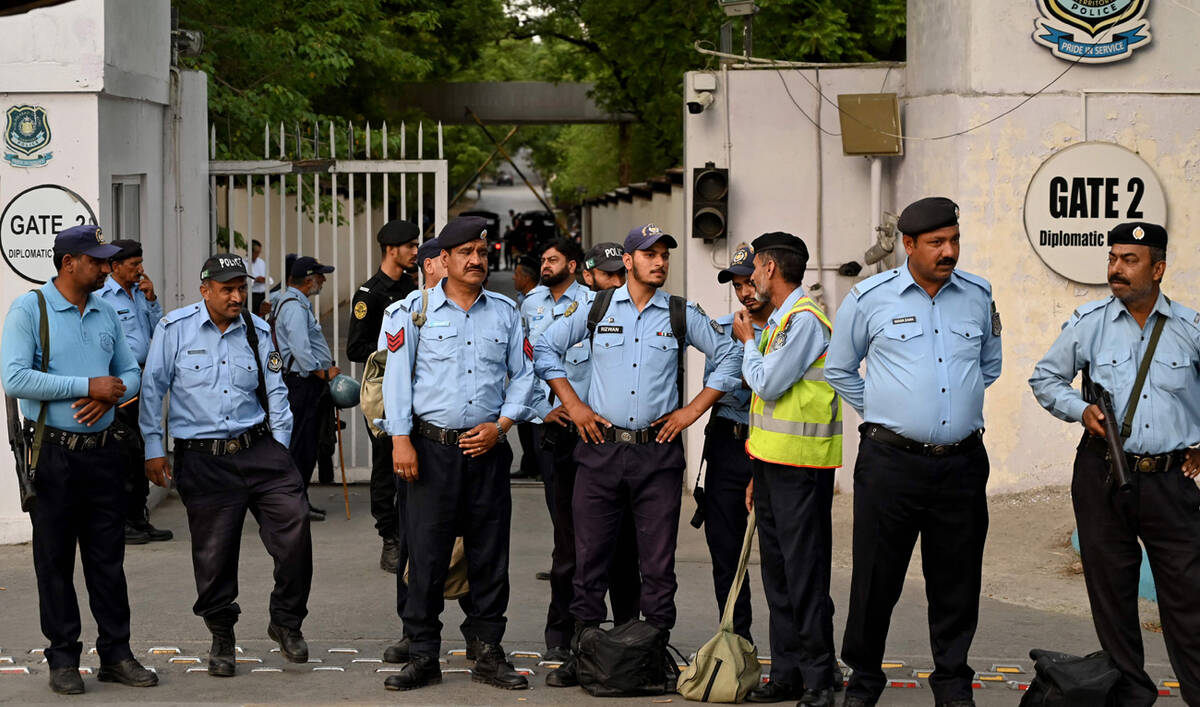
Pakistani security personnel stand guard at the diplomatic enclave near the Indian High Commission in Islamabad on April 24, 2025, during an anti-India protest. (AFP)
There is growing concern since Tuesday’s attack that India could conduct a military strike in Pakistani territory as it did in 2019 in retaliation for a suicide bombing in Pulwama in Indian-administered Kashmir in which at least 40 Indian paramilitary police were killed. Pakistan had denied official complicity in that assault. Several leaders of Prime Minister Narendra Modi’s Hindu nationalist Bharatiya Janata Party have also variously called for military action against Pakistan this week.
Speaking to an international media outlet on Thursday evening, Pakistani Defense Minister Khawaja Muhammad Asif said Islamabad would respond “in kind and with full force” to any Indian incursion on the pretext of Tuesday’s militant attack.
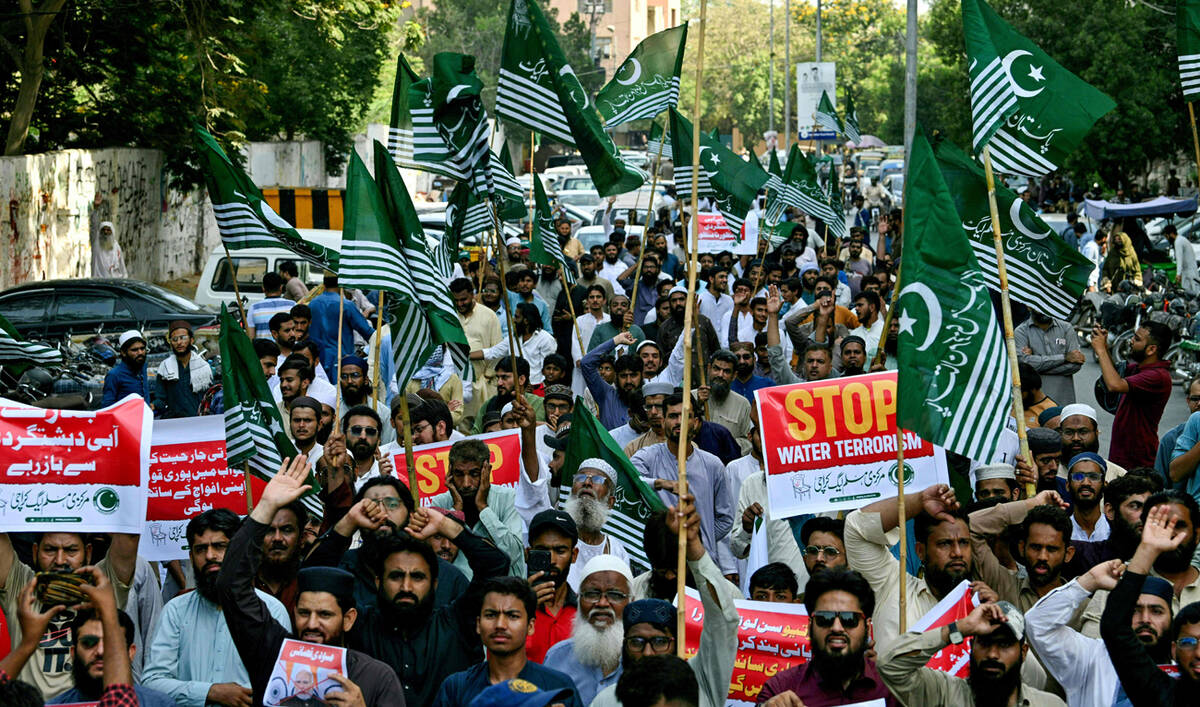
People shout slogans during an anti-India protest in Karachi on April 24, 2025. (AFP)
Meanwhile, Syed Ashfaq Gilani, a government official in Pakistan-administered Kashmir known as Azad Kashmir, told AFP Friday that troops exchanged fire along the Line of Control (LOC), which runs 742km (460 miles), dividing Indian- and Pakistan-controlled Kashmir, and acts as part of the de facto border between the two countries. The military frontline, which runs through inhospitable terrain, has separated hundreds of families and even divided villages and mountains.
“There was no firing on the civilian population,” Gilani added.
India’s army confirmed there had been limited firing of small arms that it said had been “initiated by Pakistan,” adding it had been “effectively responded to.”

People carry baggage as they travel toward the Attari-Wagah border crossing on the India-Pakistan border, near Amritsar, India, April 25, 2025. (REUTERS)
India’s army chief is expected to review security arrangements on Friday and visit the site in the Pahalgam area of Tuesday’s attack, Reuters reported on Friday, quoting army sources.
The two countries both claim Muslim-majority Kashmir in full but rule it in part. India, a Hindu majority nation, has long accused Muslim-majority Pakistan of aiding separatists who have battled security forces in its part of the territory — accusations Islamabad denies.


