

Over 40 Indian firms have established regional HQs in Saudi Arabia, official reveals

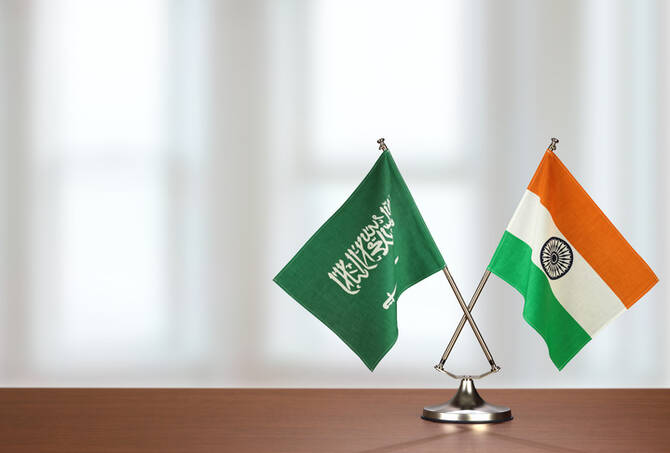
India and Saudi Arabia have close economic ties. Getty
Short Url
Updated 22 April 2025
Follow

Over 40 Indian firms have established regional HQs in Saudi Arabia, official reveals

RIYADH: More than 40 Indian companies have established headquarters in Saudi Arabia, with additional facilities in the defense sector expected in the near future, according to a top official.   

Abdulaziz Al-Qahtani, chairman of the Saudi-Indian Business Council, made the comments as Indian Prime Minister Narendra Modi arrived in Jeddah on Tuesday for a two-day visit. 

He is expected to meet with Crown Prince and Prime Minister Mohammed bin Salman during the trip.  

Al-Qahtani said the visit aligns with Saudi Arabia’s broader push to localize defense spending, boost technology transfer, and expand domestic investment across sectors that contribute to national gross domestic product.  

In an interview with Al-Eqtisadiah, Al-Qahtani said Saudi investments in India are valued at around $10 billion, including stakes by the Public Investment Fund in major companies such as Reliance Jio Platforms, Reliance Retail, OYO Hotels, and the Health Technology Co. 

“Al-Qahtani pointed out that the Saudi-Indian Business Council is working to encourage Indian investment in Saudi Arabia, identify investment opportunities in India, and transfer and localize technology in various sectors, such as space and defense,” Al-Eqtisadiah reported.   

“It also aims to exchange expertise in education and training, benefit from mutual expertise in tourism and entertainment, and cooperate in the healthcare sector, pharmaceutical and medical supplies industries, and enhance integration in logistics services,” the report added.  

Al-Qahtani added that India has invited Saudi Arabia to invest in its growing defense sector, which has opened up to private investors in recent years.  

Indian firms that have already established regional bases in Saudi Arabia include those working in automobile and bus manufacturing.  

The move by the more than 40 Indian firms comes amid a wave of multinational companies establishing regional bases in the Kingdom. 

Almost 600 international companies have set up bases in Saudi Arabia since 2021, including Northern Trust, IHG Hotels & Resorts, and Deloitte, the Saudi Press Agency reported in March. 

The growth was fueled by the government-backed Riyadh regional headquarters program, which offers incentives such as a 30-year corporate income tax exemption and withholding tax relief, alongside regulatory support for multinationals operating in the Kingdom. 

India remains a key energy partner for the Kingdom, as it imported 14 percent of Saudi Arabia’s crude oil production and 18 percent of its liquefied natural gas exports in the past year.    

Bilateral trade has also expanded in sectors such as chemicals, construction, and contracting, as well as healthcare training, and information technology.   

Total trade between the two countries reached around $42 billion in the financial year 2023-24. Of this, Indian exports to Saudi Arabia accounted for approximately $11 billion, consisting of engineering products, rice, and petroleum derivatives, as well as chemicals, food and medical supplies, and textiles.    

Saudi exports to India totaled SR31 billion ($8.2 billion), including crude oil, liquefied natural gas, fertilizers, chemicals, and plastics.   


First EU–Saudi roundtable on critical raw materials reflects shared policy commitment

Updated 16 January 2026
Follow

First EU–Saudi roundtable on critical raw materials reflects shared policy commitment

RIYADH: The EU–Saudi Arabia Business and Investment Dialogue on Advancing Critical Raw Materials Value Chains, held in Riyadh as part of the Future Minerals Forum, brought together senior policymakers, industry leaders, and investors to advance strategic cooperation across critical raw materials value chains.

Organized under a Team Europe approach by the EU–GCC Cooperation on Green Transition Project, in coordination with the EU Delegation to Saudi Arabia, the European Chamber of Commerce in the Kingdom and in close cooperation with FMF, the dialogue provided a high-level platform to explore European actions under the EU Critical Raw Materials Act and ResourceEU alongside the Kingdom’s aspirations for minerals, industrial, and investment priorities.

This is in line with Saudi Vision 2030 and broader regional ambitions across the GCC, MENA, and Africa.

ResourceEU is the EU’s new strategic action plan, launched in late 2025, to secure a reliable supply of critical raw materials like lithium, rare earths, and cobalt, reducing dependency on single suppliers, such as China, by boosting domestic extraction, processing, recycling, stockpiling, and strategic partnerships with resource-rich nations.

The first ever EU–Saudi roundtable on critical raw materials was opened by the bloc’s Ambassador to the Kingdom, Christophe Farnaud, together with Saudi Deputy Minister for Mining Development Turki Al-Babtain, turning policy alignment into concrete cooperation.

Farnaud underlined the central role of international cooperation in the implementation of the EU’s critical raw materials policy framework.

“As the European Union advances the implementation of its Critical Raw Materials policy, international cooperation is indispensable to building secure, diversified, and sustainable value chains. Saudi Arabia is a key partner in this effort. This dialogue reflects our shared commitment to translate policy alignment into concrete business and investment cooperation that supports the green and digital transitions,” said the ambassador.

Discussions focused on strengthening resilient, diversified, and responsible CRM supply chains that are essential to the green and digital transitions.

Participants explored concrete opportunities for EU–Saudi cooperation across the full value chain, including exploration, mining, and processing and refining, as well as recycling, downstream manufacturing, and the mobilization of private investment and sustainable finance, underpinned by high environmental, social, and governance standards.

From the Saudi side, the dialogue was framed as a key contribution to the Kingdom’s industrial transformation and long-term economic diversification agenda under Vision 2030, with a strong focus on responsible resource development and global market integration.

“Developing globally competitive mineral hubs and sustainable value chains is a central pillar of Saudi Vision 2030 and the Kingdom’s industrial transformation. Our engagement with the European Union through this dialogue to strengthen upstream and downstream integration, attract high-quality investment, and advance responsible mining and processing. Enhanced cooperation with the EU, capitalizing on the demand dynamics of the EU Critical Raw Materials Act, will be key to delivering long-term value for both sides,” said Al-Babtain.

Valere Moutarlier, deputy director-general for European industry decarbonization, and directorate-general for the internal market, industry, entrepreneurship and SMEs at European Commission, said the EU Critical Raw Materials Act and ResourceEU provided a clear framework to strengthen Europe’s resilience while deepening its cooperation with international partners.

“Cooperation with Saudi Arabia is essential to advancing secure, sustainable, and diversified critical raw materials value chains. Dialogues such as this play a key role in translating policy ambitions into concrete industrial and investment cooperation,” she added.