





RIYADH: The Saudi Film Commission has introduced a new initiative, Cinamaa, to promote film studies and support people entering the industry.
A launch event was held on Wednesday at the Cultural Palace in Riyadh, hosted by the commission and National Film Archive.
The Cinamaa website, a platform intended to help educate aspiring filmmakers, critics, and film enthusiasts, allowing them to share their work, gives users access to articles, research studies, discussions, workshops, and short films on various topics related to film.
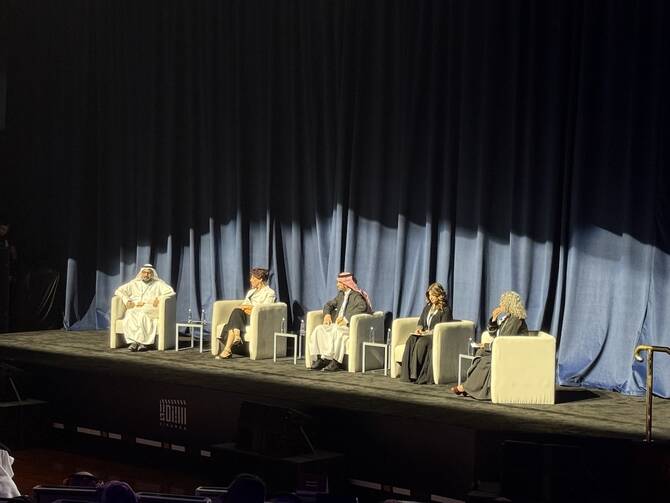
Following a panel discussion in which she spoke on the importance of film studies in academia, Salma Tarek, professor of literature at the University of Cairo’s French language department, told Arab News: “We need to distinguish between academic studies, meaning university-level education, and studies at film institutes, which aim to train technicians and filmmakers.”
The latter is very important and widely available, she said, but cinema studies at the school and university levels are still lacking.
“Abroad, for example, children in elementary school have reading and literacy programs that include a section on how to ‘read’ a film. They learn what a shot is, what camera movement means, because these have become part of the basic language of how we interpret the world around us,” Tarek said.
“Cinema is no longer just an art form; it is a form of discourse. We are constantly exposed to it, and it’s very important that we learn how to decode its messages.”
Tarek said that these are messages that are constantly being sent to viewers, who must receive them in an open and thoughtful way.
“The university is the institution best suited to play this role.”
When asked what can be done to push this agenda forward, the professor said that first, there must be conviction in the value of cinema studies, a task she said is “not simple.”
The entry point, however, is in interdisciplinary studies.
“For example, literature departments can offer courses on the relationship between performance art and cinema. In history departments, there can be a course on cinema and history. Gradually, these borders will open up, and we will start to develop a cinematic culture within academic institutions.”
These institutions will then have the capabilities and foundation to establish dedicated departments for cinema studies, which Tarek said is the “ultimate goal.”
The panel also discussed the need for more original Arabic content in addition to translations of foreign films.
Tareq Al-Khawaji, film critic and cultural adviser at the King Abdulaziz Center for World Culture, said that young Saudis interested in screenplay writing have a great opportunity to develop scripts that can contribute to bolstering the cinematic scene in the Kingdom.
The launch of Cinamaa was followed by the signing of two memoranda of understanding between the Saudi Film Commission and its partners, the Saudi Broadcasting Authority and the International Federation of Film Critics.
The commission’s CEO Abdullah Al-Qahtani took the stage with Mohammed Fahad Al-Harthi, SBA CEO and former editor in chief of Arab News, and Fipresci CEO Ahmad Shawky.
The establishment of the Cinema Critics Association was also announced, the first independent professional entity dedicated to film criticism in Saudi.
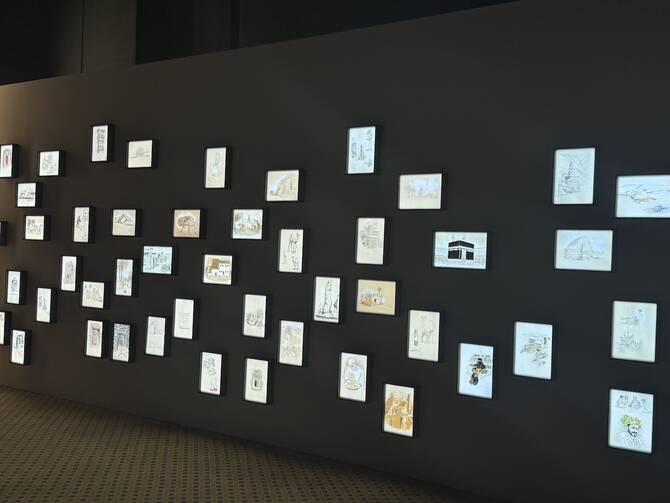
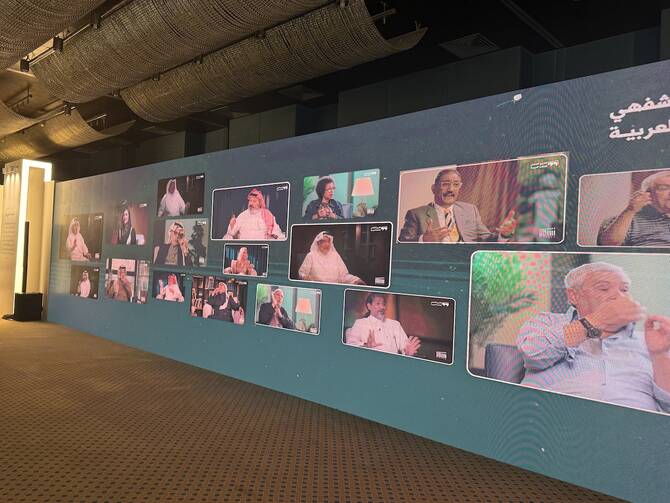
At the end of the night, the doors opened to welcome guests into an exhibition on film history in the Arab world.


