
RIYADH: London Business School is set to open an office in Riyadh in the coming months, a move its dean says reflects the institution’s long-term commitment to supporting Saudi Arabia’s Vision 2030 and the country’s accelerating demand for executive education.
The new location will deliver tailored executive education programs for both public and private sector organizations, building on London Business School’s expanding presence in the Kingdom.
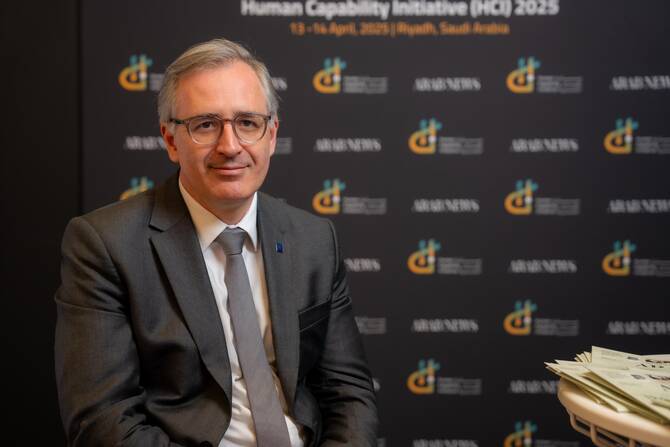
“Opening a third location is a big move for us, and we are making this investment because we strongly believe in the future of Vision 2030,” said Sergei Guriev, dean of London Business School, in an interview with Arab News on the sidelines of the Human Capability Initiative in Riyadh.
“We want to be part of this transformation, and we want to help enhance human capability of Saudi public and private sector organizations through providing leadership and business skills,” he added.
The expansion will mark the school’s third global location and its second in the Middle East after Dubai. It will be managed by Florin Vasvari, appointed executive dean of executive education, Middle East, and Helen Kerkentzes, associate dean of executive education, who will serve as general manager.
“We’ve grown our relationships with Saudi public and private sector organizations a lot. We have many Saudi students coming to our campuses in London and Dubai, but we also teach programs for Saudi corporations as well as, public sector organizations in London and in Riyadh,” Guriev said.
He explained the school runs both open-enrollment and custom-designed programs to meet the needs of Saudi companies.
“Open executive education programs are when students can apply from all sectors of Saudi economies,” he said. “But we also design custom customer-centric programs for Saudi corporations.”
In recent years, the number of Saudi executives enrolling in open-enrollment Executive Education programs has surged by over 250 percent.
Guriev noted that nearly one-third of LBS’s global executive education clients are either Saudi individuals or companies.
“For us, Saudi Arabia is the biggest country for our executive education,” he said.
The Kingdom has also become the top source of students at the school’s Dubai campus.
“Saudi nationals are the biggest national group and account in the last intake, they account for about 40 percent of the student body in Dubai, in our executive MBA program in Dubai,” Guriev noted.
He said the decision to open an office in Riyadh was part of a broader strategic move backed by the school’s leadership.
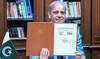
“When I came on board as a dean, I talked to the board, the governing body of the London Business School. In November, we made the decision to proceed with opening an office,” he said. “In April, we stand on stage with three ministers, holding our commercial registration and investment license, allowing us to operate in Saudi Arabia.”
On gender inclusion, Guriev praised the Kingdom’s progress and reaffirmed LBS’s commitment to advancing female leadership.
“We drastically increase the participation of women in our programs in Saudi Arabia and in London. For us it’s very important and we praise the focus of the government on increasing of economic activity of women,” he said.
“This is one of the great successes of recent years of the Kingdom of Saudi Arabia. And we want to be part of the success, providing more programs for women, not only in London but here on the ground in Riyadh, making it easier for female business leaders to take programs from London Business School,” Guriev added.