
RIYADH: As the Kingdom’s Vision 2030 continues to push ahead with its real estate goals, marine sustainability is highlighting the growing importance of integrating science with urbanization.
Along Jeddah’s Red Sea Coast, developers are planning for their upcoming projects to embrace an innovative approach to real estate, one that aligns with tourism, economic return, and importantly, marine ecosystems.
According to Vision 2030, the efforts under the framework of the National Red Sea Sustainability Strategy place great emphasis on the intersectionality of marine life with sectors such as real estate.
“Through marine-protected areas, habitat restoration, and innovative sustainable projects, Saudi Arabia aims to strengthen its position as a leader in marine sustainability while supporting local communities and economic diversification,” states the intiative’s website.
The incorporation of marine sustainability has made its way into real estate in the Kingdom through various streams, from coral preservation to water circulation systems, and has now become a core factor in coastal development.
The move is one that understands long-term real estate value’s close relationship to environmental preservation, particularly in destinations such as Jeddah, where the Red Sea is a primary attraction for locals and tourists alike.
Understanding coral reefs plays a crucial role when real estate developers assess whether the long-term strategy of waterfront destinations is as equally sustainable as it is economically successful.
Dr. Taiba Alamoudi, expert in marine ecology and coastal ecosystems, spoke to Arab News on the importance of coral reefs in these developments, and said: “Coral reefs are irreplaceable natural infrastructure, among the oldest and most diverse ecosystems on the planet … for any waterfront development, a healthy reef is both the product and the protection. Degrade it, and you lose both.”
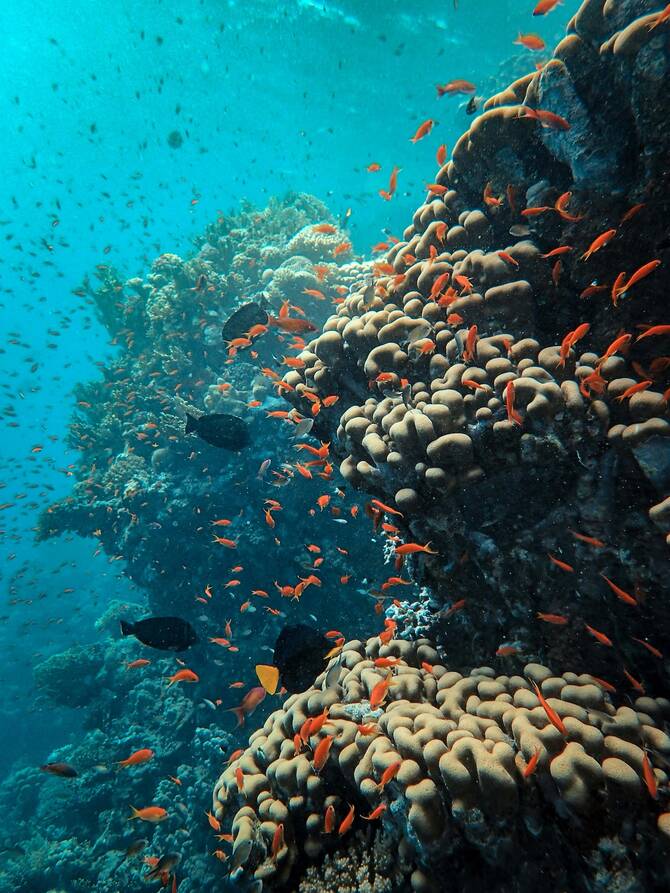
The environmental preservation aspect of these reefs is strategic in terms of investment for real estate developers, as the Kingdom’s Red Sea reefs are among the most thermally resilient globally.

Developers understand the coral reefs are environmentally unique and would strengthen a coastal real estate portfolio.
A destination that has integrated that into its approach is ALMA Destination in North Jeddah, a 3.12 million-sq.-meter waterfront development that took on a marina-led urban concept.
ALMA reflects the Kingdom’s marine sustainability priorities in real estate, not only from government-led initiatives, but from private sector participation as well.
Environmental sustainability has been embedded in the framework of ALMA’s development from the beginning, with marine and environmental calculation determining the canal system design, as well as the development’s water circulation and flushing strategies.
ALMA’s prioritization of marine sustainability during its development include its strategy surrounding coral reefs.
To protect marine ecosystems, coral reefs located within dredging areas were relocated and replanted in offshore marine zones before excavation efforts began.
ALMA also incorporates a canal network that relies on natural tidal movement for water circulation, which in turn allows for continuous water renewal without mechanical intervention, a strategy that helps prevent stagnation while water quality is maintained.
ALMA is one example that mirrors the broader shift toward science-based developments in real estate in the Kingdom.
Matheus Paiva, senior oceanographer at KAUST Beacon Development, told Arab News that science-based calculations and mapping are critical to destinations like the Red Sea.
“Early integration of comprehensive environmental studies is the most critical factor in preventing irreversible ecological damage … this must be paired with visual surveys to accurately map sensitive habitats like coral reefs and seagrass meadows,” he said.
“This data-first approach enables what we call informed design.” Paiva added.
He went on to explain that failing to plan with consideration for coral and overall marine life can create a series of complex structural and marine-life issues.
“If not properly managed, treated or untreated wastewater from surrounding urban centers introduces excess nutrients that can trigger harmful algal blooms, further degrading water quality,” Paiva said, adding: “With proper planning, these water quality challenges can be mitigated through science-backed design and long-term water quality monitoring programs.”
ALMA Destination’s coral reef relocation strategy was no easy feat, Paiva emphasized, saying: “It is not simply a matter of moving corals; you must match the depth, light, flow regimes, and water quality of the new site to the original habitat as closely as possible.”
The role that developers play in understanding marine life through thorough consultations with experts from different entities is fundamental to ensuring that the Kingdom’s Vision 2030 for sustainability is pursued with meticulous effort.
Alamoudi called this role “transformative,” adding: “The developers defining the next generation of coastal real estate are those treating marine ecosystems as core assets on the balance sheet, not line items in a compliance report.”