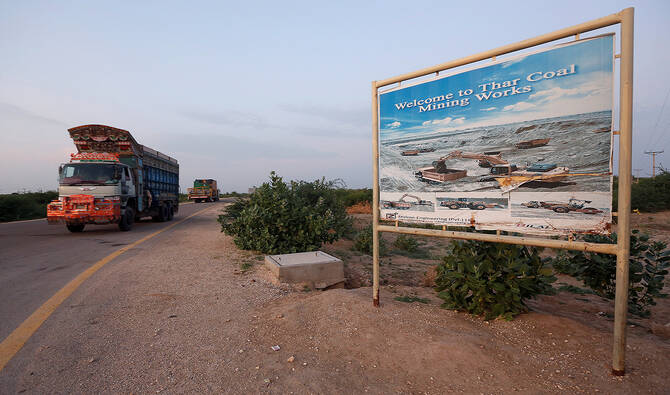
ISLAMABAD: A South Africa-based Pakistani entrepreneur is investing in a coal-to-gasification plant at the Thar coalfields in southern Sindh province to generate cleaner energy and reduce Pakistan’s reliance on imported fuels, state media reported on Tuesday.
The announcement follows Pakistan’s high-profile mining summit in Islamabad, which brought together investors, policymakers and industry leaders from around the world to explore the country’s vast untapped mineral wealth.
Businesswoman Tabassum Pardesi’s investment signals a renewed effort to harness Pakistan’s Thar coal reserves through gasification technology, which converts coal into synthetic gas for industrial use. The initiative can reduce energy costs, alleviate the country’s growing fuel import bill and provide a domestic alternative to costly liquefied natural gas.
“Tabassum ... is now spearheading a landmark investment initiative to establish a coal-to-gasification plant at the Thar coalfields,” the Associated Press of Pakistan (APP) said in its report.
“The venture, in collaboration with leading South African mining conglomerates, aims to generate cleaner energy, reduce Pakistan’s reliance on imported fuels, and unlock long-term economic opportunities for the region.”
It highlighted that Pardesi, who is known for co-founding the South African Skywise Airlines, has submitted a proposal for the project to the Pakistani authorities and also initiated a “strategic lobbying” campaign during the minerals summit.
The report said her goal was to secure high-level public-private partnerships, streamline regulatory pathways and ensure alignment with Pakistan’s national energy and climate resilience goals.
Pakistan aims for a low-carbon future, targeting 60 percent renewable energy and 30 percent electric vehicle sales by 2030. It plans a 15 percent emissions reduction, increasing to 35 percent with international support.
“Pakistan has the potential to become a global mining powerhouse,” APP quoted Pardesi as saying. “With its abundant natural resources and a youthful workforce, all we need is visionary execution and international collaboration — and I’m here to help make that happen.”
The Thar desert is home to the world’s largest lignite coal reserves, estimated at 175 billion tons, equivalent to 50 billion tons of oil and 2,000 trillion cubic feet of gas. Pakistan’s mineral sector contributes only 3.2 percent to GDP and 0.1 percent to global mineral exports despite rich mineral resources including salt, copper, gold and coal.


![]()

South Africa-based Pakistani entrepreneur to invest in coal-to-gas plant at Thar coalfields
Short Url
https://arab.news/zfadk
South Africa-based Pakistani entrepreneur to invest in coal-to-gas plant at Thar coalfields
- The project will convert coal into synthetic gas for industrial use
- Initiative can reduce energy costs, alleviate growing fuel import bill
Latest updates


© 2026 SAUDI RESEARCH & PUBLISHING COMPANY, All Rights Reserved And subject to Terms of Use Agreement.