

Saudi Arabia’s Neo Space Group to power Thai Airways with advanced in-flight connectivity

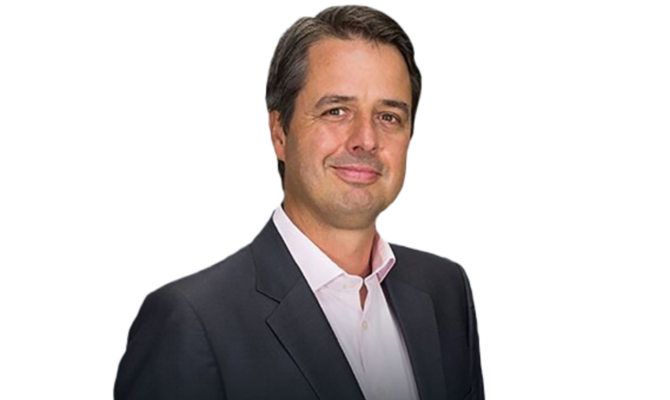
Martijn Blanken, CEO of Neo Space Group
Short Url
Updated 08 April 2025
Follow

Saudi Arabia’s Neo Space Group to power Thai Airways with advanced in-flight connectivity

Neo Space Group, a Public Investment Fund company and Saudi Arabia’s leading commercial space services provider, announced an expanded partnership with Thai Airways International to equip 80 aircraft with its state-of-the-art in-flight connectivity solution.

This announcement builds on the earlier announcement of NSG and Thai Airways collaboration to deliver a seamless in-flight connectivity service, offering market-leading connection speed, global gate-to-gate coverage (where permitted), and a personalized passenger experience through seamless login and exclusive benefits for Royal Orchid Plus members.

Thai Airways’ passengers will benefit from unlimited, high-speed internet access throughout their journey. NSG’s IFC solution leverages the SES Open Orbits network, delivering high-speed, low-latency coverage through both GEO and MEO satellites across the airline’s global routes.

The rollout will begin with Thai Airways’ Boeing 777 fleet, which will be retrofitted starting in Q3 2025. In parallel, the Airbus A321neo fleet currently in production will be line-fitted with the Airbus HBCplus platform, with deliveries starting from Q4 2025.

Building on this momentum, Thai Airways’ Boeing 787 Dreamliner fleet, also in production, will be line-fitted with SPI’s Aeroconnect terminal — a major milestone in NSG and Thai Airways’ joint connectivity strategy. Deliveries for the 787s are scheduled to commence in mid-2026.

Martijn Blanken, CEO of Neo Space Group, said: “Being selected by Thai Airways International highlights the strength and versatility of NSG’s multi-orbit connectivity solutions. We are excited to support Thai Airways in elevating the passenger experience with reliable, high-speed internet. This collaboration marks not only the airline’s resurgence but also its forward-thinking vision, and we are proud to play a role in shaping its future.”

He added: “NSG’s IFC solution will deliver internet speeds of up to 200 Mbps, enabling best-in-class complimentary Wi-Fi streaming for premium class passengers and Royal Orchid Plus members. This investment reflects THAI’s broader strategy, building on its legacy of service excellence and digital innovation — while continuing to deliver its signature hospitality.”

Wirush Theparak, head of customer experience and product at Thai Airways International, said: “Thai Airways International is committed to delivering an elevated guest experience. Our partnership with NSG allows us to vastly improve our in-flight connectivity and offer our passengers new levels of convenience, entertainment, and comfort. This initiative marks a significant step in our journey to redefine passenger expectations.”


Kuwait Fund for Development: Six decades of humanitarian and developmental impact across globe

Updated 22 January 2026
Follow

Kuwait Fund for Development: Six decades of humanitarian and developmental impact across globe

On Dec. 31, the Kuwait Fund for Development marks the anniversary of its establishment, opening a new chapter of success and ambition as one of the most prominent pioneers of development on both regional and global levels. Founded in 1961, the fund became the first and oldest development institution to operate in Arab countries and other developing nations.

Today, after more than six decades of continuous work, the Kuwait Fund for Development remains steadfast in its mission and has never ceased its efforts to support development causes in developing countries. As it celebrates its 64th anniversary, the fund has drawn a national portrait under the theme “Partners in Development,” reflected through its projects spread across the globe, all of which aim to build brighter and more sustainable future.

An external development arm

The establishment of the Kuwait Fund for Development embodied a wise and visionary decision by the leadership of Kuwait at the time. Kuwait was the only developing country that chose to share the challenges of development with other developing nations, cooperating with them through the provision of concessional loans, grants, financial assistance, and technical support tailored to their development priorities.

Since its inception, the Kuwait Fund for Development has served as Kuwait’s external development arm, sparing no effort in supporting development causes and extending assistance to developing countries worldwide.

Vision and early beginnings

In the early 1960s, the late Amir Sheikh Jaber Al-Ahmad Al-Sabah, then head of the financial department, proposed the idea of establishing a development entity that would serve Kuwait’s foreign policy and assist Arab and other developing countries in achieving development across various sectors. The idea received strong support from the late Amir Sheikh Abdullah Al-Salem Al-Sabah, as it aligned with Kuwait’s vision at the time to build a modern state.

Consequently, an Amiri decree was issued on Dec. 31, 1961, establishing the Kuwait Fund for Development with an initial capital of 50 million Kuwaiti dinars ($162.6 million).

Global reach and development impact

The fund’s activities have extended to all corners of the world, contributing to the financing of projects in 106 countries, including 16 Arab countries, 41 African countries, 19 in East and South Asia and the Pacific, 17 in Central Asia and Europe, and 12 in Latin America and the Caribbean.

This support was delivered through 1,037 concessional loans provided to the governments of these countries, with a total value of approximately 7 billion Kuwaiti dinars. In addition, the fund has provided grants and technical assistance to support a wide range of development services, helping beneficiary countries implement their development programs. A total of 420 grants and technical assistance operations were extended, amounting to approximately 401 million Kuwaiti dinars.

Loan agreements

During the past year, the Kuwait Fund for Development signed several loan agreements supporting development across different regions of the world. Among these were two loan agreements with the government of Bahrain. The first loan, valued at 31.25 million Kuwaiti dinars, contributed to financing the Electricity Transmission Networks Development Project. The second loan, valued at 10 million Kuwaiti dinars, supported the Sheikh Jaber Al-Ahmad Al-Sabah Highway Development Project (Phase II).

On the sidelines of the World Bank Group meetings held in Washington, D.C., the fund has also signed a 4 million Kuwaiti dinar-worth loan agreement with Saint Lucia to help finance the Sir Julian R. Hunte Highway Project, as well as another 4 million Kuwaiti dinar-worth loan agreement with Belize to support the George Price Highway Project.

Supporting and assisting refugees

The Kuwait Fund for Development’s contributions to humanitarian action stand out at both regional and international levels. Since its establishment, the fund has represented a unique model in supporting and assisting refugees in countries affected by disasters, conflicts, and wars, in line with Kuwait’s moderate and balanced policy.

These efforts have helped strengthen Kuwait’s relations with Arab and international partners. The fund has played a significant role in the reconstruction of Lebanon and Iraq following periods of crisis, and its assistance to the Palestinian people has never ceased.

International Participation

Over the past year, the Kuwait Fund for Development recorded notable participations in major international forums. These included taking part in the 2025 annual meetings of the World Bank Group and the International Monetary Fund in Washington, D.C., with a delegation headed by the fund’s Acting Director General Walid Shamlan Al-Bahar. The fund also took part in the Tokyo International Conference on African Development, held in Tokyo, Japan.

Additional international engagements included participation in the Third UN Conference on Landlocked Developing Countries, held in Awaza, Turkmenistan, and the Fourth International Conference on Financing for Development, organized by the UN in Seville, Spain.