


CAIRO: While Muslims around the world welcome Eid Al-Fitr with prayer and reflection, in Egypt the celebrations burst with warmth, color and deep-rooted joy.
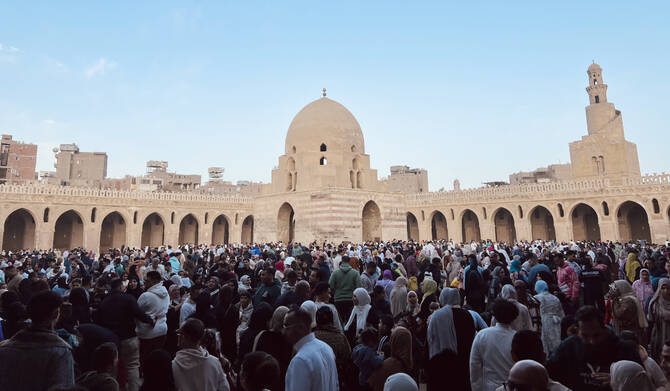
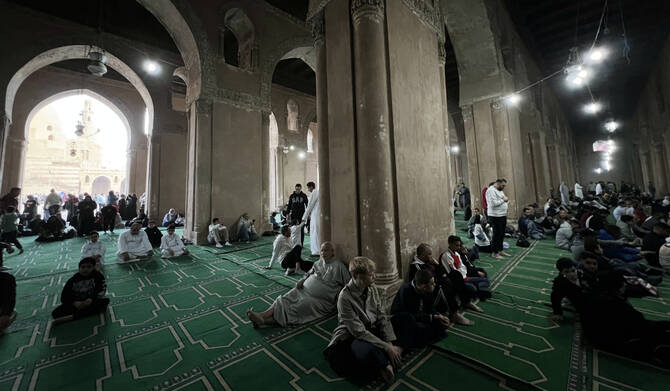
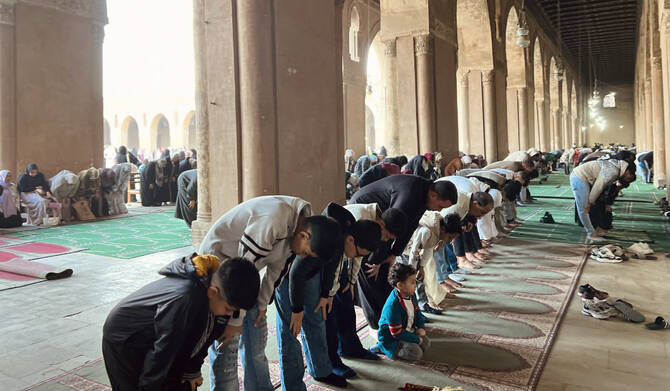
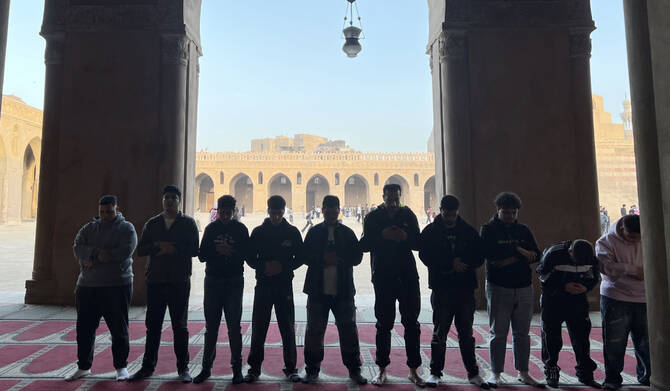
Millions of Egyptians filled mosques for Eid prayers, overflowing into courtyards and streets bright with festive decorations, with families adding to the atmosphere by gathering in public parks to share laughter and togetherness.
The Egyptian government has decreed that March 19-23 is an official holiday to mark Eid Al-Fitr.

On the delightful day of Eid, Muslims in Egypt, like other places, hold get-togethers, share special dishes and connect in an atmosphere of warmth. (AN photo)
In the early hours of Friday morning, Egyptians gathered in mosques from Al-Azhar and El-Hussein to Sayyida Zeinab and the Mosque of Amr ibn Al-Aas as everyone prepared to celebrate. At Al-Azhar, foreign communities gathered, including students from the university.
Arab News toured Cairo to cover the festivities.
Egypt is characterized by unique social customs for celebrating Eid Al-Fitr, where families gather a few days beforehand to cook special Eid sweets such as kahk and gorayebah. Songs can be heard throughout the streets and cafes, with one of the most famous, “Ahlan Bil Eid,” featuring prominently.
FASTFACT
Egypt is characterized by unique social customs for celebrating Eid Al-Fitr, where families gather a few days beforehand to cook special sweets.
After the official announcement of the Shawwal crescent sighting, Egyptians begin their own traditions, many dating back hundreds of years.
Dr. Gamal Abdel Rahim, a professor of Islamic history, told Arab News that since the 10th century, the sighting of the Shawwal crescent had been announced from the minaret of the Al-Juyoushi Mosque.
“After the Eid prayer, the Fatimid Caliph would lead a procession accompanied by workers and representatives of the guilds, setting out from the Eastern Palace,” he said.
“During the procession, the caliph would distribute sweets to the people of Egypt. The Fatimid caliph would emerge from the eastern palace, known as Bab Al-Dhahab (Gate of Gold), and stroll along Al-Muizz Street, entering through Bab Al-Nasr (Gate of Victory), where he would distribute sweets.”
The Egyptians created artistic molds that inscribed the phrase “Eat and be grateful” on the sweets.
These rituals continued into the Mamluk era, where the Sultan would hold royal banquets, and the sighting of the Shawwal crescent was announced from the minaret of Sultan Qalawun.
Such traditions have not changed in modern times, and Cairo residents celebrate throughout the Eid holiday in the city's most famous areas, most notably downtown and particularly on Talaat Harb Street, which is lined with cinemas, restaurants and cafes.
Others stroll along the banks of the Nile and on Qasr Al-Nil Bridge, while families gather on boats. The historic Al-Muizz area is filled with visitors, with many attending various artistic events taking place.
Another important part of the celebrations is visiting family, gathering together around the table to enjoy special dishes and connect in an atmosphere of warmth.


