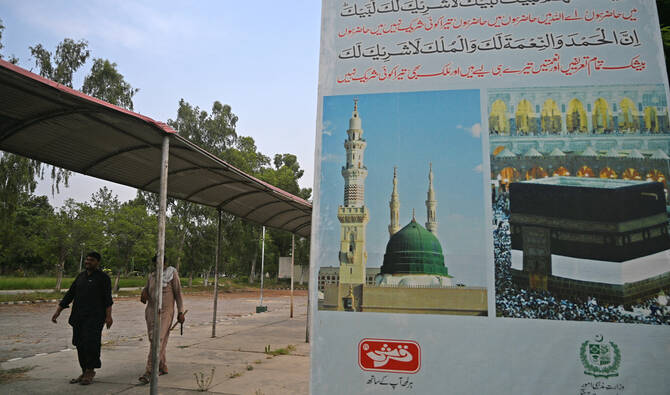
ISLAMABAD: Pakistan is set to launch today, Tuesday, the second phase of mandatory training for Hajj pilgrims, the Pakistani religion ministry said, with 142 workshops scheduled to be held in 72 cities nationwide.
Pakistan conducted its first phase of training for Hajj pilgrims in Jan. that continued across the country until late Feb., with intending pilgrims trained via audio-visual devices and other materials.
Pakistani religious affairs minister Sardar Muhammad Yousaf has said that around 90,000 pilgrims are expected to perform Hajj under the government’s scheme this year, promising to ensure the best possible facilities for them.
As part of the second phase, Hajj workshops will be held in Islamabad, Mirpur Khas, Mirpur Mathilo, Qila Saifullah, Chakwal and Pishin districts on Tuesday, while training sessions will be held in Hyderabad, Mirpur Mirs, Zhob, Qila Abdullah, Chaman, Daki, Ziarat, Mianwali and Nowshera districts on Wednesday.
“The second phase of Hajj pilgrim training will continue until April 24,” the Pakistani religion ministry said. “Overseas Pakistanis will receive training at the relevant Hajj camps after returning home.”
Training programs will be held in Tando Adam, Nowshehro Feroze, Loralai, Haripur, Khushab and Kohat districts on April 10, while workshops in Benazirabad, Dadu, Mardan and Dera Ismail Khan districts will be held on April 11, the religion ministry said.
Pakistan and Saudi Arabia signed in Jan. the Hajj 2025 agreement, under which 179,210 Pakistani pilgrims were supposed to perform the annual pilgrimage under the government and private schemes.
However, the South Asian country failed to fulfill its private Hajj quota of pilgrims, prompting Prime Minister Shehbaz Sharif last week to constitute a three-member inquiry committee to probe why Pakistani authorities had failed to comply with the Kingdom’s Hajj 2025 policy and consequently lost the quota.
Pakistan will begin its Hajj operations on Apr. 29, when the first flight carrying Hajj pilgrims will depart from the eastern city of Lahore to Saudi Arabia.


![]()

Pakistan to launch today second phase of Hajj training for pilgrims
Short Url
https://arab.news/pv55g
Pakistan to launch today second phase of Hajj training for pilgrims
- The second phase of training program will include 142 workshops in 72 cities nationwide
- Overseas Pakistanis will receive training at the relevant Hajj camps after returning home
Latest updates


© 2026 SAUDI RESEARCH & PUBLISHING COMPANY, All Rights Reserved And subject to Terms of Use Agreement.