

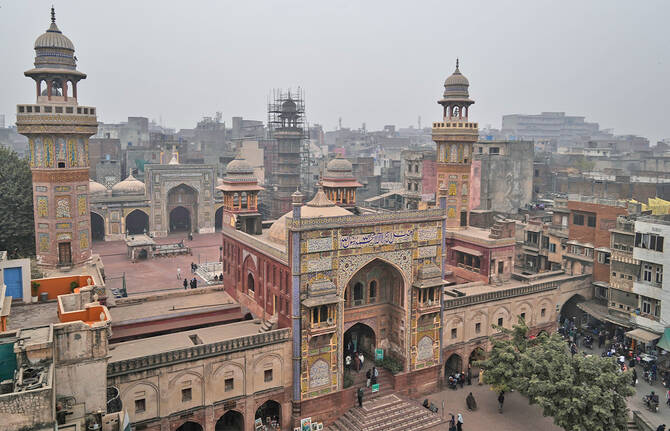
In pictures: the slim alleyways of Pakistan’s Mughal-era old Lahore city

People enter in historical the Wazir Khan mosque at in old neighborhood of Lahore, Pakistan, on December 13, 2025 (AP)
Short Url
Updated 03 January 2026
Follow

In pictures: the slim alleyways of Pakistan’s Mughal-era old Lahore city

  • Centuries-old homes were built with small, weathered bricks instead of mud and lean gracefully into the streets
  • Many have been restored, painted with frescoes and motifs, allowing the grandeur of the Mughal era to shine anew

LAHORE: In Pakistan, an old saying goes: “He who has not seen Lahore has not been born.”

To feel its heartbeat, one must wander the city’s winding alleyways that are alive with movement and color.


Motorcyclists drive through an alley in an old neighborhood in Lahore, Pakistan, on December 30, 2025. (AP)

Centuries-old homes were built with small, weathered bricks instead of mud and lean gracefully into the streets, their walls etched with the delicate patterns of history. Many have been restored, painted with frescoes and motifs, allowing the grandeur of the Mughal era to shine anew.
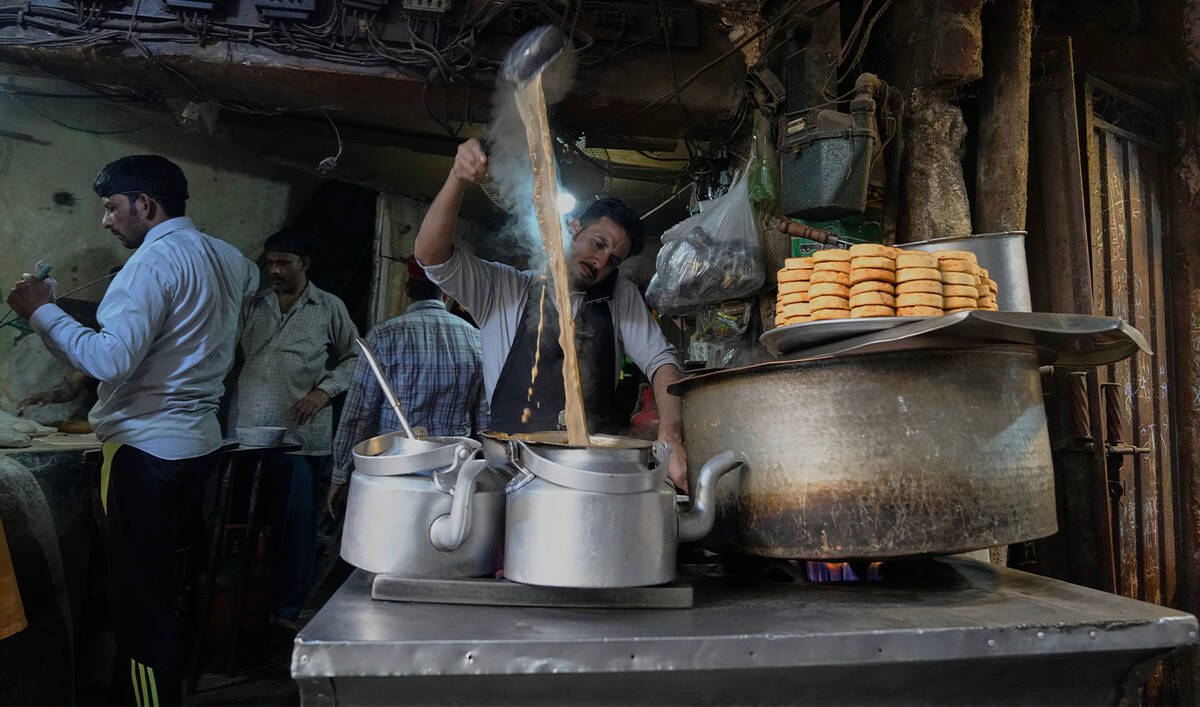


A vendor prepares traditional tea for his customers at a his stall in an old neighborhood of Lahore, Pakistan, on Dec. 7, 2025. (AP)

The alleys are narrow, sometimes barely wide enough for one person to pass. But within these tight corridors flows a quiet, enduring rhythm of courtesy, as residents step aside for one another with an unspoken grace.
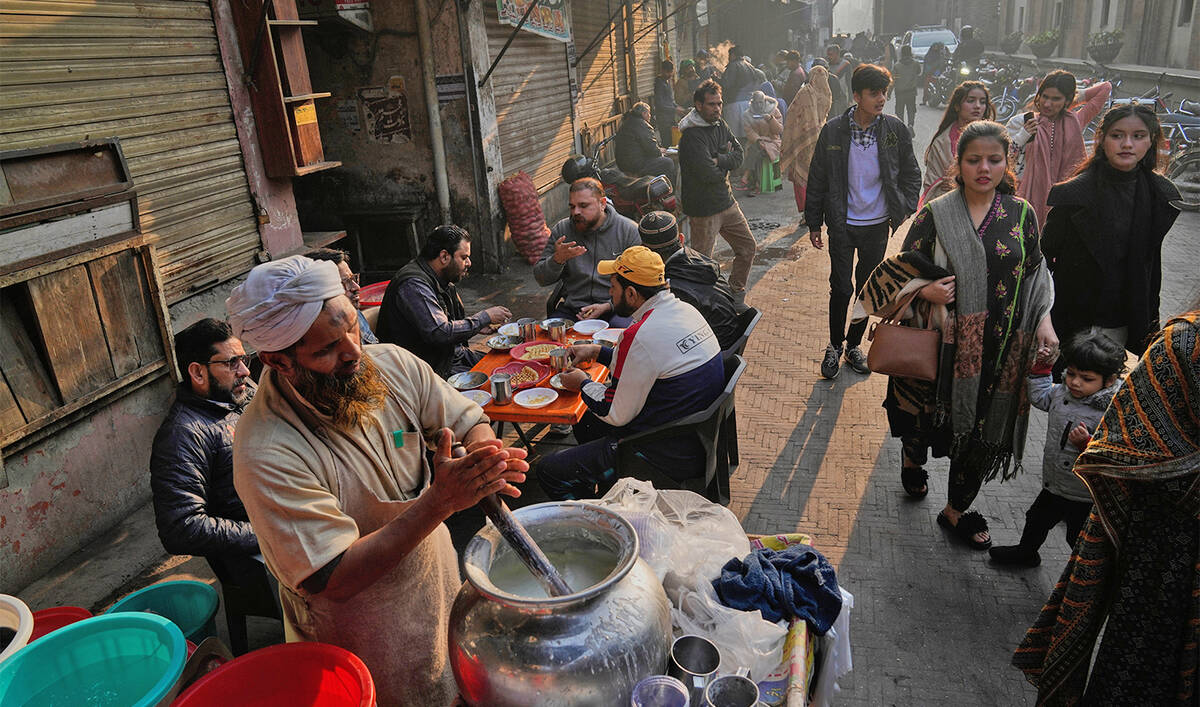


A vendor prepares traditional yogurt mixed drink locally called Lassi for customers at a street of an old neighborhood of Lahore, Pakistan, on Dec. 7, 2025. (AP)

These streets were made for foot traffic, for summer shade, and for defense — narrow passages slowing invading armies. While massive gates like Delhi Gate were once closed at night, today they remain open, welcoming life to flow uninterrupted round the clock.


Afghan trade resilient in 2025 as Iran, Central Asia routes offset Pakistan closures

Updated 6 sec ago
Follow

Afghan trade resilient in 2025 as Iran, Central Asia routes offset Pakistan closures

  • Tensions with Islamabad this year disrupted established transit corridors that connected Afghanistan to seaports for decades
  • Afghan traders ‌moved cargo ‌through Iran’s Chabahar port , expanded ​overland ‌shipments via Uzbekistan, Turkmenistan, Tajikistan

KABUL:  Afghanistan’s trade remained resilient in 2025 despite repeated closures of key border crossings with Pakistan, commerce ministry data ​showed, as exporters and importers increasingly relied on alternative routes through Iran and Central Asia.

The stability came even as tensions with Islamabad disrupted established transit corridors that have been landlocked Afghanistan’s main gateway to seaports for decades.

Traders instead ‌moved cargo ‌through Iran’s Chabahar port ‌and expanded ⁠their ​overland ‌shipments via Uzbekistan, Turkmenistan and Tajikistan, cushioning the impact of delays and political uncertainty.

Total trade — the value of exports and imports combined — rose from the previous year to nearly $13.9 billion in 2025, according to the ⁠commerce ministry. Exports stood at roughly $1.8 billion, broadly ‌steady year on year, ‍while imports increased to ‍just over $12.1 billion.

India, Pakistan and several ‍Central Asian states remained among Afghanistan’s largest export destinations with shipments dominated by dried fruit, coal, carpets, saffron and agricultural produce.

Imports continued to ​be led by fuel, machinery, food staples and industrial inputs, mainly from ⁠Iran, the United Arab Emirates, China and regional neighbors. Afghanistan is accelerating efforts to reduce its reliance on Pakistan in the wake of border closures linked to security disputes.

 While Pakistan remains its fastest route to the sea, Afghan officials say diversifying its trade corridors has enabled commerce to continue even while relations with its eastern neighbor ‌remain strained.