​​​​​​​Pakistan saw most militant attacks in a decade in March, says conflict monitoring group

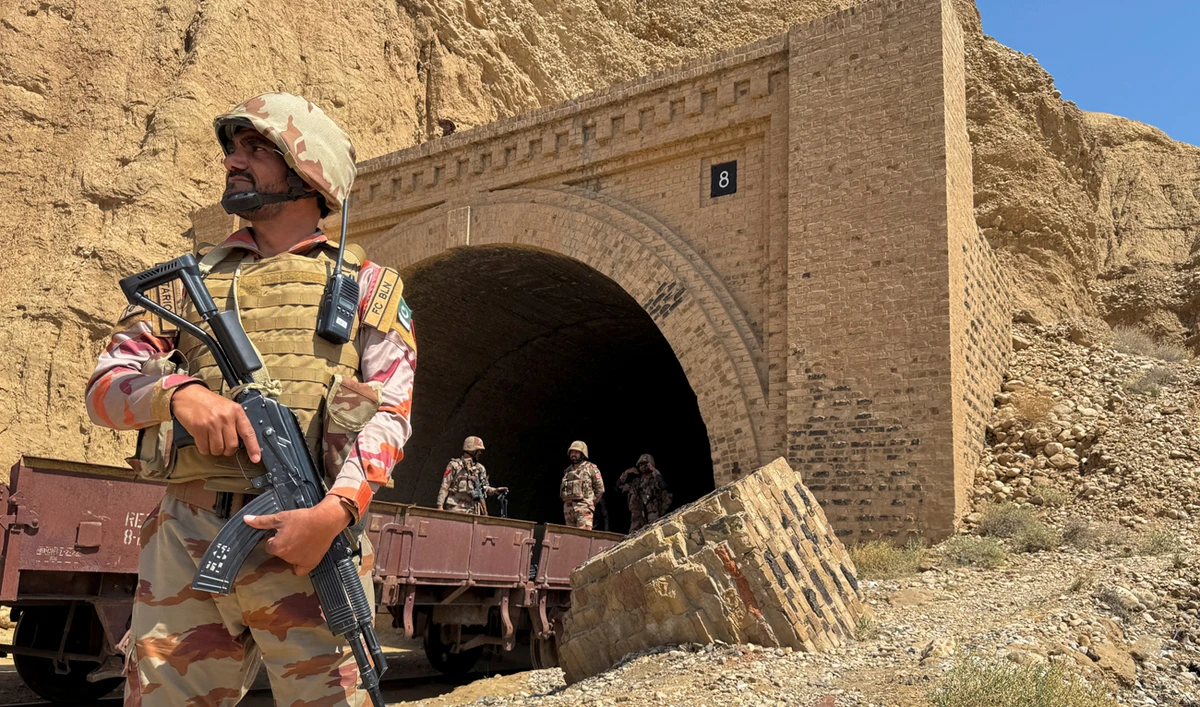
​​​​​​​Pakistan army soldiers stand at a tunnel where the Jaffar Express train was attacked by separatist militants, at Pehro Kunri in Balochistan province on March 15, 2025. (REUTERS/File)
Short Url
Updated 01 April 2025
Follow

​​​​​​​Pakistan saw most militant attacks in a decade in March, says conflict monitoring group

  • ​​​​​​​PICSS reports 228 fatalities of civilians, security personnel and militants in 105 attacks
  • ​​​​​​​Another 107 also lost their lives in security operations carried out by Pakistani forces

KARACHI: Militant attacks in Pakistan surpassed 100 in March for the first time in over nine years, marking it to be the deadliest month since 2015, a leading security think tank said on Tuesday, as violence spiked across the country’s two western provinces.
The Pakistan Institute for Conflict and Security Studies (PICSS) said Khyber Pakhtunkhwa and Balochistan were the hardest hit, though Punjab and Sindh provinces also experienced an uptick in militant activity.
Islamabad has repeatedly blamed Afghanistan for providing shelter to militant groups targeting civilians and security forces in cross-border attacks, an allegation denied by the authorities in Kabul.
“The number of militant attacks surpassed 100 for the first time since November 2014,” PICSS said in a statement.
The think tank reported 105 militant attacks during the month, resulting in 228 fatalities — 73 security personnel, 67 civilians and 88 militants — and 258 injuries, equally split between civilians and security forces.
Security operations conducted during the same period resulted in an additional 107 deaths and 31 injuries, bringing the overall death toll for the month to 335.
“According to the PICSS Militancy Database (PMD), March 2025 recorded the highest overall fatalities since August 2015,” the statement added.
Balochistan witnessed at least 122 fatalities, including 40 civilians and 37 security personnel, as well as three suicide bombings, two of which were carried out by factions of the separatist Baloch Liberation Army. The province also saw the March 11 hijacking of the Jaffar Express, which left 26 hostages and 33 militants dead.
PICSS said Khyber Pakhtunkhwa reported the highest number of total deaths — 206 — comprising 49 security personnel, 34 civilians and 123 militants. Of these, 82 fatalities occurred in the tribal districts, formerly part of the Federally Administered Tribal Areas (FATA), where security operations also intensified.
The think tank informed that Punjab also witnessed an increase in militant activity, with seven attacks recorded — mostly in Dera Ghazi Khan — marking the highest number of incidents in the province in a single month in a decade.
Six people were killed and 22 suspected militants arrested in Lahore, it added.
The southeastern Sindh province also reported three low-intensity attacks, including one claimed by Daesh.
PICSS also recorded six suicide attacks in March — three in Balochistan, two in mainland KP and one in the tribal districts — making it the deadliest month for such incidents in recent years.

Pakistan urges UN Security Council to sanction separatist BLA group after recent attacks

Updated 05 February 2026
Follow

Pakistan urges UN Security Council to sanction separatist BLA group after recent attacks

  • Separatist BLA launched attacks in multiple Balochistan cities last week, killing over 50 as per official figures
  • Pakistan envoy says since Taliban assumed control of Afghanistan, BLA, other militant groups have a “new lease of life“

ISLAMABAD: Pakistan’s UN Ambassador Iftikhar Ahmed this week urged the Security Council to impose sanctions against the separatist Baloch Liberation Army (BLA) militant group and designate it as a “terrorist” group, after its recent coordinated attacks in southwestern Balochistan province. 

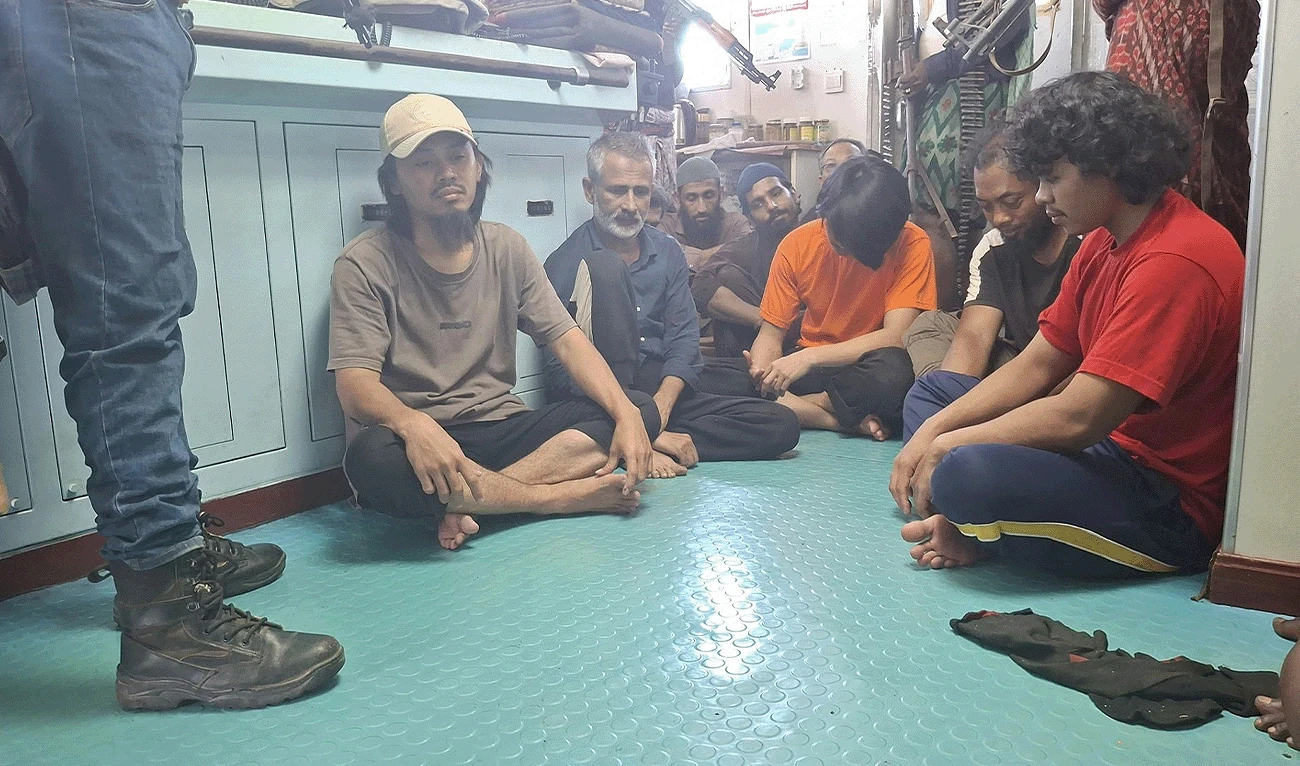
Pakistan’s military said on Thursday it has concluded security operations in Balochistan against separatists that was launched since Jan. 29, killing 216 militants. The military launched counteroffensive operations in Balochistan after the BLA said it launched coordinated attacks in several parts of the province last Friday and Saturday. 

The attacks killed 36 civilians and 22 law enforcement and security forces personnel, Pakistan’s military said. Pakistan’s government has accused India of being involved in the attacks, charges that New Delhi has dismissed. 

“We hope the Council will act swiftly to designate BLA under the 1267 sanctions regime acceding to the listing request that is currently under consideration,” Iftikhar said on Wednesday during a UNSC briefing on the topic ‘Threats to International Peace and Security caused by Terrorist Acts.’

The 1267 sanctions regime is a UNSC program that seeks to impose sanctions on individuals and entities associated with “terrorism.”

The regime seeks to impose travel bans, freeze assets and impose an arms embargo on individuals and groups primarily associated with Al-Qaeda or the Taliban. 

Ahmad said that after the Taliban takeover of Afghanistan in 2021, “externally sponsored and foreign-funded proxy terrorist groups” such as the Tehreek-e-Taliban Pakistan and the BLA have got a “new lease of life.”

“Operating with virtual impunity from Afghan soil and with the active support of our eastern neighbor, these groups are responsible for heinous terrorist attacks inside Pakistan,” he said. 

The Pakistani envoy said it has become imperative to prevent billions of dollars of sophisticated weapons and equipment, which were left behind by foreign forces in Afghanistan, “from falling into the hands of terrorists.”

“There must be accountability of external destabilizing actors who support, finance and arm these groups, including their proxies in Afghanistan,” Ahmad said in a veiled reference to India. 

Pakistan’s largest and poorest province, mineral-rich Balochistan borders Iran and ‌Afghanistan and is home to China’s investment in the Gwadar deep-water ‍port and other projects.

Balochistan has been the site of a ‍decades-long insurgency led by ethnic Baloch separatists seeking greater autonomy and a larger share of its natural ‍resources. 

They accuse the state of denying locals a fair share of the province’s mineral wealth, charges that are denied by the Pakistani government.