ISLAMABAD: Zarnab Tahir struggled to catch her breath as the steep incline of the hiking trail at Islamabad’s picturesque Margalla Hills tested her endurance. Hiking can put people through physical exertion, especially when they do it on an empty stomach.
An hour before the sun sets and the call to prayer blares out from various mosques located in Pakistan’s capital city, a group of fitness enthusiasts take to the hiking trails in Margalla Hills National Park.
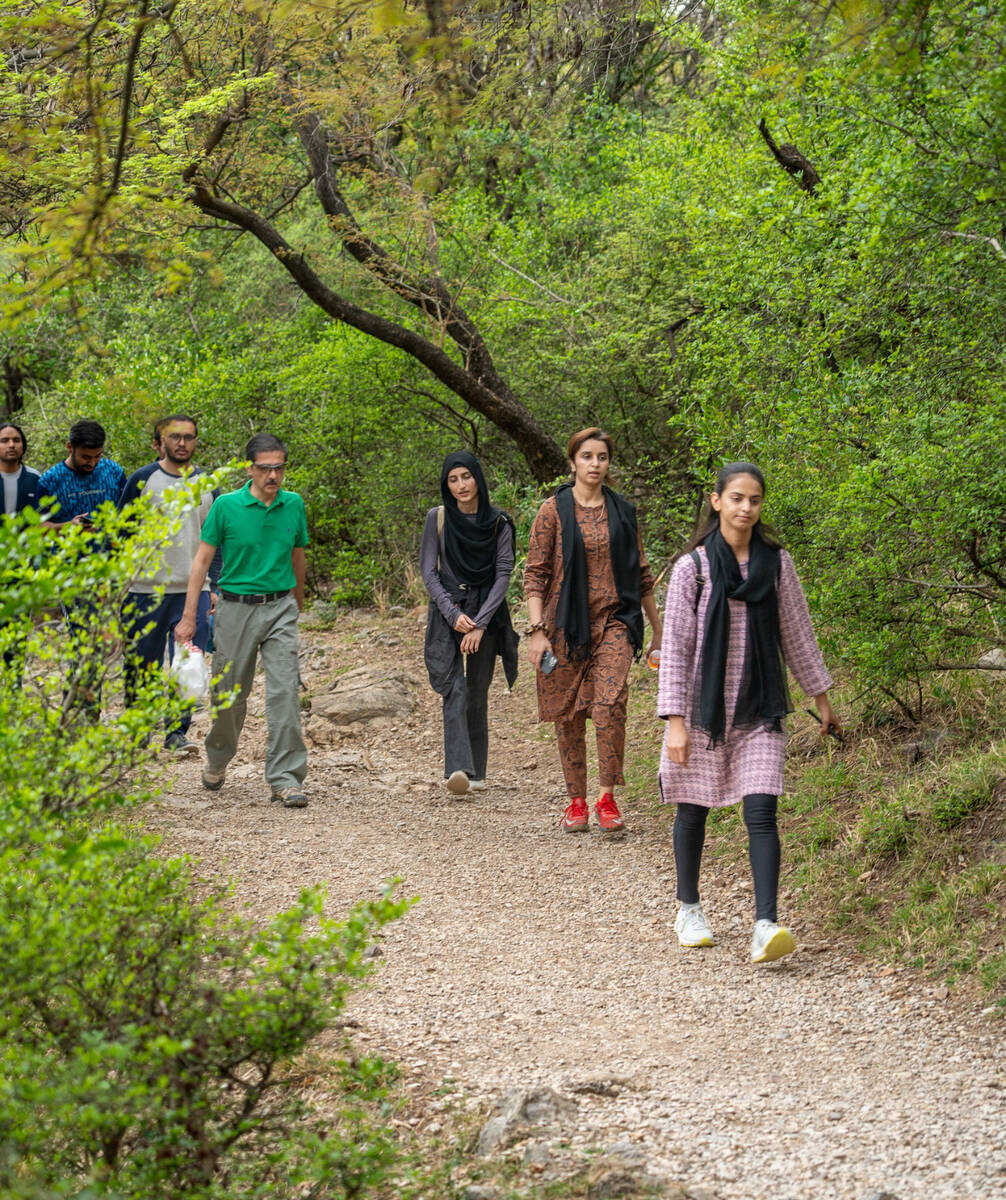
Participants hike up the mountain at the Margalla Hills National Park in Islamabad on March 25, 2025, during an Arab News’ Ramadan special coverage of a pre-iftar hiking trend in Pakistani capital. (Supplied)
Islamabad Run With Us — IRU — which describes itself as Pakistan’s “pioneering running community,” is behind the pre-iftar hiking initiative.
“When you engage in pre-iftar (physical) activities during Ramadan, it gives you extra energy, an extra boost,” Qasim Naz, who founded IRU in 2016, told Arab News on hiking trail number three.
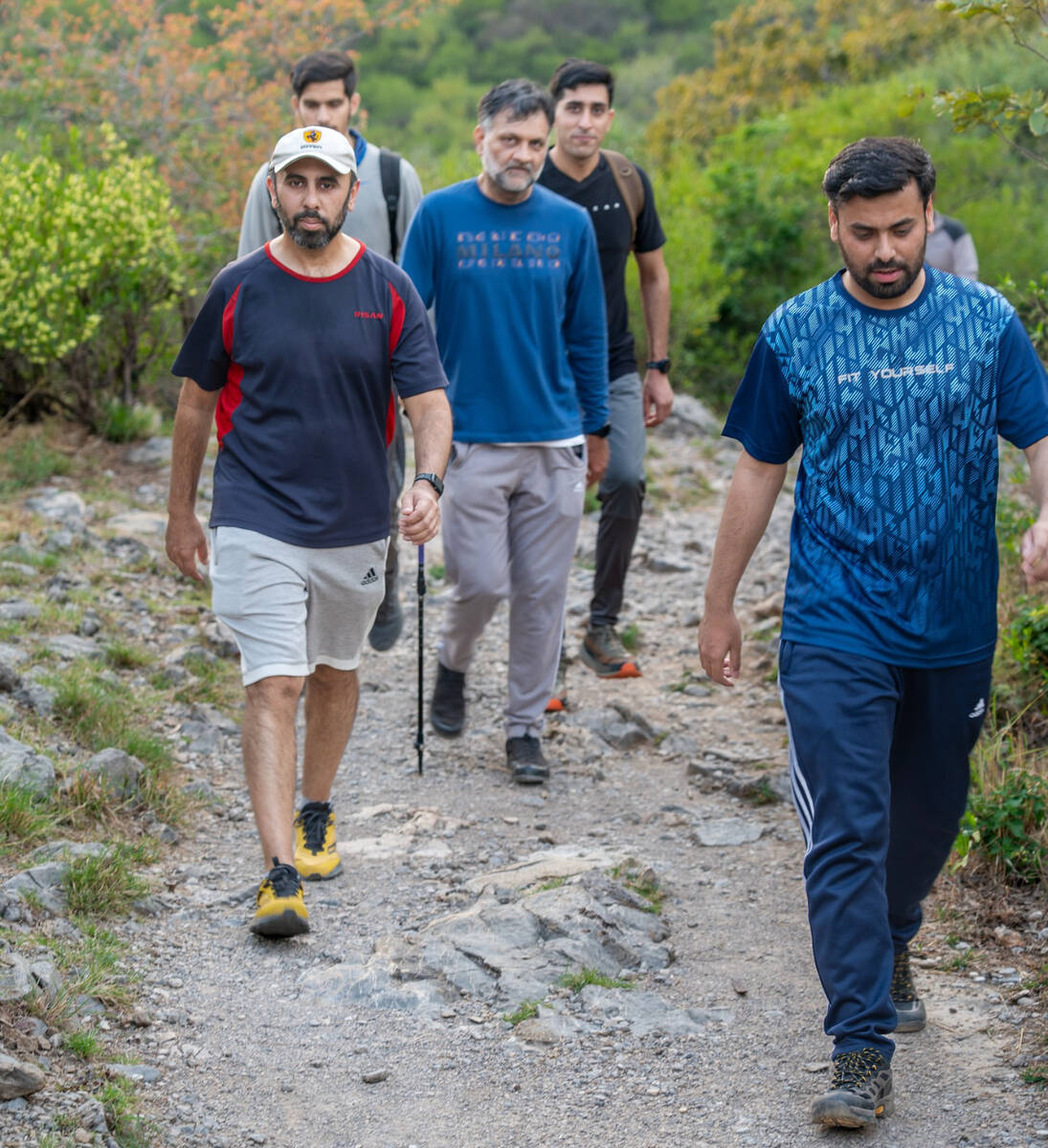
Participants hike up the mountain at the Margalla Hills National Park in Islamabad on March 25, 2025, during an Arab News’ Ramadan special coverage of a pre-iftar hiking trend in Pakistani capital. (Supplied)
“And when someone joins in on an activity once or twice, they figure out it’s not that hard and they can sustain it comfortably.”
Naz stresses that staying active during the holy month is essential. The IRU organizes five activities a week, which include two runs and three hikes.
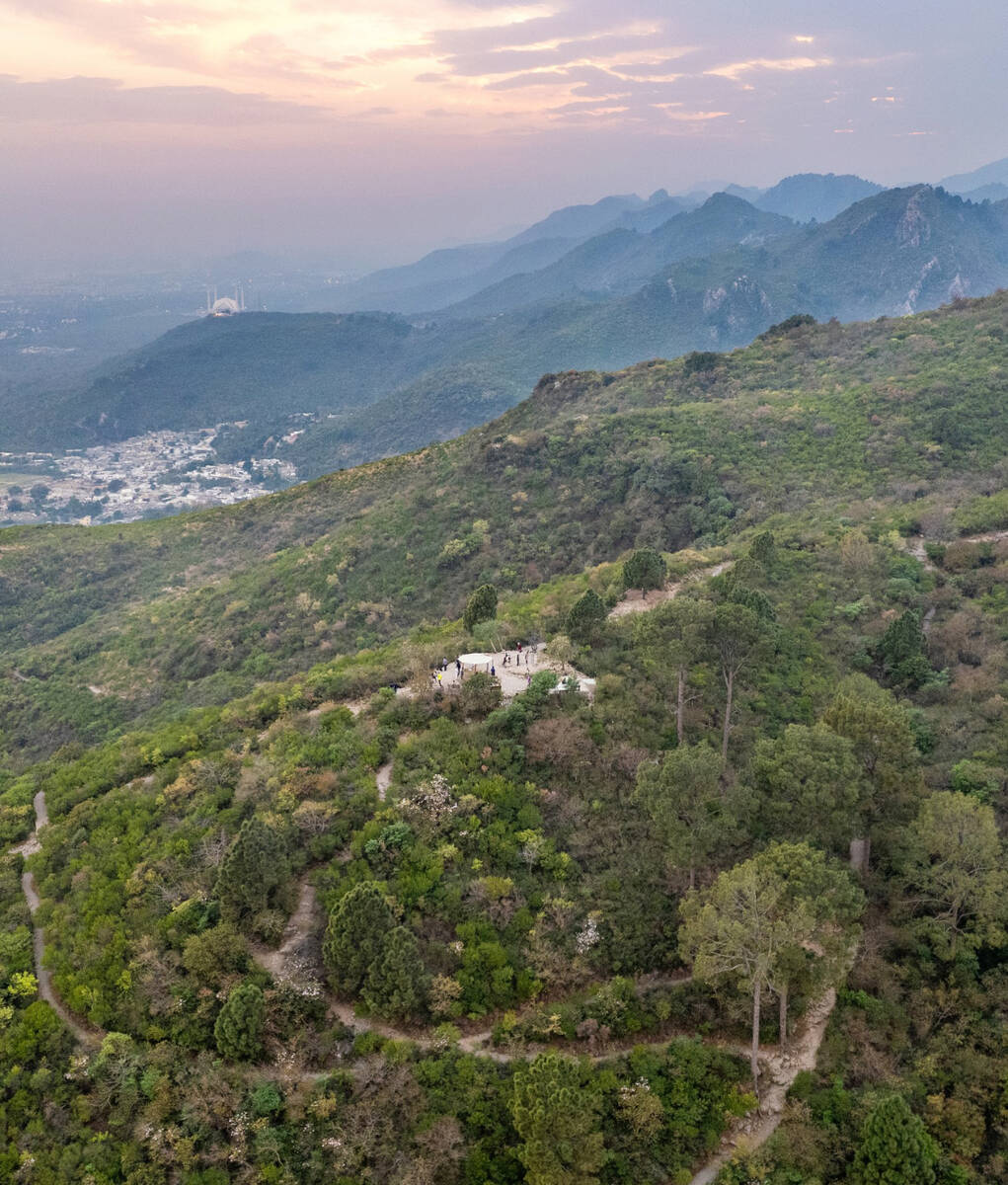
This aerial view shows the Margalla Hills National Park in Islamabad on March 25, 2025, during an Arab News’ Ramadan special coverage of a pre-iftar hiking trend in Pakistani capital. (Supplied)
“Either we can maintain our weight, or if our goal is weight loss, we can achieve it by being in a calorie deficit while eating a healthy diet and exercising,” Naz explained.
Tahir, 22, meanwhile, said that she was committed to reaching the top of hiking trail before sunset. This was the second time she was hiking with IRU.
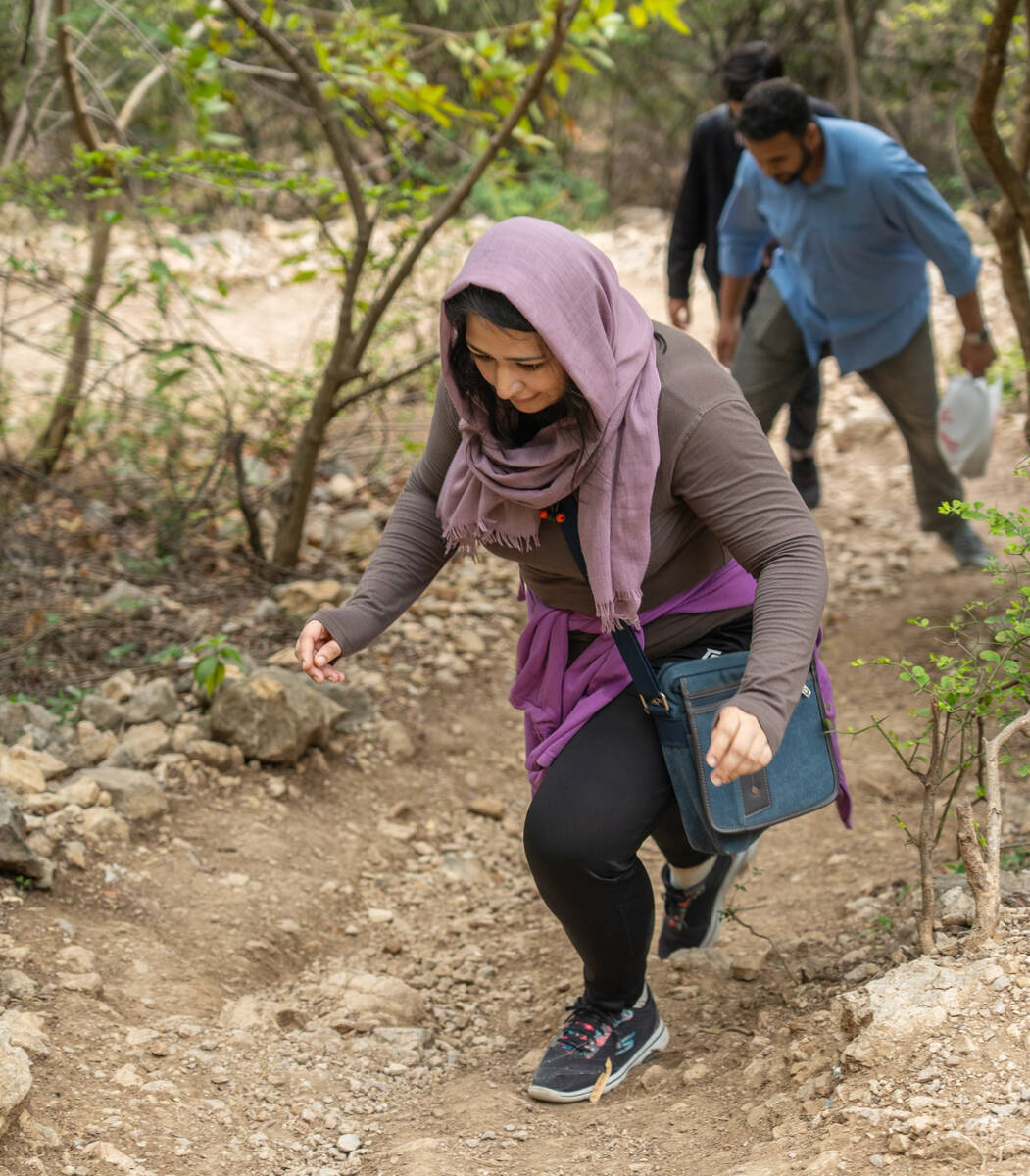
Participants hike up the mountain at the Margalla Hills National Park in Islamabad on March 25, 2025, during an Arab News’ Ramadan special coverage of a pre-iftar hiking trend in Pakistani capital. (Supplied)
She agreed with Naz that group activities are “much easier” to sustain.
“I think it is important to go at your own pace and it’s so much easier with the group,” Tahir, a content creator, told Arab News.
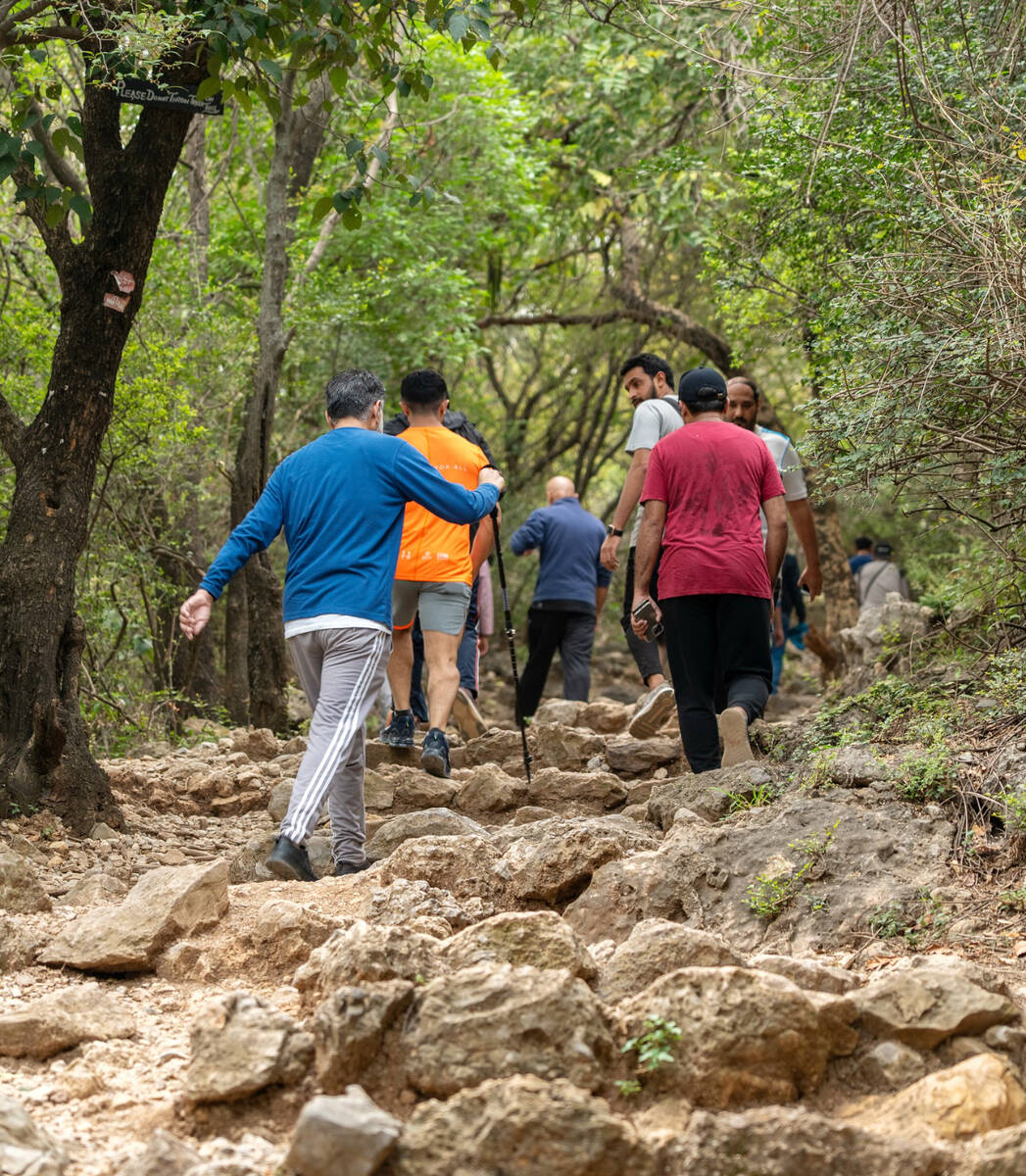
Participants hike up the mountain at the Margalla Hills National Park in Islamabad on March 25, 2025, during an Arab News’ Ramadan special coverage of a pre-iftar hiking trend in Pakistani capital. (Supplied)
“If you go alone, it’s kind of more difficult and you are, like, really slow but if you go with the group you can maintain that pace and I think it’s much easier that way.”
Mahwish Ashraf, a journalist associated with a foreign diplomatic mission in Islamabad, shared how she struggled the first time that she went on a pre-iftar hike with IRU.
“The first time I was hiking, I returned from in between, I couldn’t complete it,” she admitted. “So, this is my second time hiking with the IRU, and gladly, I’m at the main point, the meeting point.”
Eraj Khan, a commercial specialist visiting from Australia to spend Ramadan with his family, said pre-iftar hikes give one “lots of energy.”
“For fat burning, it’s a great activity,” Khan said. “Especially because the last two hours of fasting are the hardest, most people feel really hungry. But so far, I’m loving it.”
As the clock continued to tick and evening settled in, the hikers began to pick up their pace. For Tahir, reaching the top of the trail before sunset was a victory in itself.
She had pushed past exhaustion, embraced the challenge and proved to herself that she was capable of more than she thought she could achieve.
And according to her, hiking with the group made all the difference.
“The energy of the group keeps you going,” she said. “Even when you feel like stopping, you see everyone else moving forward, and you push through.”