Al-Rumaila Mosque restoration highlights Riyadh’s Najdi heritage

1 / 3
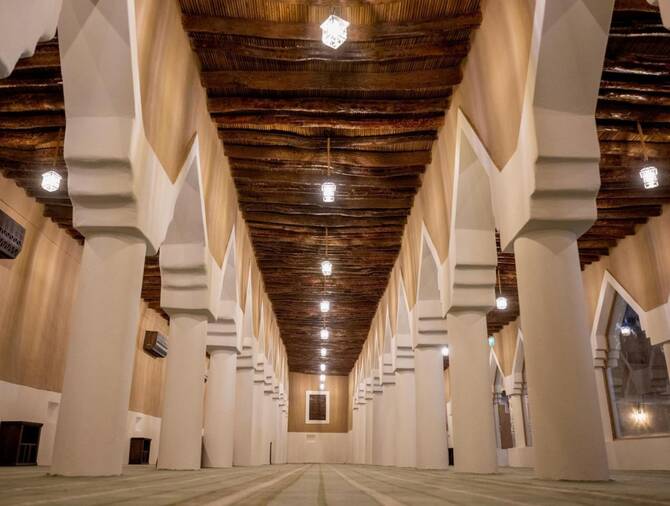
The project will renovate the mosque in the Najdi style, expanding its area from 1,185 sq. meters to 1,556 sq. meters, and doubling its capacity from 327 to 657 worshippers. (SPA)
2 / 3
The project will renovate the mosque in the Najdi style, expanding its area from 1,185 sq. meters to 1,556 sq. meters, and doubling its capacity from 327 to 657 worshippers. (SPA)
3 / 3
The project will renovate the mosque in the Najdi style, expanding its area from 1,185 sq. meters to 1,556 sq. meters, and doubling its capacity from 327 to 657 worshippers. (SPA)
Short Url
Updated 29 March 2025
Follow

Al-Rumaila Mosque restoration highlights Riyadh’s Najdi heritage

  • The project will use clay construction techniques and natural materials, primarily based on the Najdi style
  • Phase one was completed in 2018, with 30 mosques restored in 10 regions

RIYADH: Historic Al-Rumaila Mosque in the Al-Dhahirah district of Riyadh is one of the oldest religious sites being restored as part of a national project, the Saudi Press Agency reported.

The second phase of the Prince Mohammed bin Salman Project for Historic Mosques focuses on renovating and restoring religious and cultural significance, while preserving the ancient architectural style using sustainable, environmentally friendly methods.

The project will renovate the mosque in the Najdi style, expanding its area from 1,185 sq. meters to 1,556 sq. meters, and doubling its capacity from 327 to 657 worshippers.

Although the mosque’s exact construction date is unknown, the design will reflect its original form, showcasing the architectural style of old Riyadh mosques, the SPA reported.

The project will use clay construction techniques and natural materials, primarily based on the Najdi style, which adapts well to the local environment and hot desert climate.

Al-Rumaila Mosque is one of 30 mosques in 13 regions in phase two of the project. These include six in Riyadh, five in Makkah, four in Madinah, three in Asir, and two each in the Eastern Province, Jouf, and Jazan. The Northern Borders, Tabuk, Baha, Najran, Hail, and Qassim each have one mosque in the scheme.

Phase one was completed in 2018, with 30 mosques restored in 10 regions. Saudi companies and heritage restoration experts are leading the development efforts.

The project balances traditional and modern construction standards, ensuring the sustainability of mosque components while preserving heritage.

Saudi companies and engineers specializing in heritage restoration are leading the development efforts, according to the report.

The project’s four strategic objectives include restoring historic mosques for worship, preserving architectural authenticity, highlighting the Kingdom’s cultural heritage, and enhancing the religious and cultural significance of religious sites.


Saudi Arabia, UAE and allies condemn Gaza ceasefire violations

Updated 7 sec ago
Follow

Saudi Arabia, UAE and allies condemn Gaza ceasefire violations

RIYADH: Saudi Arabia on Sunday led renewed regional condemnation of Israel’s repeated violations of the ceasefire in Gaza, which have resulted in the killing and wounding of more than 1,000 Palestinians.

In a joint statement, the foreign ministers of the Kingdom, the UAE, Indonesia, Pakistan and Turkiye said the breaches represented a dangerous escalation that risked inflaming tensions and undermining efforts to restore calm and stability, the Saudi Press Agency reported.

They joined Qatar, Jordan and Egypt, who on Saturday condemned what they described as ongoing ceasefire violations and warned they threatened de-escalation efforts and regional stability.

The ministers said the latest developments come at a critical moment, as regional and international efforts intensify to advance the second phase of the peace plan proposed by US President Donald Trump and implement UN Security Council Resolution 2803, SPA added.

They warned that the repeated violations pose a direct threat to the political process and could derail attempts to create the conditions for a more stable phase in Gaza, both in security and humanitarian terms. They stressed the need for full adherence to the ceasefire to ensure the success of the next phase of the peace plan.

The statement called on all parties to assume their responsibilities during this sensitive period, exercise maximum restraint, sustain the ceasefire, and avoid any actions that could undermine current diplomatic efforts. It also urged steps to facilitate early recovery and reconstruction in the Gaza Strip.

Reaffirming their commitment to a just, comprehensive and lasting peace, the ministers said this must be based on the Palestinian people’s inalienable right to self-determination and the establishment of an independent state, in line with international law, relevant UN Security Council resolutions and the Arab Peace Initiative.