


DUBAI: US airstrikes targeting Yemen’s Houthi militia pounded sites across the country into early Tuesday, with the group saying one attack in the capital killed at least two people and wounded more than a dozen others.
The American strikes on the militia, who threaten maritime trade and Israel, entered their 10th day without any sign of stopping. They are part of a campaign by US President Donald Trump targeting the rebel group while also trying to pressure Iran, the Houthis’ main benefactor.
So far, the US has not offered any specifics on the sites it is striking, though Trump’s national security adviser Mike Waltz claimed the attacks have “taken out key Houthi leadership, including their head missileer.” That’s something so far that’s not been acknowledged by the Houthis, though the militia have downplayed their losses in the past and exaggerated their attacks attempting to target American warships.
“We’ve hit their headquarters,” Waltz told CBS’ “Face the Nation” on Sunday. “We’ve hit communications nodes, weapons factories and even some of their over-the-water drone production facilities.”
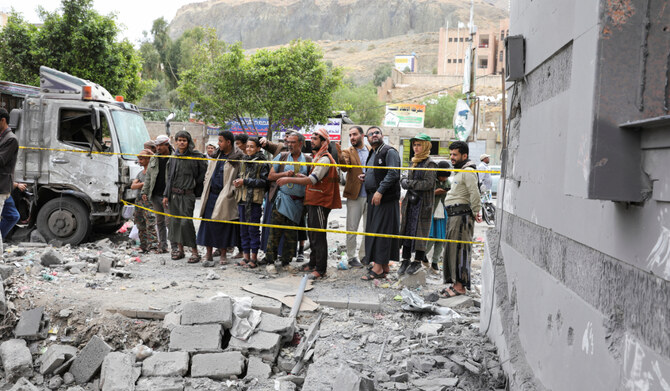
An apparent US strike Sunday hit a building in a western neighborhood of Yemen’s capital, Sanaa, killing at least two people and wounding 13 others, the rebel-controlled SABA news agency said, citing health officials. Footage released by the militia showed the rubble of a collapsed building and pools of blood staining the gray dust covering the ground.
A building next to the collapsed structure still stood, suggesting American forces likely used a lower-yield warhead in the strike.
The Houthis also described American airstrikes targeting sites around the city of Saada, a Houthi stronghold, the Red Sea port city of Hodeida and Marib province, home to oil and gas fields still under the control of allies to Yemen’s exiled central government. Those strikes continued into early Tuesday as the Houthis separately launched a missile attack on Israel.
The campaign of airstrikes targeting the militia, which killed at least 53 people immediately after they began March 15, started after the Houthis threatened to begin targeting “Israeli” ships again over Israel blocking aid entering the Gaza Strip. The militia in the past have had a loose definition of what constitutes an Israeli ship, meaning other vessels could be targeted as well.
The Houthis had targeted over 100 merchant vessels with missiles and drones, sinking two vessels and killing four sailors during their campaign targeting ships from November 2023 until January of this year. They also launched attacks targeting American warships, though none have been hit so far.
The attacks greatly raised the Houthis’ profile as they faced economic problems and launched a crackdown targeting any dissent and aid workers at home amid Yemen’s decadelong stalemated war that has torn apart the Arab world’s poorest nation.


