

Peshawar’s iconic Sunehri Mosque sees surge of devotees in Ramadan

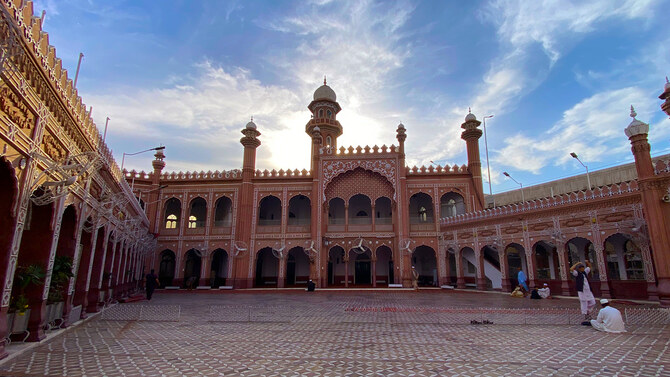
Worshipers pray during Ramadan at the Sunehri Mosque in Peshawar, Pakistan, on March 22, 2025. (AN Photo)
Short Url
Updated 26 March 2025
Follow

Peshawar’s iconic Sunehri Mosque sees surge of devotees in Ramadan

  • Sunehri Masjid is famous for its many domes, tall minarets and Mughal architecture, foundation stone for mosque laid in 1946
  • Worshippers frequent Sunehri Masjid, with capacity for 6,000 people, during Ramadan to offer prayers, recite Qur’an in large groups

PESHAWAR: The 128-feet tall minaret is the first thing that comes into view when one arrives close to the street in Peshawar’s main Saddar Bazaar where the majestic Sunehri Masjid is located. 

Known for its considerable size, built over an impressive 18,000 square feet, and Mughal-style architecture, the Sunehri, or Golden, Mosque in the capital of the northwestern Khyber Pakhtunkhwa is one of the most iconic masjids in the region. The mosque can accommodate at least 6,000 worshippers, making it ideal for the month of Ramadan when believers flock to mosques for Tarawih — special, voluntary prayers performed typically after the Isha night prayer and considered a highly recommended Sunnah, or practice of the Prophet Muhammad (pbuh).

The foundation stone of the mosque was laid by Habib Ur Rehman, a Peshawar resident, in 1946 but construction work experienced delays due unavailability of funds and security issues and was completed in 1992, primarily funded by public donations. 

Rehman modeled the mosque after Lahore’s iconic Badshahi Mosque built by Mughal emperor Aurangzeb, the prayer leader at Sunehri Masjid, Maulana Muhammad Ismail, told Arab News. 

“The foundation stone of our mosque was laid in 1946, but the situation deteriorated in Pakistan due to the wars [of 1965 and 1971], so work was stopped for a little time,” he said. 
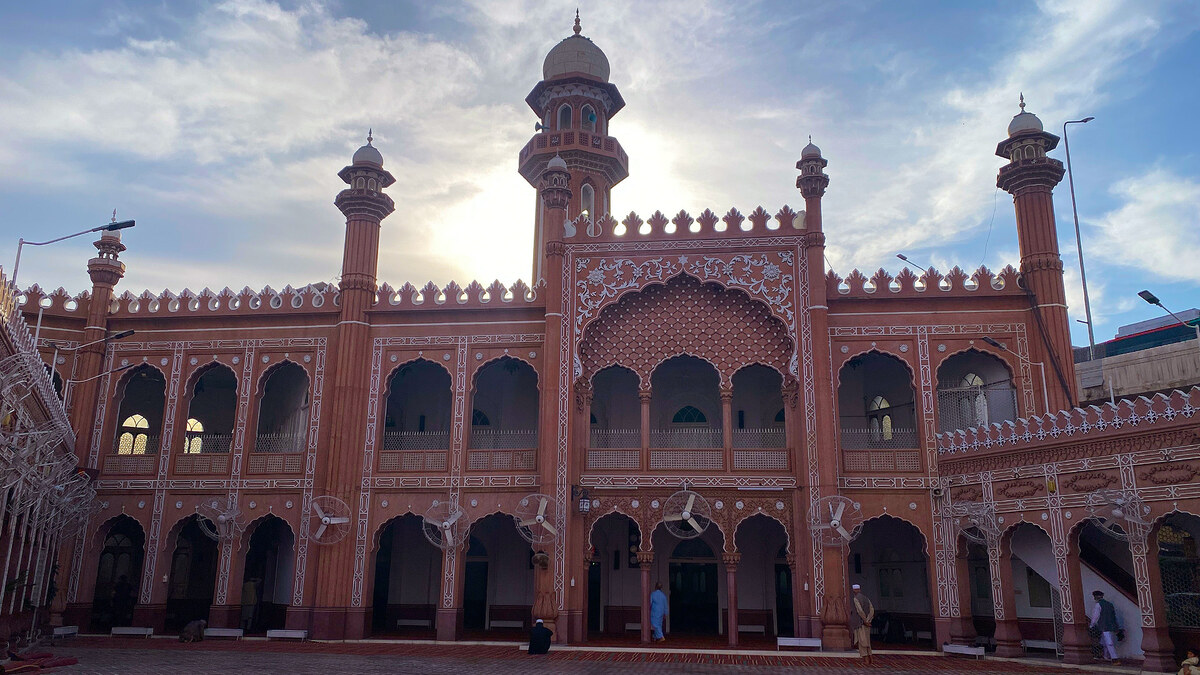


 Worshipers enter Sunehri Mosque in Peshawar, Pakistan, on March 22, 2025. (AN Photo)

Explaining the architecture, Ismail said the central minaret, a hallmark of the mosque, was built at 128 feet so it could be visible even from far-flung areas in Peshawar at a time when there were few tall buildings in the city.

“The need for the construction of the 128-feet-high minaret at that time was that our organizers thought that the azaan [call to prayer] of the Sunehri Masjid should reach far-flung areas,” Ismail said.

The mosque is built with red bricks and famed for its signature white domes and intricate Mughal-style architecture that features arches and pointed cupolas atop the minarets.
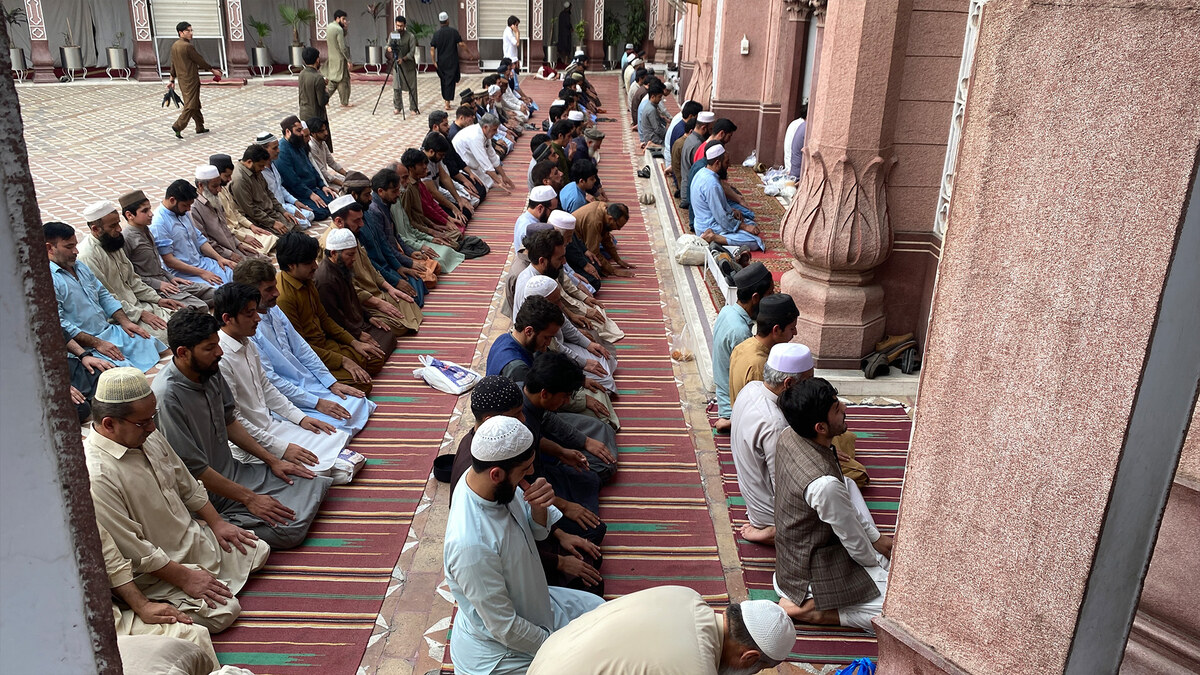


Worshipers pray during Ramadan at the Sunehri Mosque in Peshawar, Pakistan, on March 22, 2025. (AN Photo)

In Ramadan, more worshippers than usual throng to the Sunehri Masjid, filling up its halls and prayer rooms as they seek to deepen their connection with Allah, earn rewards, and ask for forgiveness from sins.

Imran Khan, 38, is one such devotee who has been offering prayers at the mosque for the past 12 years.

“This is a beautiful mosque, I come here every Ramadan to worship and recite [the Qur’an],” Khan told Arab News. “I especially visit a lot in Ramadan when I get the chance.”

Khawar Rehman, a Peshawar resident who had come for Asr prayers at the mosque, said he frequented the place as he liked worshiping at a “famous mosque” like the Sunehri Masjid. 

“This mosque has larger congregations and better rewards,” he said, “so I like to come here.”


Pakistan steps up EU trade engagement as India deal raises export fears

Updated 6 sec ago
Follow

Pakistan steps up EU trade engagement as India deal raises export fears

  • Deputy PM chairs inter-ministerial meeting, calls GSP+ “crucial” for growth
  • Move follows India–EU trade pact that industry warns could hit exports, jobs

ISLAMABAD: Pakistan’s Deputy Prime Minister and Foreign Minister Mohammad Ishaq Dar on Friday chaired a high-level inter-ministerial meeting to review and strengthen trade and economic relations with the European Union, as Islamabad scrambles to safeguard market access following India’s new trade deal with the bloc.

The meeting is part of a broader diplomatic and policy push this week after India and the EU confirmed a free trade agreement granting Indian exporters sweeping tariff-free access to Europe — a development Pakistani exporters and analysts warn could erode Pakistan’s competitiveness, particularly in textiles, its largest export sector.

The EU is Pakistan’s second-largest export market, accounting for about $9 billion in annual shipments, mostly textiles and apparel. Industry leaders have warned that India’s tariff-free access could undercut Pakistan’s long-standing advantage under the EU’s Generalized Scheme of Preferences Plus (GSP+), which allows duty-free access in return for commitments on labor rights, human rights and governance.

At Friday’s meeting, Dar emphasized the centrality of GSP+ to Pakistan’s trade strategy with Europe.

“He emphasized that GSP Plus remains a crucial framework for mutually beneficial trade and underlined the need to maximize its potential for Pakistan’s economic growth,” the Foreign Office said in a statement.

Dar also stressed the importance of enhancing trade cooperation with the EU and exploring new avenues for economic engagement, as Pakistan assesses how to respond to shifting trade dynamics in Europe.

The inter-ministerial huddle follows a series of rapid consultations this week, including a meeting between Prime Minister Shehbaz Sharif and the EU’s ambassador to Pakistan, as well as briefings by trade bodies to Finance Minister Muhammad Aurangzeb on the potential impact of the India–EU agreement. 

Exporters have warned that unless Pakistan lowers production costs, particularly energy tariffs, and secures continued preferential access, the country could face declining market share in Europe and job losses across its labor-intensive textile sector.

Pakistan’s Foreign Office has said Islamabad is aware of the India–EU agreement and continues to view its trade relationship with the EU as mutually beneficial, but officials acknowledge that the new deal has intensified pressure to defend Pakistan’s position within the bloc.