


RAWALPINDI: Sheikh Sajid Mahmood, a Pakistani entrepreneur in his late 50s, basks in the winter sunshine after offering Dhuhr prayers at a mosque in the city of Rawalpindi. The tranquil appeal of the place of worship — a spiritual and cultural beacon — draws thousands like Mahmood, particularly during Ramadan.
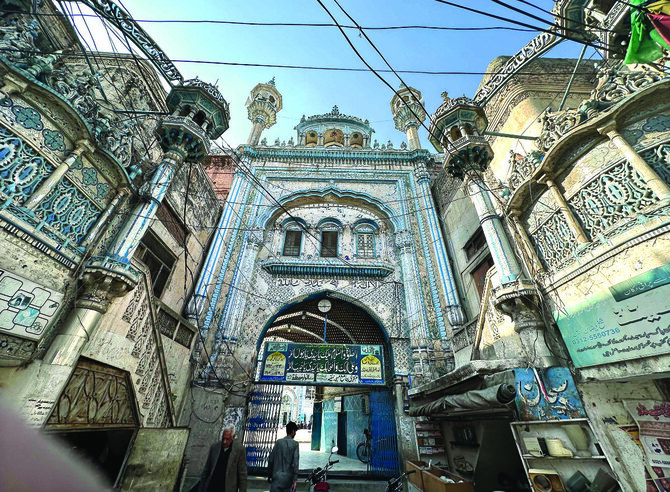
Surrounded by busy markets and towering buildings, the Markazi Jamia Masjid, or central grand mosque, is an architectural marvel in Pakistan that not only offers a retreat to devotees, but also captivates visitors with its vibrant frescoes and intricate design, offering a glimpse into the rich religious and cultural heritage of Rawalpindi.

Rawalpindi’s Markazi Jamia Masjid offers visitors a chance to connect with the city’s past. (AN photo)
The mosque’s foundations were laid in 1896 by Amanullah Khan, who later became the king of Afghanistan, alongside a prominent local religious figure, Peer Mehar Ali Shah of Golra Sharif in Islamabad. Since its completion, the mosque has been a central place of worship for Muslims in the city, whose numbers multiply in Ramadan.
“I am from the second generation (of devotees praying here). I am almost 60 years old now. (We) get a lot of spiritual satisfaction by praying here,” Mahmood told Arab News, explaining how the vastness of the space provides a sense of serenity.
FASTFACT
Surrounded by busy markets and towering buildings, the Markazi Jamia Masjid offers a glimpse into the rich religious and cultural heritage of Rawalpindi.
“Look at the sunlight, there are rows of prayer mats laid out in the courtyard. You can also get an idea from this; smaller mosques are confined on the sides.”

Worshippers offer prayers in the compound of the century-old Markazi Jamia Mosque in Rawalpindi, Pakistan on March 12, 2025, during Arab News’ Ramadan special coverage. (AN photo)
Mufti Muhammad Siddiq-ul-Hasnain Sialvi, who leads prayers at the mosque, shares a “deep connection” with the place.
“This mosque is the largest in the Rawalpindi division, accommodating up to 7,000 worshippers,” he said. “The arrangements for (late night) Taraweeh prayers during Ramadan are excellent, and we also have a grand arrangement for iftar. A large number of people perform itikaf (or seclusion in the last 10 days of Ramadan) here as well.”

Worshippers offer prayers in the compound of the century-old Markazi Jamia Mosque in Rawalpindi, Pakistan on March 12, 2025, during Arab News’ Ramadan special coverage. (AN photo)
The Markazi Jamia Masjid’s architectural beauty blends elements of Mughal architecture with local designs. The main prayer hall, dominated by three domes and several minarets, reflects the grandeur of traditional Mughal architecture, featuring arches and intricate floral motifs. Local adaptations imbue the mosque with a unique identity that speaks of Rawalpindi’s heritage.
The interior walls are adorned with hand-painted frescoes, some of which have been meticulously restored over the years. The frescoes, with their detailed floral patterns and geometric symmetry, evoke the splendor of Mughal craftsmanship. Although some of the vibrant blues, reds and yellows have faded with time, they retain their beauty, telling the story of an era long past.
The mosque’s spacious courtyard is the heart of the complex, where worshippers gather before entering the prayer hall. During Ramadan, the worship place comes alive, especially during iftar and Taraweeh as the open space allows for a comfortable congregation, offering a welcoming environment for all.
“There is more rush here in Ramadan, the open courtyard makes it comfortable for people,” said Waqas Iqbal, a jeweler who regularly visits the mosque. “You don’t feel cramped, whether it’s summer or winter.”
But for Mahmood, the mosque is a sanctuary of peace.
“The open courtyard and the peaceful surroundings make it a special place to pray,” he said, explaining how the vastness of the space provides a sense of serenity that “smaller mosques often lack.”
More than just a place of worship, Rawalpindi’s Markazi Jamia Masjid offers visitors a chance to connect with the city’s past. Its management, which falls under the Punjab Auqaf and Religious Affairs Department, ensures the mosque undergoes maintenance every 10 to 15 years, so that it stays in pristine condition for future generations.
“Many prominent personalities have offered prayers in this grand mosque and the imam of Haram Sharif (Grand Mosque in Makkah) has visited and led prayers here,” said Sialvi, who added that all these factors make it a special place for the residents of the neighborhood and an honor for Rawalpindi.


