

Pakistan Railways awaits security clearance to repair track damaged in deadly Balochistan attack

1 / 2
Pakistan's Frontier Corps inspect the siege site after armed militants ambushed a train in the remote mountainous area, at Pehro Kunri in Balochistan province on March 15, 2025. (AFP)
2 / 2
Pakistan's Frontier Corps inspect the siege site after armed militants ambushed a train in the remote mountainous area, at Pehro Kunri in Balochistan province on March 15, 2025. (AFP)
Short Url
Updated 15 March 2025
Follow

Pakistan Railways awaits security clearance to repair track damaged in deadly Balochistan attack

  • BLA separatists targeted a passenger train earlier this week, taking more than 200 hostages
  • The militants killed 31 people in the attack, derailing the train and damaging 398 feet of track 

QUETTA: A delegation of Pakistan Railways officials visited the site of a militant attack on a passenger train in the southwestern mountainous Bolan region on Saturday, saying repair work on the damaged track would begin after security clearance to restore train service from Balochistan.
Dozens of separatist Balochistan Liberation Army (BLA) militants attacked the Quetta-Peshawar-bound Jaffar Express with bomb, gun and rocket attacks on Tuesday afternoon, killing 31 people and taking more than 200 passengers captive.
The hostage crisis lasted for 36 hours before security forces executed a rescue operation, killing 33 militants and securing the release of the passengers.
Speaking to the media, Rasheed Imtiaz Siddiqui, deputy chief engineer of Pakistan Railways, said four carriages of the Jaffar Express had derailed in the attack and 398 feet of track was damaged.
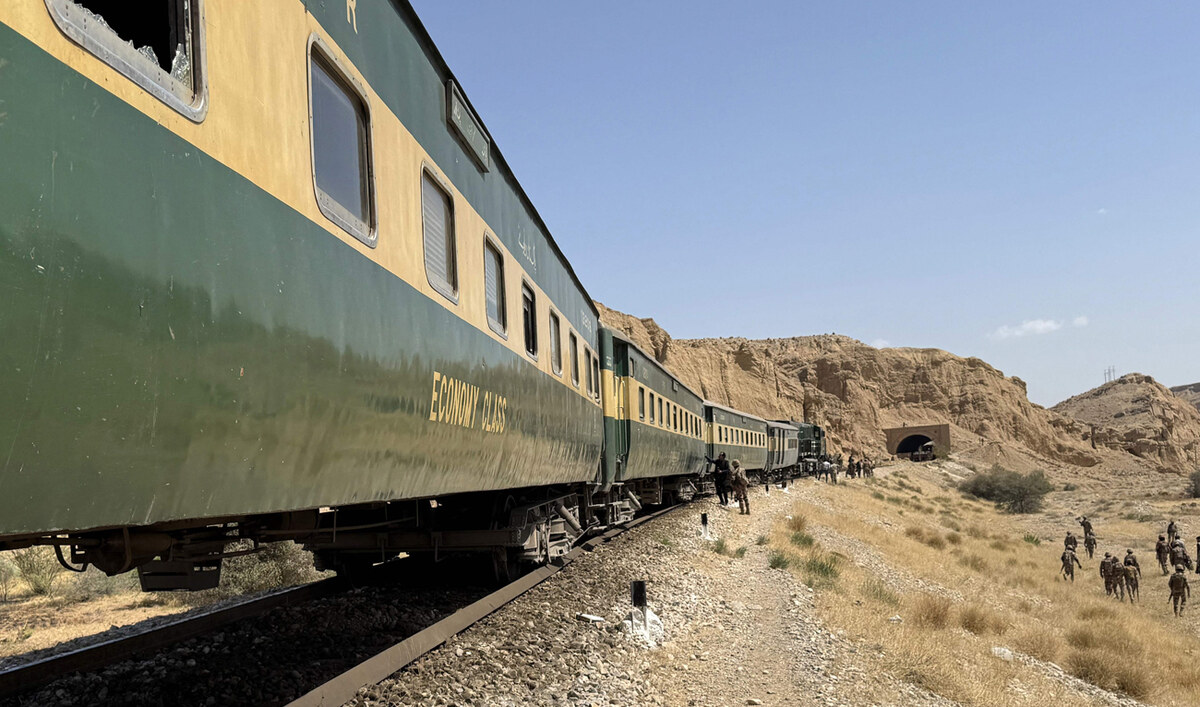


Pakistan's Frontier Corps inspect the siege site after armed militants ambushed a train in the remote mountainous area, at Pehro Kunri in Balochistan province on March 15, 2025. (AFP)

“Our teams are ready at Sibi, Mushkaf, Paneer and Aab-e-Gum railway stations,” he told reporters at the Bolan site where the train was hijacked.
“This is a highly sensitive area, and our teams will have to work from dawn to dusk since there can be security issues in the dark requiring formal clearance [from Pakistani forces],” he added.
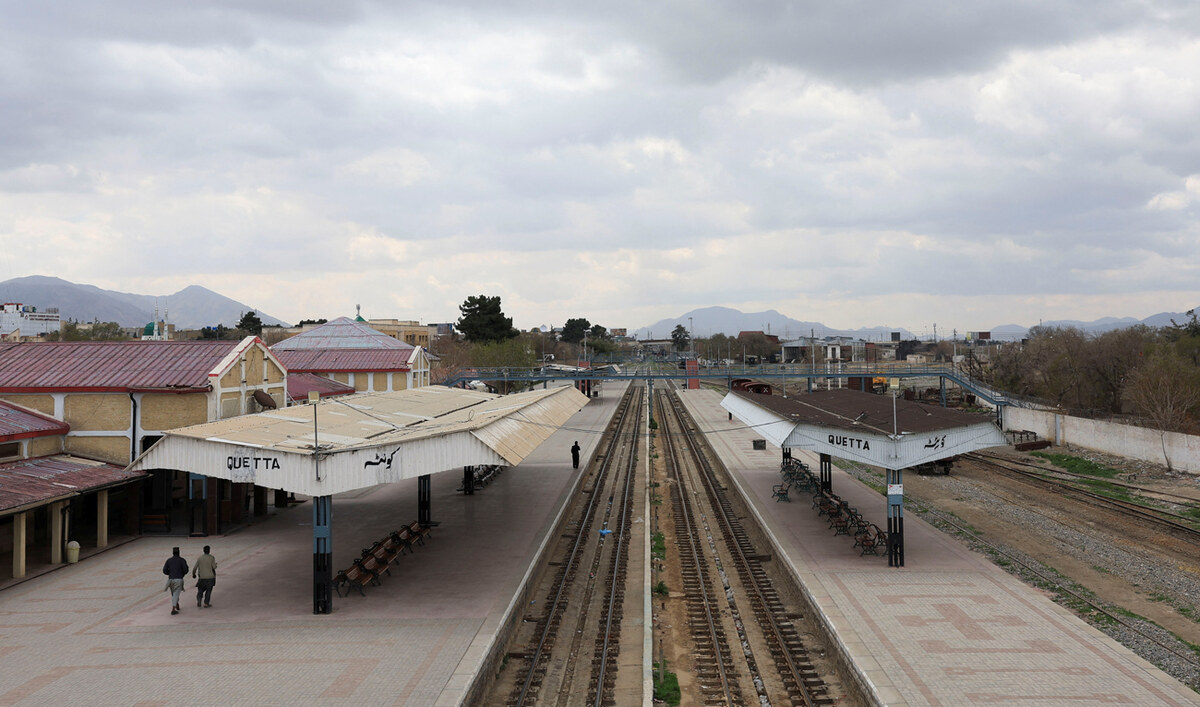


A view shows the railway station, after the train service is halted following the attack on a train by separatist militants in Bolan, in Quetta, Balochistan, on March 14, 2025. (REUTERS)

Siddiqui said it would take at least eight to nine hours to clear the derailed carriages and repair the track.
Armed separatist groups often target trains and passenger coaches in southwestern Balochistan province, which has witnessed a low-level insurgency for decades against the Pakistani state.
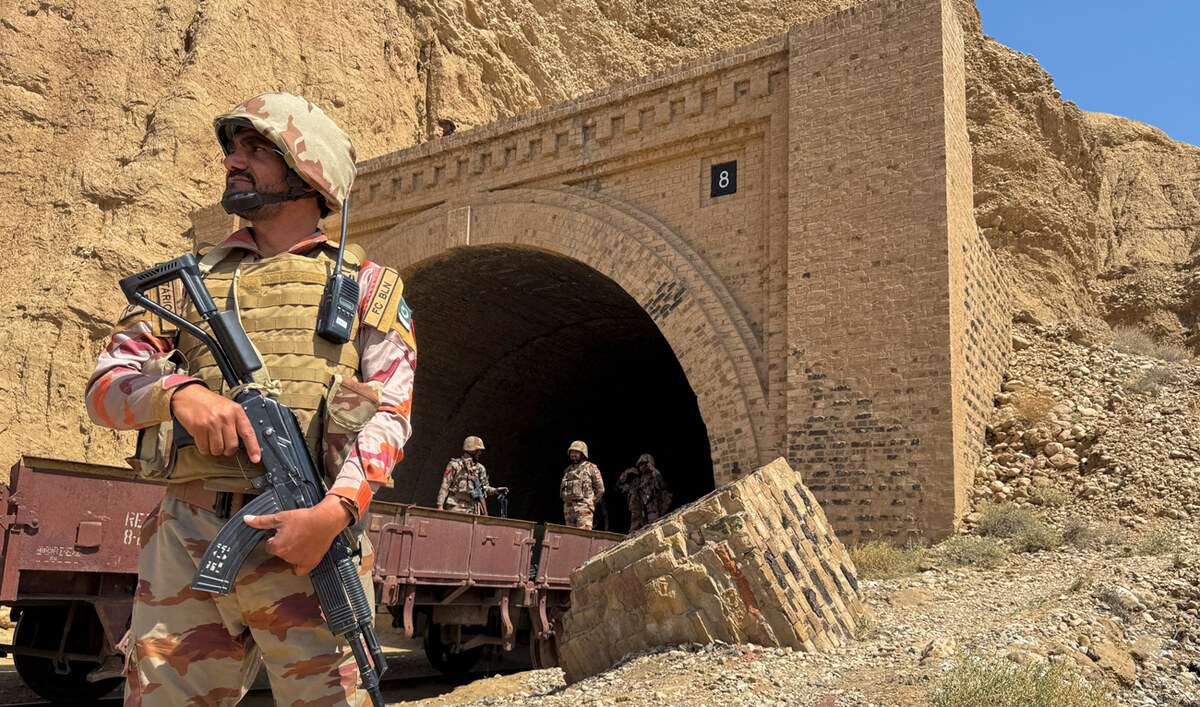


Pakistan army soldiers stand at a tunnel where the Jaffar Express train was attacked by separatist militants, at Pehro Kunri in Balochistan province on March 15, 2025. (REUTERS)

The separatists accuse the government of stripping the province’s natural resources and leaving its people mired in poverty. However, government officials deny the allegation, saying they are working to uplift the province through development projects, including multibillion-dollar schemes funded by Beijing.
Last August, the BLA destroyed a historic bridge built by the British Army in the 18th century in the hilly area of Kolpur, suspending train service for nearly a month.
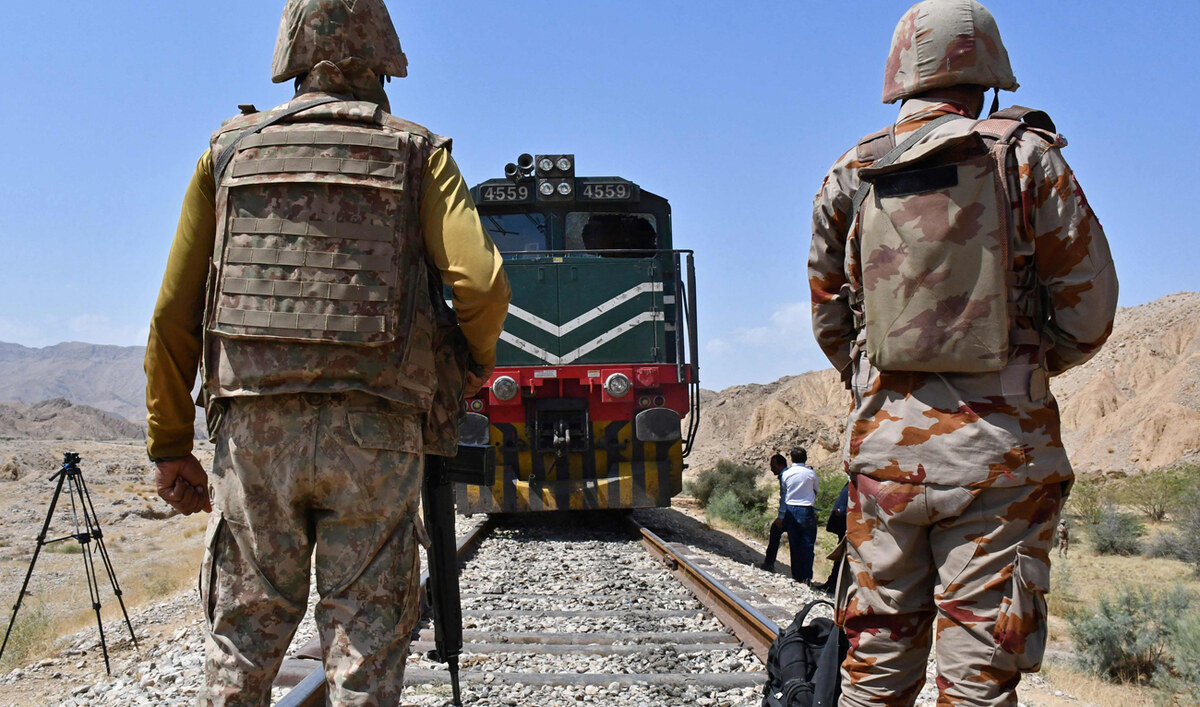


Pakistan's Frontier Corps stand guard at the siege site after armed militants ambushed a train in the remote mountainous area, at Pehro Kunri in Balochistan province on March 15, 2025. (AFP)

Brig. Umar Altaf, Commandant Sibi Scouts, told the media that the area was clear.
“The terrorists were confident they could prolong the standoff and propagate that the area was under their control,” he said, pointing out that they could not withstand the rescue operation.
“We have recovered eight magnetic improvised explosive devices from the area,” he continued. “They [the militants] were ready to blast the train, but we neutralized them.”


IMF hails Pakistan privatization drive, calls PIA sale a ‘milestone’

Updated 6 sec ago
Follow

IMF hails Pakistan privatization drive, calls PIA sale a ‘milestone’

  • Fund backs sale of national airline as key step in divesting loss-making state firms
  • IMF has long urged Islamabad to reduce fiscal burden posed by state-owned entities

KARACHI: The International Monetary Fund (IMF) on Saturday welcomed Pakistan’s privatization efforts, describing the sale of the country’s national airline to a private consortium last month as a milestone that could help advance the divestment of loss-making state-owned enterprises (SOEs).

The comments follow the government’s sale of a 75 percent stake in Pakistan International Airlines (PIA) to a consortium led by the Arif Habib Group for Rs 135 billion ($486 million) after several rounds of bidding in a competitive process, marking Islamabad’s second attempt to privatize the carrier after a failed effort a year earlier.

Between the two privatization attempts, PIA resumed flight operations to several international destinations after aviation authorities in the European Union and Britain lifted restrictions nearly five years after the airline was grounded following a deadly Airbus A320 crash in Karachi in 2020 that killed 97 people.

“We welcome the authorities’ privatization efforts and the completion of the PIA privatization process, which was a commitment under the EFF,” Mahir Binici, the IMF’s resident representative in Pakistan, said in response to an Arab News query, referring to the $7 billion Extended Fund Facility.

“This privatization represents a milestone within the authorities’ reform agenda, aimed at decreasing governmental involvement in commercial sectors and attracting investments to promote economic growth in Pakistan,” he added.

The IMF has long urged Islamabad to reduce the fiscal burden posed by loss-making state firms, which have weighed public finances for years and required repeated government bailouts. Beyond PIA, the government has signaled plans to restructure or sell stakes in additional SOEs as part of broader reforms under the IMF program.

Privatization also remains politically sensitive in Pakistan, with critics warning of job losses and concerns over national assets, while supporters argue private sector management could improve efficiency and service delivery in chronically underperforming entities.

Pakistan’s Cabinet Committee on State-Owned Enterprises said on Friday that SOEs recorded a net loss of Rs 122.9 billion ($442 million) in the 2024–25 fiscal year, compared with a net loss of Rs 30.6 billion ($110 million) in the previous year.