



ISLAMABAD: Pakistan’s military spokesperson, Lt. Gen. Ahmad Sharif Chaudhry, on Friday accused India of being the main sponsor of “terrorism” in Balochistan, as the death toll from a separatist group’s attack on a passenger train, which triggered a hostage crisis earlier this week, rose to 26.
The separatist Balochistan Liberation Army (BLA) bombed part of a railway track and stormed the train on Tuesday afternoon in Mushkaaf, a rugged area in the mountainous Bolan range of Balochistan. The hostage crisis was resolved a day later when the armed forces conducted a successful operation to rescue the hostages, killing 33 militants in the process.
“We must understand that in this terrorist incident in Balochistan, and others before, the main sponsor is your eastern neighbor [India],” the military spokesperson said during a joint news conference with Chief Minister Balochistan Sardar Sarfraz Bugti in Islamabad, though New Delhi has previously denied such allegations.
He criticized the Indian media for “glorifying” the Jaffer Express attack, accusing it of launching an information warfare campaign while militants held hostages and forces assessed the situation.
“The Indian media was using videos shared by the internationally recognized terrorist group,” he said, referring to the visuals shared by the BLA. “They used images generated by artificial intelligence and old videos as well to glorify and promote the attack internationally.”
In response to a question, the military spokesperson said 33 terrorists had been killed during the rescue operation, while the number of passengers who had lost their lives after being shot by the militants had risen to 26 from the previous count of 21.
“Of the 26 killed, 18 were from the army and the FC [frontier corps], three were railway employees and the remaining five were civilians,” he said, adding that apart from them five FC soldiers were also killed during the attack.
Chaudhry said 354 hostages had been rescued, identified, contacted and treated. He said with 26 people killed, the total count of hostages who had been accounted for was 380. He also expressed fear of a potential rise in casualties due to 37 injured among the rescued passengers.
Asked if the large-scale BLA attack indicated an intelligence failure, the military spokesperson said Balochistan’s difficult terrain made intelligence gathering challenging, but agencies were working around the clock to track leads and prevent attacks.
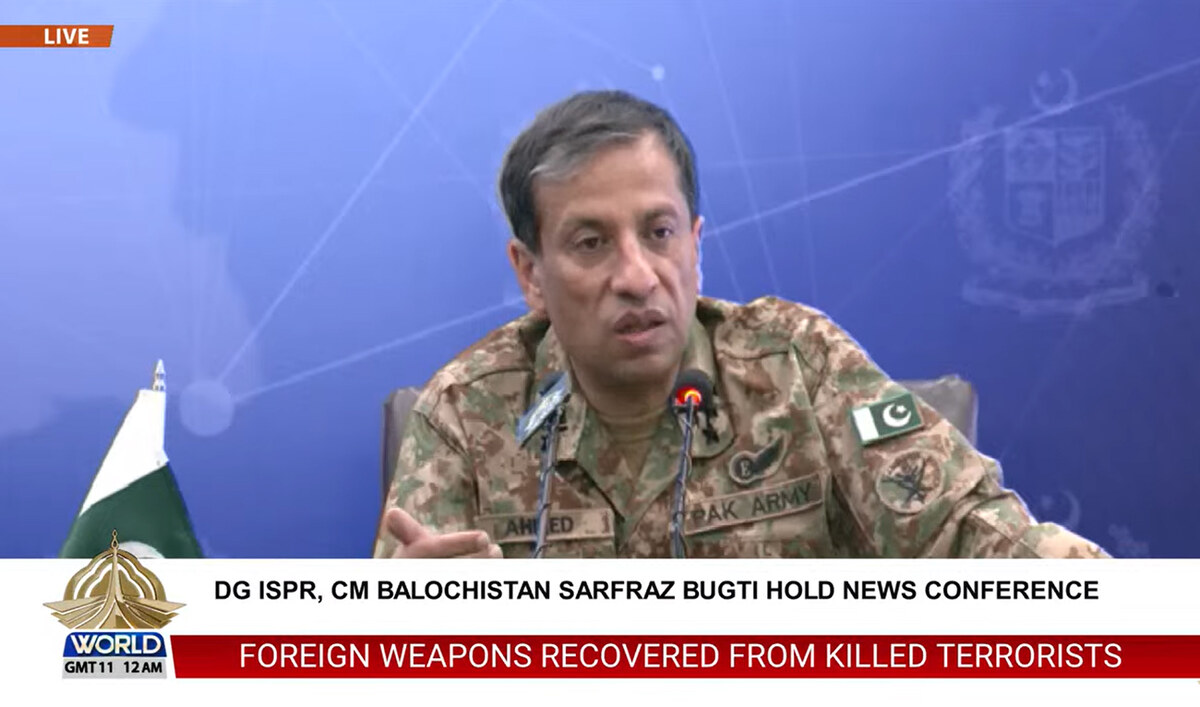
This screengrab, taken from state run Pakistan Television’s live broadcast, shows Pakistan’s military spokesperson, Lt. Gen. Ahmad Sharif Chaudhry, speaking during a press briefing on Balochistan train hijack, in Islamabad on March 14, 2025. (PTV World/Screengrab)
“I don’t agree with the term ‘intelligence failure’ because there are thousands of intelligence successes that people do not hear about, incidents that never happened because our intelligence detected and neutralized the threats,” he added.
Providing the train rescue details, he described the operation as “one of the most successful” conducted in a hostage situation and completed within a period of 36 hours.
“Not even a single casualty of hostages took place during the process,” he said, adding the passengers who were killed by the militants died shortly after they took over the train. “The whole operation was done with extreme expertise.”
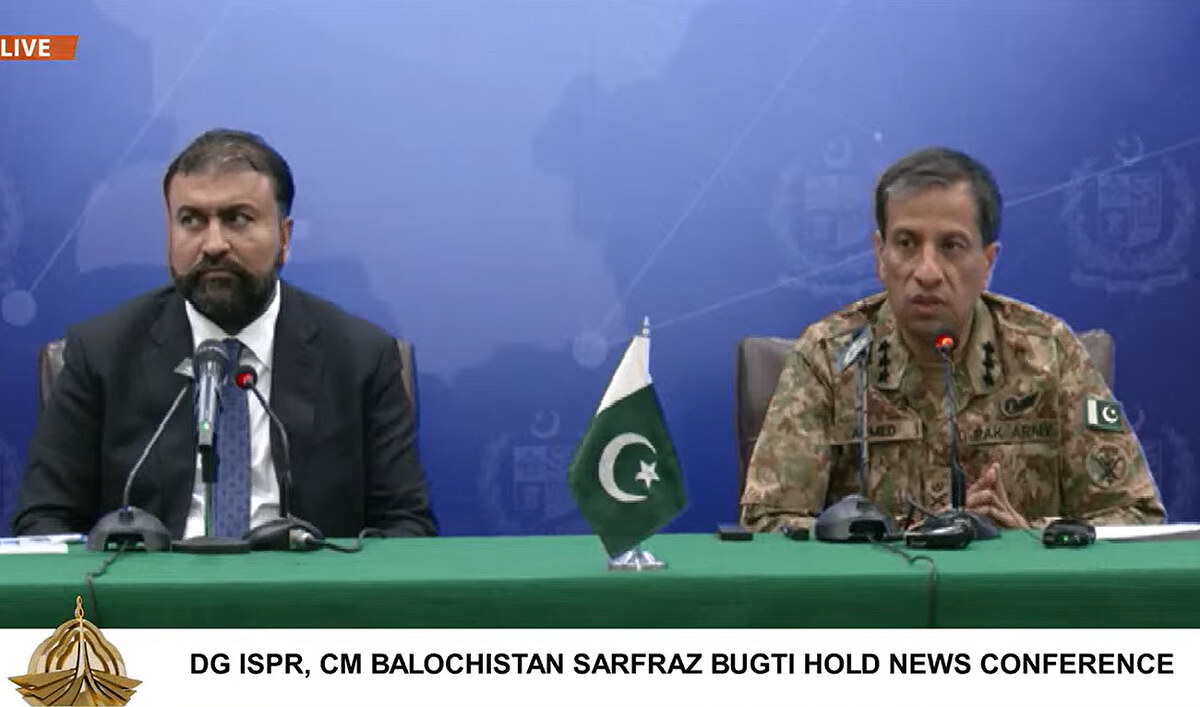
This screengrab, taken from state run Pakistan Television’s live broadcast, shows Pakistan’s military spokesperson, Lt. Gen. Ahmad Sharif Chaudhry, speaking during a press briefing with Chief Minister Sarfaraz Bugti (left) on Balochistan train hijack, in Islamabad on March 14, 2025. (PTV World/Screengrab)
Chaudhry said the armed forces executed the mission after a careful assessment of the situation, ensuring the safety of the hostages while eliminating the militants who had positioned suicide bombers near civilians to prolong the standoff.
The military spokesperson also reiterated that BLA militants were in contact with individuals inside Afghanistan, echoing Islamabad’s allegation that Afghan authorities have been backing anti-Pakistan groups, a charge the administration in Kabul denies.
Addressing the media, the Balochistan chief minister maintained India’s spy agencies and other hostile entities were waging an intelligence-driven war against Pakistan using Afghan soil.
Balochistan, Pakistan’s largest province by land area, has long been the site of a low-level insurgency, with separatist groups accusing the government of exploiting the province’s natural resources while leaving its people in poverty.
Government officials deny the allegation and say they are developing the province through multibillion-dollar projects, including those backed by China.


