BEIRUT: Qatar is set to provide Syria with gas via Jordan to improve the nation’s meagre electricity supply and boost Syria’s new rulers, in a move that a US official said had Washington’s approval.
It would be the most significant tangible support for the new administration in Damascus by Qatar, one of the region’s sternest opponents of the now-deposed Bashar Assad and strongest backers of the rebels-turned rulers who replaced him.
A US official said the gas deal had a nod of approval from President Donald Trump’s administration without saying how this was communicated.
Qatar’s state news agency later said an agreement had been signed between Qatar’s development fund and Jordan’s energy ministry to provide Damascus with “an approved supply of natural gas” via Jordan to help address Syria’s electricity shortage, without mentioning Syria’s new rulers or Washington.
Qatar’s fund will provide Jordan’s energy ministry with a grant to supply Syria with the gas, the fund told Reuters in an email.
Jordanian energy minister Saleh Al-Kharabsheh told Jordan’s state news agency the initiative would be fully funded by Qatar’s fund.
The gas will be received at Jordan’s Red Sea port of Aqaba and pumped to Syria via the Arab Gas Pipeline, Jordanian energy minister Al-Kharabsheh said.
A segment of the pipeline runs from Aquaba north across Jordan to Syria.
The US green light and efforts to encourage a deal between Kurdish forces in Syria’s north and Damascus suggest the US remains actively engaged in Syria, despite Washington moving more cautiously than European states to ease sanctions.
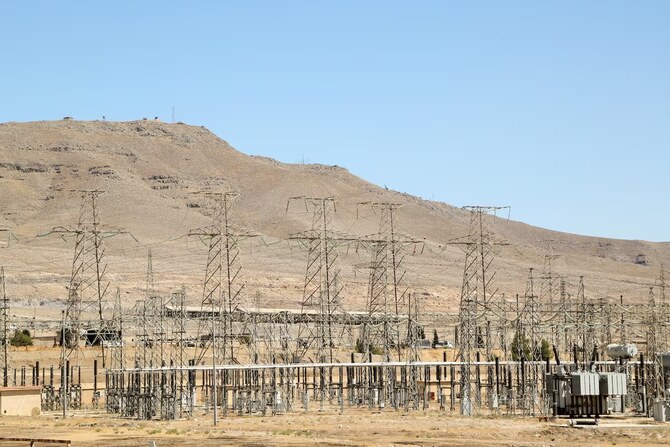
The gas would be transferred from Jordan via a pipeline to the Deir Ali power plant in southern Syria, two of the sources said.
The move will initially boost the Deir Ali power plant’s output by 400 megawatts per day, an amount that would “gradually increase,” according to the Qatari fund’s statement.
Estimates of Syria’s recent power capacity range up to around 4,000 MW.
The US State Department and Qatar’s foreign ministry did not respond to emailed requests for comment.
Syria suffers from severe power shortages, with state-supplied electricity available just two or three hours a day in most areas. Damage to the electricity grid means that generating or supplying more power is only part of the problem.
Damascus used to receive the bulk of its oil for power generation from Iran, but supplies have been cut off since Islamist Hayat Tahrir Al-Sham led the ouster of Tehran-allied former president Assad in December.
The interim government has pledged to quickly ramp up power supply, partly by importing electricity from Jordan and using floating power barges that have yet to arrive.
According to two further sources with knowledge of the matter, Jordan has received US approval to move forward with the supply of up to 250 MW of electricity during non-peak hours.
However, Syria still needs to make fixes to its electricity grid and solve other technical issues before the supply, expected at around 250 megawatts during non-peak hours, can begin, the sources said.
“The internal network in Syria is not yet ready to receive this and needs a significant amount of work. Additionally, some matters are still unclear about financing of the agreement,” said Ibrahim Seif, a former Jordanian minister of energy and mineral resources.
US and Jordanian officials did not respond to requests for comment on the plan.


![]()

Qatar to provide gas to Syria via Jordan
Short Url
https://arab.news/538bf
Qatar to provide gas to Syria via Jordan
- US official says the gas deal had a nod of approval from President Donald Trump’s administration
- Agreement signed between Qatar’s development fund and Jordan’s energy ministry to provide Damascus with 'an approved supply of natural gas'


Latest updates


Recommended


© 2026 SAUDI RESEARCH & PUBLISHING COMPANY, All Rights Reserved And subject to Terms of Use Agreement.