


NEW YORK CITY: Saudi Arabia has been on a transformative journey in recent years, particularly when it comes to women’s empowerment, with a range of once-unimaginable opportunities opening up in education, business, the workforce, and social life.
On the sidelines of the 69th UN Commission on the Status of Women, or CSW, chaired this year by Saudi Arabia, Princess Lamia bint Majid Al-Saud lauded the Kingdom’s strides toward gender equality and her vision for the future.
In a wide-ranging interview with Arab News, she highlighted the significant progress Saudi women have made, the challenges still on the horizon, and the critical role that the youth, especially young women, play in shaping the nation’s destiny.
“We have momentum. I think it is now our time to shine,” she said.
A key part of this momentum is the growing realization of the vast potential that Saudi women possess. With more than 9 million women in Saudi Arabia, 67 percent of whom are under the age of 30, the Kingdom holds an immense demographic advantage.
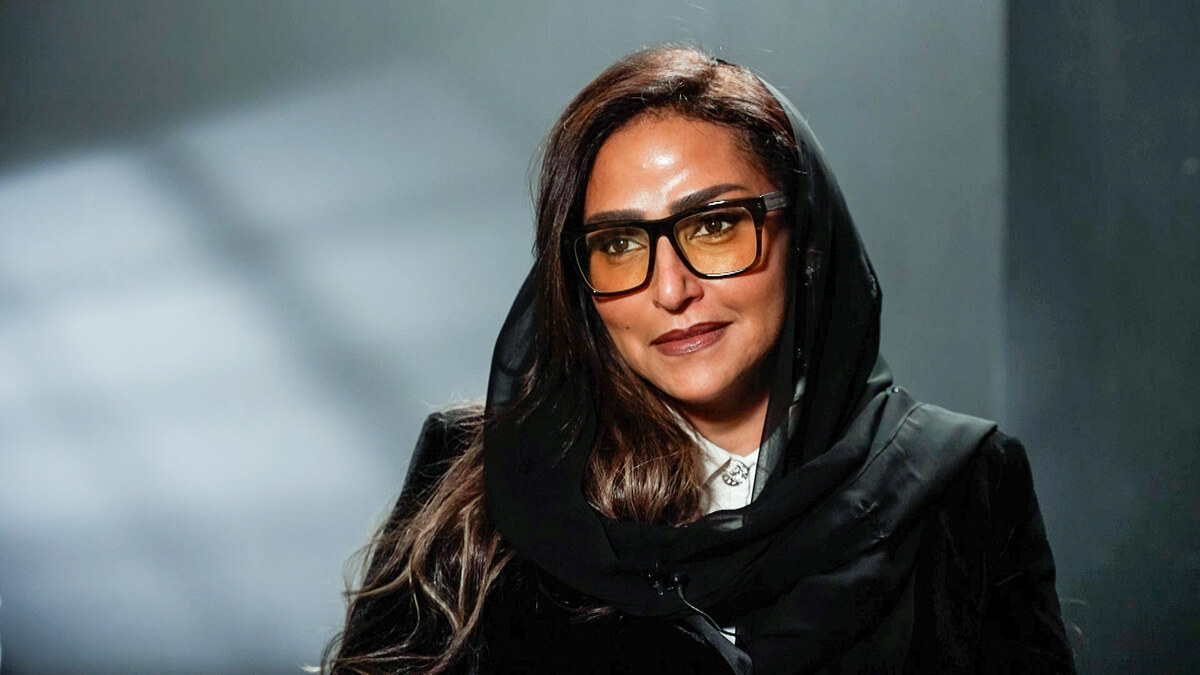
Princess Lamia
Princess Lamia said that the opportunities currently available to Saudi women in terms of education, employment, and empowerment were unprecedented.
“Can you imagine the amount of power? Can you imagine, with all the doors open for Saudi women, with all the support, with all the initiatives done, and the educational opportunities, and the training, the jobs, everything that is happening,” she said.
“This is our time. Now. There is no room for losing this opportunity.”
Princess Lamia reflected on her experience at the high-level side event at the CSW, where she was part of a panel titled: “From vision to reality: Saudi Arabia’s story of women’s empowerment.”
The event offered the Kingdom a chance to showcase the profound changes that have taken place in Saudi Arabia over the past decade — an opportunity that Princess Lamia said was historic.
“What happened, it was history,” she said. “We witnessed history with this amount of expertise of women sitting on the same panel in New York at the UN to present our success and our story.”
She said that it was a significant milestone not only for Saudi women but for the Kingdom as a whole, highlighting the country’s commitment to driving gender equality and empowering women across all sectors.
“For Saudi Arabia to chair the CSW, it’s well deserved,” she added.
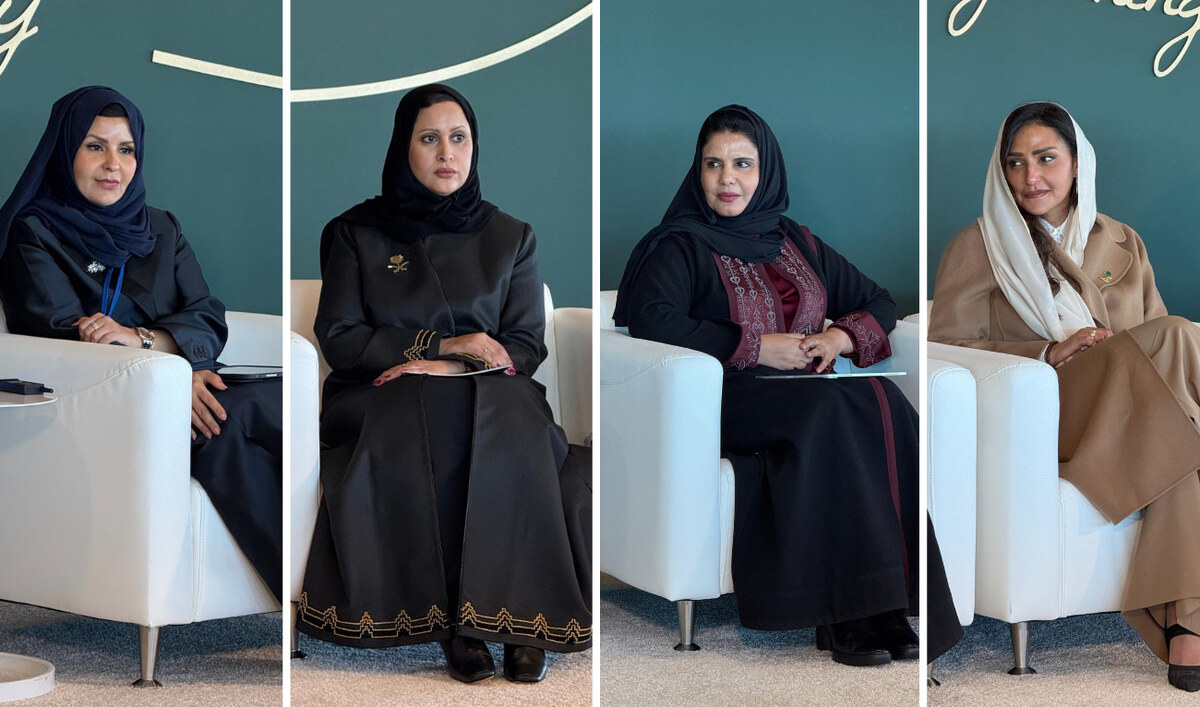
Left to Right: Prof. Einas Al-Eisa, Dr. Maimoonah Al-Khalil, Prof. Hanan Al-Ahmadi, and Princess Lamia bint Majid at the 69th session of the UN Commission on the Status of Women in New York. (Supplied)
For Princess Lamia, the presence of so many accomplished women at the event underscored the progress women had made. She drew particular attention to the confidence and determination of the panelists.
“It was astonishing,” she said. “The amount of confidence that reflects that we’re free to choose our path.”
Despite the Kingdom’s rapid progress, Princess Lamia acknowledged that challenges remain. “Let’s be very honest, where is the country that is 100 percent free of challenges? There’s no such a thing,” she said.
“It’s about sustaining the process and sustaining the development, and how you keep it going on the right path and on a healthy path, and at a healthy speed.
“Yes, we’ve been very fast, but we’ve been very late — that’s why we work very fast. But to have it sustained, this is the most important thing.
“Of course, we still have challenges. We’re a very young country in our 90s, and we did all of that in nine years.”
She added: “But where we reached (in that time), I don’t think even Europe and the US have the same thing in empowering women.”
Princess Lamia shared an example, highlighting the differences between Saudi Arabia and other regions in terms of women’s rights.
In many Western countries, gender equality issues such as equal pay for women are still being debated in government institutions, she said. However, in Saudi Arabia, any instance of unequal pay can be addressed immediately through legal channels.
“In Saudi Arabia, any governmental entity, if I prove that a male is taking one riyal more than me, I can sue them instantly,” she said. “Where is that, but in Saudi Arabia?”
A significant part of Princess Lamia’s vision for women’s empowerment is grounded in the example set by Princess Nourah bint Abdel Rahman, the sister of King Abdulaziz, who played an instrumental role in shaping the Kingdom’s early years.
Such was her impact, the largest women’s university in the world is named after her.
“Princess Nourah bint Abdel Rahman is the figure of women’s empowerment,” Princess Lamia said, adding that there is still much to be learned from her legacy.
Princess Nourah’s contributions to Saudi society were multifaceted, as “the consultant, the minister of foreign affairs, the sister, the friend, everything,” and a key figure in the royal family, said Princess Lamia.
King Abdulaziz, Princess Nourah’s brother, took great pride in her achievements, often saying, “I am Nourah’s brother,” rather than emphasizing his royal status.
“Can you imagine? With the tribal mentality, a man to say this during wartime?”
Princess Nourah’s humility and commitment to empowering others resonates deeply with Princess Lamia, who views her as a beacon of strength and inspiration. “She’s a character I think I’m embodying (in the sense) that I truly admire her,” she said.
Princess Lamia also highlighted the vital role women play in philanthropy and social development. She emphasized the critical role that mothers play in shaping strong families and societies.
“Listen, if you want to have a developing nation, it needs to rely on its people, and mothers are the main pillars,” she said.
“If the mother is very well-educated, empowered, definitely the family will be strong. One woman has always been and will always be the main pillar of a family and of society. The only job that you cannot resign from is being a mother.”
Princess Lamia also reflected on her own journey in philanthropy, particularly as the secretary-general of Alwaleed Philanthropies, the charitable foundation led by the Saudi businessman and investor Prince Alwaleed bin Talal.
She said that Prince Alwaleed’s decision to place his trust in women to lead and shape his philanthropic vision had left a lasting impact on Saudi Arabia and beyond.
“The relation between men and women, it is how you build this world,” she said. “This is how God created us. We need men and they need us. No one can move and move forward without the other. That’s a fact.”
Princess Lamia paid tribute to the Kingdom’s crown prince for implementing many of the reforms now serving women’s empowerment.
“Prince Mohammed bin Salman … he is the savior of the Kingdom,” she said, adding that his Vision 2030 has been a game-changer for the Kingdom, creating equal opportunities for both men and women.
“Under his leadership, Saudi Arabia has taken significant steps toward gender equality, breaking down barriers that once seemed insurmountable.
“Would we be here today… without the vision of one person, Prince Mohammed bin Salman? No. Prince Mohammed, he created Vision 2030, he empowered us, he changed the country.
“He represents more than half of the population (youth), he is talking the same language. We’ve been waiting for that, us, (who are not of) this generation, we’ve been waiting for equal opportunities and gender equality.”
Reflecting on the collaborative spirit that now defines Saudi Arabia’s approach to women’s rights, Princess Lamia said: “We don’t have to fight with each other. We can work with each other.”
She added: “What we did, our generation, how we struggled to find our place in different positions, and how we paved the way for the upcoming generation, wasn’t easy. But I believe in (young women) so much that they can do much better than us.”
She encouraged young women to seize “the golden opportunity” that lies before them.
“No nation, around the world, ever experienced what we’re experiencing. You’re living the dream,” she said, urging the next generation to stand firm, to recognize their worth, and to build on the hard-won gains of those who came before them.
“Make us feel that it was worth it,” she said. “Look at us and say: ‘She had a very tough life. It wasn’t easy, but she made it. I want to be much better than her.’”


