NEW YORK: Women are vital partners and agents of change, driving positive societal shifts ranging from economic growth and social justice to peace building, Saudi Arabia’s permanent representative to the UN has said, adding that their empowerment is essential to achieving a sustainable and more equitable world.
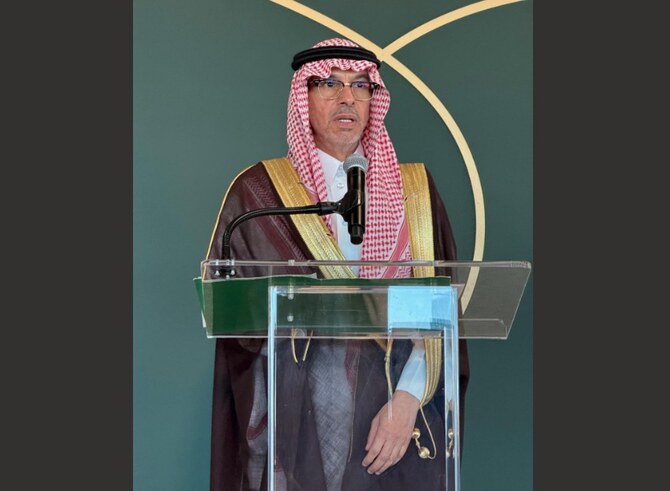
Speaking at a high-level side event during the 69th session of the UN Commission on the Status of Women, Abdulaziz Alwasil outlined the Kingdom’s transformative strides in advancing gender equality and women’s empowerment across various sectors.
The event, titled “From Vision to Reality: Saudi Arabia’s Story of Women’s Empowerment,” shed light on the policies and initiatives that have propelled women’s participation in the labor market and promoted their roles in diverse fields, such as technology, innovation, and renewable energy.
Alwasil told leading officials at the event that the Kingdom has launched a series of policies and initiatives to enhance women’s participation in the labor market and alleviate family burdens that may hinder them from achieving their academic and professional aspirations.
He said that the Kingdom’s efforts have gone beyond setting ambitious goals. Saudi Arabia initially aimed for a 30 percent women’s participation rate in the labor market by the third quarter of 2024. However, that target was exceeded ahead of schedule, with women now making up 36.2 percent of the workforce.
“This achievement underscores the Kingdom’s commitment to empowerment and reflects women’s significant efforts in strengthening their economic involvement,” Alwasil said, emphasizing the importance of creating flexible work environments that support women’s academic and professional ambitions.
The Saudi envoy highlighted the government’s collaborative efforts with civil entities to provide sustainable solutions that promote job stability and ensure women can fully contribute to both economic and social development.
He said that in addition to expanding opportunities in traditional sectors, Saudi Arabia is pushing for women’s involvement in non-traditional fields such as technology, cybersecurity, and renewable energy — key sectors that align with the country’s national ambitions and the evolving demands of the global economy.
“Women are critical partners in our journey toward a prosperous future,” Alwasil said, reaffirming the Kingdom’s dedication to promoting gender equality in sectors such as science, technology, engineering, mathematics, and health.
However, Alwasil also acknowledged persistent challenges, especially in conflict zones. “We face unprecedented crises marked by regional and international tensions,” he said.
“While progress has been made, these crises are accelerating a concerning decline, particularly for women in conflict zones.”
In response, Saudi Arabia is committed to protecting women globally, especially in conflict-stricken areas, and is collaborating with regional and international organizations to ensure their safety and empowerment, said Alwasil.
The Kingdom is also supporting policies that involve women in peacebuilding and humanitarian efforts.
Alwasil reiterated Saudi Arabia’s pledge to remain a pioneer in women’s empowerment, ensuring that women are active participants in all aspects of society.
“Women are vital partners and agents of change,” he said. “Their empowerment is essential to achieving a sustainable and more equitable world.”


Women are ‘agents of change’ driving societal shifts: Saudi UN envoy
https://arab.news/cxztp
Women are ‘agents of change’ driving societal shifts: Saudi UN envoy

- Abdulaziz Alwasil highlights Kingdom’s advances in gender equality across range of sectors
- Envoy addresses high-level side event during 69th session of the UN Commission on the Status of Women


Experimental farm in Al-Lith looks into future of Saudi Arabian agriculture
- Research initiative reflects strategic transformation
JEDDAH: An experimental farm in Saudi Arabia’s Al-Lith Governorate is one of the research initiatives reflecting the strategic transformation taking place in the Kingdom’s agricultural sector.
The farm uses highly efficient, sustainable production models that combine scientific research with commercial application, contributing to strengthening the country’s food security system and the sustainability of water resources.
Located in the Ghumaiqa Center on an area of about 10 hectares, the cutting-edge farm is a testing platform for modern agricultural technologies that tackle the challenge of water scarcity.
The farm includes developed open fields and modern greenhouses, supported by smart irrigation encompassing drip and sprinkler irrigation alongside surface and subsurface technologies.
All the systems operate via smart controls that enable the monitoring of water consumption and ensure improved efficiency, thereby achieving a balance between agricultural production and water conservation.
The farm also uses treated and diluted low-salinity seawater.
It aims to diversify agricultural water sources, reduce reliance on freshwater, and open new horizons for agriculture in coastal and semi-arid environments.
The project represents a promising investment opportunity in the field of smart agriculture, enabling the development of commercially scalable production models, particularly for high-value vegetables and fruits, while reducing operational costs associated with water and energy, enhancing the economic feasibility of future agricultural projects.
In addition, the project contributes to transferring and localizing agricultural expertise, supporting local food supply chains, and creating an attractive environment for agricultural investment.
This aligns with Sustainable Development Goals and enhances the efficiency of the private sector in adopting innovative agricultural solutions.
Yahya bin Abdulrahman Al-Mahabi, the director of the Ministry of Environment, Water and Agriculture office in Al-Lith Governorate, told the Saudi Press Agency that the project represented the future of agriculture in the Kingdom.
He explained that the vision was based on investing in technology, enhancing the return on water per unit, and integrating scientific research with investment opportunities.
Al-Mahabi spoke of the experimental farm as a modern, scalable and replicable model applicable in several regions of the Kingdom, particularly in coastal environments.
Al-Mahabi highlighted the Ministry of Environment, Water and Agriculture’s commitment to supporting distinctive projects that contributed to achieving food security while developing rural areas and enhancing agricultural production efficiency, in line with the objectives of the Kingdom’s Vision 2030.


