

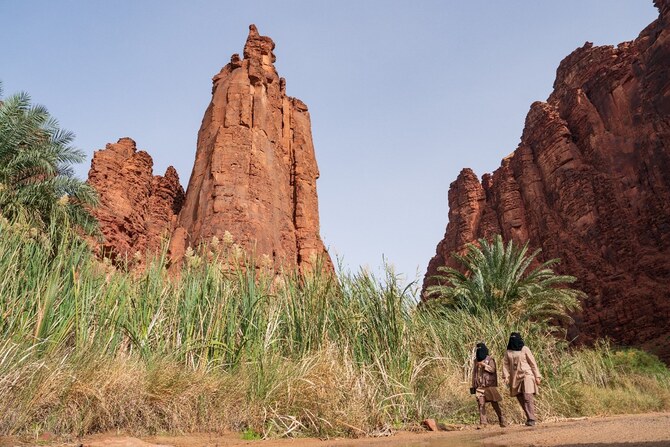

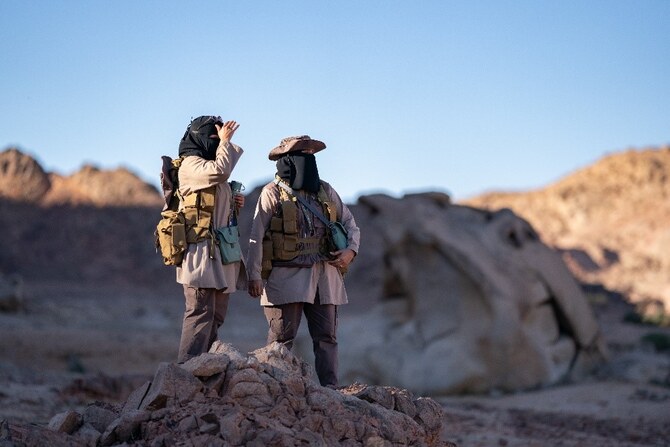


RIYADH: Prince Mohammed bin Salman Royal Reserve marked International Women’s Day by announcing the expansion of its pioneering all-women ranger unit, one of the largest in the Middle East.
“Women are breaking new ground at Prince Mohammed bin Salman Royal Reserve, one patrol at a time,” Andrew Zaloumis, CEO at the reserve, said. “Their presence strengthens our conservation efforts, brings new ideas to the table, and helps connect our communities to conservation in ways we have never seen before.”
With 40 new recruits, women now comprise 34 percent of the reserve’s ranger team — surpassing the global average of 11 percent and setting a new regional benchmark. These 84 nature rangers play a critical role in protecting the reserve’s landscapes, culture and wildlife.
The reserve’s all-women ranger unit calls itself Al Anqas (the phoenix), symbolizing a new beginning for Saudi women in conservation. Through their daily patrols and interactions, the rangers challenge perceptions and engage local communities in meaningful discussions around nature protection and conservation practices.
Rogayah Awad Al-Balawi, a ranger from Al-Sudayd in Al-Wajh Governorate, embodies the spirit of the initiative. Her journey, from a traditional Bedouin upbringing to becoming one of Saudi Arabia’s pioneering female wildlife rangers, highlights resilience and determination.
She said: “The job was described as a ranger, which was a new concept for me. No Saudi woman had worked in this field before, so I didn’t know exactly what to expect.”
Now, alongside her colleagues, she regularly patrols the reserve’s vast landscapes, using her local knowledge to help safeguard its wildlife and habitats. “Having local women in these roles is crucial. We understand the land, its people, and its unique needs,” she said.
Asma Khdeer, senior manager of capacity building and natural resource use management, has played a key role in ranger training, and asked: “Who is there better to support local people to make meaningful change in their community than someone who understands the challenges?”
She told of her pride in watching new recruits navigate rugged terrain, track wildlife and participate in their first patrols, and added: “It felt like the stereotypes we’ve faced as women were finally being dismantled — not with speeches but actions. That’s what makes our work transformative. Women bring a unique perspective to conservation, thinking about families and future generations.”
Each year thousands of applicants compete for limited positions on the reserve’s ranger training program. Selected candidates undergo an intensive four-day selection process, testing their physical fitness, teamwork and character. Successful recruits then take on a rigorous nine-week training course led by Ali Al-Balawi, the reserve’s capacity-building supervisor.
The comprehensive training covers essential topics such as conservation management, technical field skills, wildlife monitoring, tracking, off-road driving, cultural heritage conservation, self-defense, incident reporting, first aid, and disaster management.
The reserve continues to reinforce its vision of creating a vibrant society and thriving economy by empowering local women and providing them with employment and training opportunities.


