

Intelligence sharing with Pakistan DG ISI led to capture of Kabul bombing suspect — CIA chief

US Central Intelligence Agency (CIA) Director John Ratcliffe speaking to Fox News on March 5, 2025. (Fox News/Screen grab)
Short Url
Updated 07 March 2025
Follow

Intelligence sharing with Pakistan DG ISI led to capture of Kabul bombing suspect — CIA chief

  • CIA Director John Ratcliffe says told Lt Gen Asim Malik about Sharifullah’s location on the Afghan-Pakistan border
  • US has charged Sharifullah with helping plan attack at Kabul airport which killed at least 170 Afghans and 13 US soldiers

ISLAMABAD: US Central Intelligence Agency (CIA) Director John Ratcliffe confirmed this week Mohammad Sharifullah, blamed for a 2021 attack on US troops at Kabul airport, was arrested through intelligence sharing with Pakistan’s top military spy agency, the Inter-Services Intelligence (ISI).

The United States has charged Sharifullah with helping plan the attack at Kabul airport which killed at least 170 Afghans and 13 US soldiers as they sought to help Americans and Afghans flee in the chaotic aftermath of the Taliban takeover. The attack was claimed by Daesh-K, the Afghan branch of the Daesh group. 

Speaking to Fox News, Ratcliffe said he had shared information with his Pakistani counterpart, Lt Gen Asim Malik, the DG ISI, about the location of Sharifullah, also known by the alias Jafar, along the Pakistan-Afghanistan border.

“My second day on the job I spoke with the head of Pakistani intelligence,” Ratcliffe told Fox News in an interview. “I shared with him that we had intelligence indicating that Jafar was located in the Afghan-Pakistan border region.”

He said he told Malik to make the capture of the Daesh commander “a high priority” if Pakistan wanted to work with President Donald Trump and “have good relations with our country.”

“So, we worked with Pakistani intelligence,” Ratcliffe added. “Jafar was apprehended in short order and is in US custody.”

The US Justice Department has charged Sharifullah with “providing and conspiring to provide material support and resources” to Daesh. 
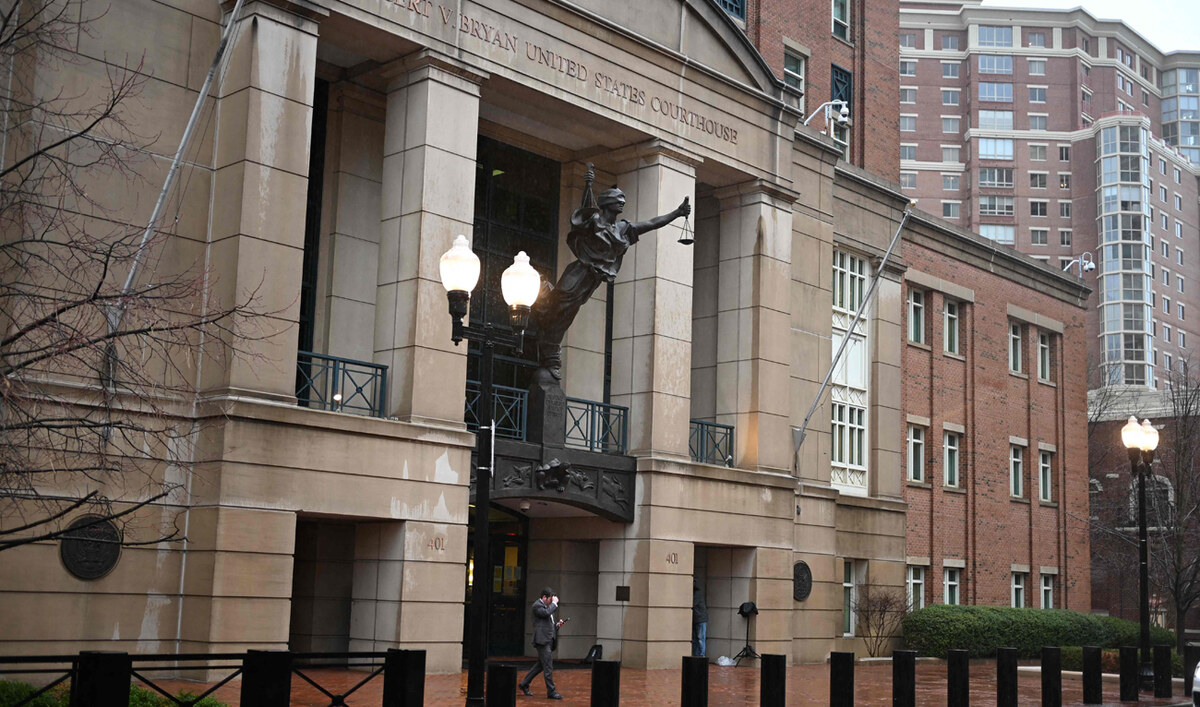


A view of the Albert V. Bryan US Courthouse of the US District Court Eastern District of Virginia, on March 5, 2025, in Alexandria, Virginia. A Daesh operative who helped plan the 2021 suicide bombing outside Kabul airport during the chaotic US military withdrawal has been arrested, President Donald Trump has said. The man named as Mohammad Sharifullah, also known as Jafar, and appeared in a federal court in Virginia on March 5, 2025. (AFP)

“He confessed. This was the planner of that bombing,” White House national security adviser Mike Waltz said in an interview with Fox News this week. 

On Thursday, US State Department spokesperson Tammy Bruce said the US was thankful to the Pakistani government for its “partnership” in bringing Sharifullah to justice. 

“And we have, regarding Pakistan and the nature of our relationship, we have a common interest, obviously, in fighting terrorism, and the arrest of this terrorist also illustrated that US-Pakistan cooperation on counterterrorism remains vitally important,” she said during a press briefing.

Pakistani Prime Minister Shehbaz Sharif has also thanked Trump for recognizing Pakistan’s role in counterterrorism and confirmed the involvement of Pakistani security forces in the arrest of Sharifullah, an Afghan national.

Pakistan and the US have a history of counterterrorism cooperation, especially post-9/11, when Pakistan began handing over Taliban and Al-Qaeda members to US authorities. 

However, Pakistan’s links with Washington have frayed in recent years, while arch-rival India has gained greater influence.


Pakistan, global crypto exchange discuss modernizing digital payments, creating job prospects 

Updated 05 December 2025
Follow

Pakistan, global crypto exchange discuss modernizing digital payments, creating job prospects 

  • Pakistani officials, Binance team discuss coordination between Islamabad, local banks and global exchanges
  • Pakistan has attempted to tap into growing crypto market to curb illicit transactions, improve oversight

ISLAMABAD: Pakistan’s finance officials and the team of a global cryptocurrency exchange on Friday held discussions aimed at modernizing the country’s digital payments system and building local talent pipelines to meet rising demand for blockchain and Web3 skills, the finance ministry said.

The development took place during a high-level meeting between Finance Minister Muhammad Aurangzeb, Pakistan Virtual Assets Regulatory Authority (PVARA) Chairman Bilal bin Saqib, domestic bank presidents and a Binance team led by Global CEO Richard Teng. The meeting was held to advance work on Pakistan’s National Digital Asset Framework, a regulatory setup to govern Pakistan’s digital assets.

Pakistan has been moving to regulate its fast-growing crypto and digital assets market by bringing virtual asset service providers (VASPs) under a formal licensing regime. Officials say the push is aimed at curbing illicit transactions, improving oversight, and encouraging innovation in blockchain-based financial services.

“Participants reviewed opportunities to modernize Pakistan’s digital payments landscape, noting that blockchain-based systems could significantly reduce costs from the country’s $38 billion annual remittance flows,” the finance ministry said in a statement. 

“Discussions also emphasized building local talent pipelines to meet rising global demand for blockchain and Web3 skills, creating high-value employment prospects for Pakistani youth.”

Blockchain is a type of digital database that is shared, transparent and tamper-resistant. Instead of being stored on one computer, the data is kept on a distributed network of computers, making it very hard to alter or hack.

Web3 refers to the next generation of the Internet built using blockchain, focusing on giving users more control over their data, identity and digital assets rather than big tech companies controlling it.

Participants of the meeting also discussed sovereign debt tokenization, which is the process of converting a country’s debt such as government bonds, into digital tokens on a blockchain, the ministry said. 

Aurangzeb called for close coordination between the government, domestic banks and global exchanges to modernize Pakistan’s payment landscape.

Participants of the meeting also discussed considering a “time-bound amnesty” to encourage users to move assets onto regulated platforms, stressing the need for stronger verifications and a risk-mitigation system.

Pakistan has attempted in recent months to tap into the country’s growing crypto market, crack down on money laundering and terror financing, and promote responsible innovation — a move analysts say could bring an estimated $25 billion in virtual assets into the tax net.

In September, Islamabad invited international crypto exchanges and other VASPs to apply for licenses to operate in the country, a step aimed at formalizing and regulating its fast-growing digital market.