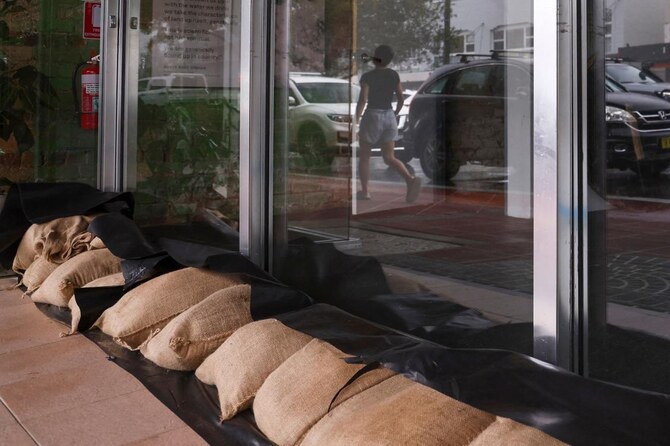
SYDNEY: Cyclone Alfred stalled off Australia’s east coast on Thursday as officials shut airports, schools and public transport while residents stockpiled supplies and sandbagged homes against flooding expected when the category-two storm hits.
The storm is now likely to make landfall by Saturday morning near Brisbane, Australia’s third-most populous city, the Bureau of Meteorology said in its latest update, compared with a prior projection of landfall by early Friday.
The storm’s destructive reach will stretch across the border regions of the states of Queensland and New South Wales, the bureau said, bringing heavy rain, flooding and damaging wind.
“Alfred is behaving at the moment like a completely unwanted houseguest. It’s told us it’s going to be late but linger even longer,” New South Wales Premier Chris Minns told reporters.
“Unfortunately that means the window for destruction in our community – heavy rains, winds, powerful surf – is longer than we would have otherwise liked.”
Storm warnings on Thursday stretched for more than 500km across the northeast coast, as huge waves whipped up by the cyclone eroded beaches, and officials urged residents in flood-prone areas to evacuate soon.
Prime Minister Anthony Albanese said the defense force would be ready to support emergency services.
Heavy rain from the weather system has already drenched some regions, said Dean Narramore, forecaster at Australia’s weather bureau.
Narramore said the cyclone’s stalling could result in “a longer and prolonged period of heavy rainfall, particularly in northern New South Wales” leading to life-threatening flash flooding.
New South Wales resident Sara Robertson and her family has moved all their valuables from their home in the rural town of Murwillumbah to a motel ahead of the storm.
“I’m glad we’ve got a little bit more of a breather, feeling very tired today and we still have a lot to do,” Robertson told ABC News after moving computers and electronics into the motel.
More than 5,000 properties in southeast Queensland and thousands in northern New South Wales are without power as officials warned there would be more outages when the wind speed increases.
Brisbane airport said it will suspend operations around 4 p.m. (0600 GMT) on Thursday but keep its terminals open for defense operations.
Qantas Airways said its international operations from Brisbane would remain suspended until Saturday noon and domestic flights until Sunday morning.
More than 1,000 schools in southeast Queensland and 250 in northern New South Wales were closed on Thursday, while public transport in Brisbane has been suspended.
Alfred has been called by officials a “very rare event” for Brisbane, Queensland’s state capital, with the city last hit by a cyclone more than half a century ago in 1974. The city of around 2.7 million had near misses from cyclones in 1990 in 2019.


![]()

Cyclone Alfred stalls off Australia’s east as millions brace for impact
Short Url
https://arab.news/mjbtn
Cyclone Alfred stalls off Australia’s east as millions brace for impact
- Cyclone Alfred is now likely to make landfall by Saturday morning near Brisbane, Australia’s third-most populous city
- The storm’s destructive reach will stretch across the border regions of the states of Queensland and New South Wales


Latest updates






© 2026 SAUDI RESEARCH & PUBLISHING COMPANY, All Rights Reserved And subject to Terms of Use Agreement.