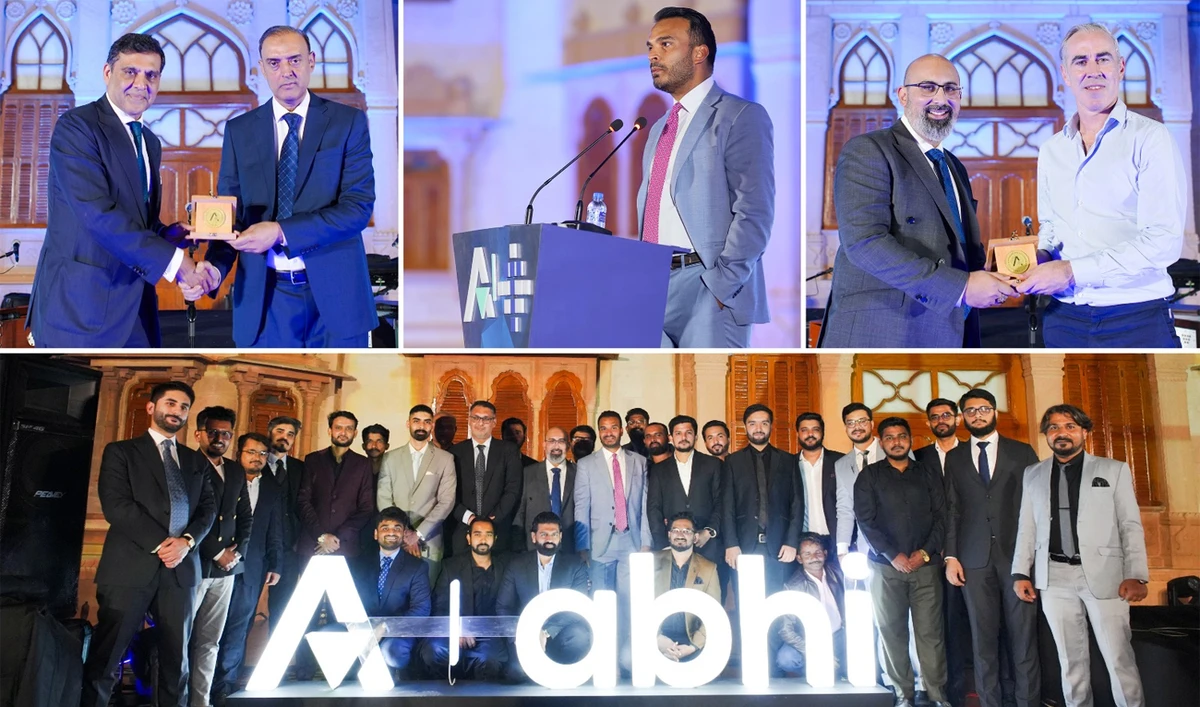
KARACHI: Pakistani fintech ABHI, which expanded its operations to the United Arab of Emirates (UAE) and Kingdom of Saudi Arabia, has launched ABHI Microfinance Bank in collaboration with TPL Corp, the company said on Thursday.
Founded in 2021, ABHI has been serving customers in Pakistan, UAE, Saudi Arabia and Bangladesh through its credit-bridging products such as the Earned Wage Access (EWA) facility.
TPL Corp. is the investment holding company of the TPL Group with investments across the insurance, real estate, transport, securities, technology and financial sectors
ABHI said its strategic collaboration, approved by the Pakistani central bank, was a major step toward redefining financial inclusion in the South Asian country.
“This acquisition marks a significant step toward strengthening Pakistan’s financial ecosystem and expanding access to credit for unserved and underserved communities,” the fintech firm quoted State Bank of Pakistan Governor Jameel Ahmed as saying at the launch of ABHI Microfinance Bank.
“Collaborations like these play a vital role in driving financial inclusion and empowering individuals and businesses across the country.”
The event, hosted by ABHI and TPL Corp. in Karachi, brought together international investors, industry leaders, financial experts and key stakeholders, serving as a platform to highlight the collective vision of the three entities in transforming Pakistan’s financial landscape.
The development comes as Pakistan seeks to increase financial inclusion and document its economy as the South Asian country treads a tricky path to economic recovery under a $7 billion International Monetary Fund (IMF) program.
SBP Governor Ahmad this week said the central bank has set a target to increase bank account coverage in the country to 75 percent of the adult population and to reduce the gender gap to 25 percent by 2028.
Pakistan, with a population of 240 million, is home to one of the world’s largest unbanked populations, with around 64 percent of its adult population having a bank account, according to central bank figures.
The central bank chief also urged the banking industry to increase their usage of artificial intelligence, based on cellular and satellite data, to provide cost-effective alternative delivery channels to enhance access, usage and quality of financial services.
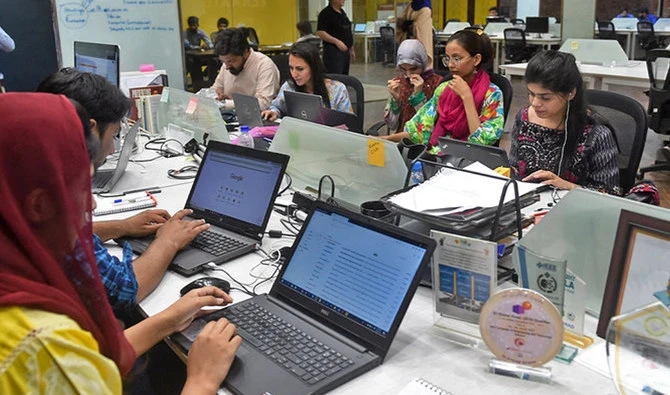
Pakistani fintech ABHI, after Middle East expansion, launches microfinance bank
https://arab.news/maexv
Pakistani fintech ABHI, after Middle East expansion, launches microfinance bank
- Founded in 2021, ABHI has been serving customers in Pakistan, UAE, Saudi Arabia and Bangladesh through its credit-bridging products
- The fintech firm says its collaboration with TPL Corp. to launch microfinance bank is a major step toward financial inclusion in Pakistan
Pakistan to sell excess gas in international markets from Jan.1— petroleum minister
- Pakistan was reportedly exploring ways to reduce $378 million in annual losses from supply glut caused by excess fuel imports
- Move to sell excess LNG in international markets will limit $3.56 billion losses caused since 2018-19, says petroleum minister
ISLAMABAD: Pakistan will sell its excess liquefied natural gas (LNG) in international markets from Jan. 1, Petroleum Minister Ali Pervaiz Malik said, revealing the move would limit losses caused from a years-long supply gut.
Local and international media outlets had reported in July that Pakistan was exploring ways to sell excess LNG cargoes amid a gas supply glut that government officials said was costing domestic producers $378 million in annual losses. News reports had said Pakistan had at least three LNG cargoes in excess that it imported from Qatar and has no immediate use for.
Speaking to reporters during a press conference on Sunday, Malik said there was an excess of imported gas in Pakistan as the use of this fuel for power generation had reduced in the country during the past few months. He said Islamabad had been forced to sell the gas to local consumers, due to which the circular debt in the gas sector from 2018 till now had ballooned to around Rs1,000 billion [$3.56 billion].
“From Jan. 1 we will sell this excess fuel in international markets to reduce our burden and limit our losses of this Rs1,000 billion [$3.56 billion],” Malik said.
He said this move would also allow Pakistan’s state-owned enterprises in the sector to operate on their full capacity and generate profits and employment.
Malik also spoke of foreign oil companies that were ready to invest millions in the country in the near future.
The minister cited the recent visit of Turkish energy minister to Pakistan which had resulted in the state-owned Turkish Petroleum signing deals to carry out onshore and offshore drilling activities in Pakistan.
“Turkish Petroleum will also open its office in Islamabad, where 10 to 15 Turkish nationals will be working,” Malik said.
He also said that a delegation of the State Oil Company of Azerbaijan Republic (SOCAR) visit Pakistan this week, adding that it was also expected to collaborate with local companies for oil and gas exploration.
The minister said SOCAR was also opening its office in Pakistan.
“It will also invest millions of dollars in the construction of an oil pipeline from Machike to Thalian in collaboration with the PSO (Pakistan State Oil) and FWO (Frontier Works Organization),” Malik said.