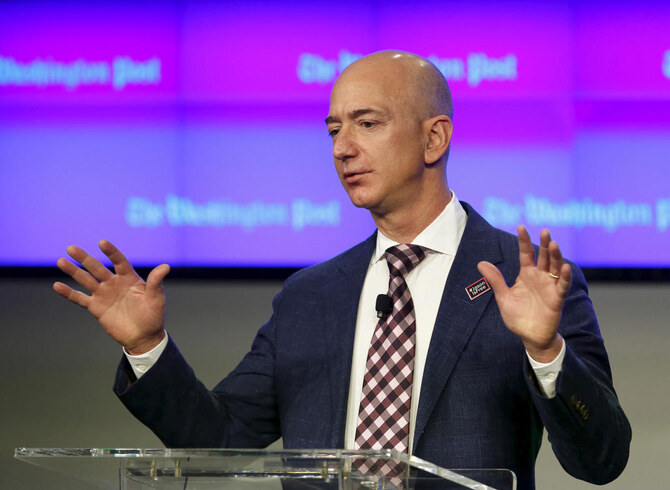
WASHINGTON: The Washington Post will no longer run views opposed to “personal liberties and free markets” on its opinion pages, its owner Jeff Bezos announced on Wednesday, the latest intervention by the billionaire in the major US paper’s editorial operations.
“We are going to be writing every day in support and defense of two pillars: personal liberties and free markets,” wrote Bezos on social media platform X.
“We’ll cover other topics too of course, but viewpoints opposing those pillars will be left to be published by others.”
The move, a major break from the norm on opinion pages at the Post and at most credible news media organizations worldwide, comes as US media face increasing threats to their freedom and accusations of bias from President Donald Trump.
In October, Bezos sparked controversy by blocking the Post’s planned endorsement of Democratic Vice President Kamala Harris for the 2024 presidential election, triggering newsroom protests and subscriber cancelations.
And in January, an award-winning political cartoonist for the newspaper announced her resignation after a cartoon depicting Bezos groveling before Trump was rejected.
At the time, editorial page editor David Shipley defended the decision, saying it was made to avoid repeated coverage on the same topic.
On Wednesday, Bezos announced Shipley would be leaving his post because he had not signed on to the new opinion pages policy.
“I suggested to him that if the answer wasn’t ‘hell yes,’ then it had to be ‘no,’” said Bezos.
Other Post staffers also expressed their concern.
“Massive encroachment by Jeff Bezos into The Washington Post’s opinion section today — makes clear dissenting views will not be published or tolerated there,” said Jeff Stein, the paper’s chief economics correspondent, on X.
Stein added that he had “not felt encroachment on my journalism on the news side of coverage, but if Bezos tries interfering with the news side I will be quitting immediately.”
Amazon owner and world’s third-richest man Bezos, along with other US tech moguls, have appeared increasingly close to Trump since his election last year.
Bezos was among a group of tech billionaires who were given prime positions at Trump’s inauguration, and he visited the Republican at his Mar-a-Lago estate during the transition period.
In his post on Wednesday, Bezos said the Post did not have to provide opposing views because “the Internet does that job.”


![]()

Billionaire Bezos announces restrictions on Washington Post opinion coverage
Short Url
https://arab.news/jump7
Billionaire Bezos announces restrictions on Washington Post opinion coverage
- World’s third-richest man said the newspaper will no longer run views opposed to “personal liberties and free markets”


Latest updates





© 2026 SAUDI RESEARCH & PUBLISHING COMPANY, All Rights Reserved And subject to Terms of Use Agreement.