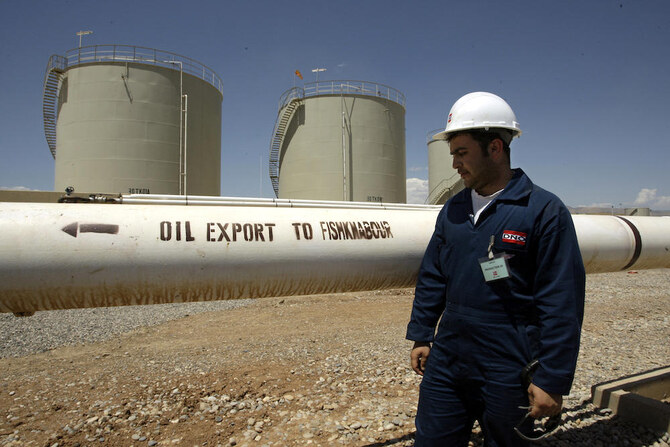
BAGHDAD: Iraq is waiting for Turkiye’s approval to restart the oil flows from the Iraqi Kurdistan region, the Iraqi oil minister said on Monday, adding that Kurdish oil exports will hopefully be ready in two days.
Asked if resuming Kurdish oil exports will affect Iraq’s OPEC compliance, Hayan Abdel-Ghani told reporters that Baghdad is committed to the OPEC+ decisions and exported volumes under the control of the Iraqi oil ministry.
Iraqi Kurdistan authorities have agreed with the federal oil ministry to restart Kurdish crude exports based on available volumes, Kurdistan’s regional government said on Sunday.
The pipeline was halted by Turkiye in March 2023 after the International Chamber of Commerce (ICC) ordered Ankara to pay Baghdad $1.5 billion in damages for unauthorized exports between 2014 and 2018.
US President Donald Trump’s administration is putting pressure on Iraq to allow Kurdish oil exports to restart or face sanctions alongside Iran, sources have told Reuters. An Iraqi official later denied pressure or the threat of sanctions.
A speedy resumption of exports from Iraq’s semi-autonomous Kurdistan region would help to offset a potential fall in Iranian oil exports, which Washington has pledged to cut to zero as part of Trump’s “maximum pressure” campaign against Tehran.
Asked if the northern oil exports through neighboring Turkiye’s Ceyhan port will include crude oil produced from Iraq’s Kirkuk fields, Hayan Abdel-Ghani told reporters: “Production from Kirkuk fields will be for local use.”


![]()

Iraqi Kurdistan can start oil flows within days on Turkish approval, minister says
Short Url
https://arab.news/mcuzy
Iraqi Kurdistan can start oil flows within days on Turkish approval, minister says
- Iraqi Kurdistan authorities have agreed with the federal oil ministry to restart Kurdish crude exports based on available volumes
- A speedy resumption of exports from semi-autonomous Kurdistan region would help to offset a potential fall in Iranian oil exports


Latest updates


© 2026 SAUDI RESEARCH & PUBLISHING COMPANY, All Rights Reserved And subject to Terms of Use Agreement.