


RIYADH: Saudi investment firm Derayah Financial saw its assets under management soar to SR17 billion ($4.53 billion) in 2024 as it outpaced growth across the sector in the Kingdom, according to its CEO.
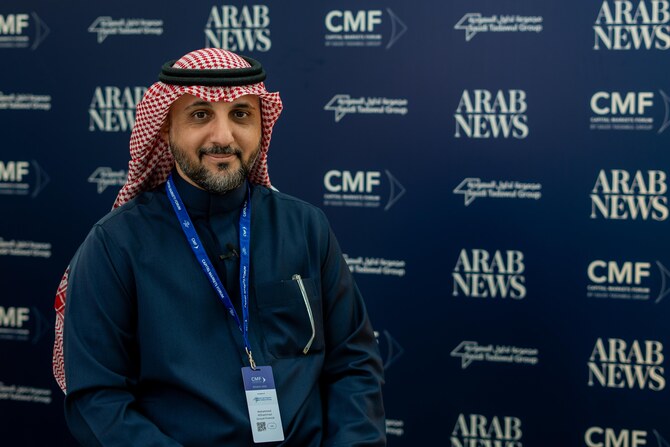
Speaking to Arab News at the Capital Markets Forum 2025, Mohammed Al-Shammasi revealed that this rise to a 70 percent year-on-year growth, ranking the company among the top independent firms in Saudi brokerage revenues, with the third-largest market share.
Saudi Arabia’s asset management industry was set for growth in the second half of 2024 and into 2025, with AUM increasing 13.5 percent year over year to exceed $250 billion by mid-2024, according to a Fitch Ratings report released in October.
The Kingdom has the largest asset management industry in the Gulf Cooperation Council, the fifth-largest in the Organisation of Islamic Cooperation, and the second-largest public Islamic funds market globally.
“The overall size of the market is actually growing at a very decent growth rate. So, if you look at retail brokerage or digital brokerage, it is historically growing at a 9 percent CAGR year after year,” he said, adding: “On the asset management side, that has been growing at around 14 percent year after year.”
Oversubscribed IPO
Al-Shammasi also discussed Derayah’s recent initial public offering, which was 162 times oversubscribed, underscoring the firm’s strong market position. “This is a great testament to the company’s performance over the past few years,” he said.
Founded 17 years ago as a digital challenger in capital markets, Derayah has grown into Saudi Arabia’s third-largest brokerage on of the the largest independent brokers in the region.
The IPO allows shareholders to sell 20 percent of the company’s shares in a secondary transaction, with 90 percent allocated to corporates and institutions and 10 percent to retail investors.
“We think this will give us huge credibility in the market,” Al-Shammasi said, adding that the transaction could also pave the way for more fintech companies to list on the Saudi stock exchange.
The CEO emphasized the strong demand for Derayah’s IPO from investors across Asia, Europe, and the US. “We have seen investors from all over the world submitting bids for our IPO,” he noted.
Al-Shammasi further assured that Derayah is well-funded for the near future, with a debt-free balance sheet and a track record of generous dividend distributions. “The company does not really need any capital in the near term to continue its strategy and growth plans,” he said.
“We have a perfect environment to raise money here in the Kingdom, and I’m more than happy to tap the market if we need it,” Al-Shammasi added.
The CEO also revealed that Derayah has partnered with Alpaca, a significant player in international brokerage, to cater to the growing local fintech sector. The partnership aims to provide fintechs in Saudi Arabia with a localized version of Alpaca’s services while facilitating international investors’ access to the Saudi market.
“Alpaca operates a lot of brokerage houses, and we believe this partnership will pave the way for international investors to come and trade in the local market,” he explained.
The Capital Markets Forum 2025, hosted by Saudi Tadawul Group, aims to bring together policymakers, business leaders, and industry experts to discuss trends shaping the Kingdom’s capital markets and position Saudi Arabia as a key player in the global financial ecosystem.


