


MINNEAPOLIS: In a Minneapolis apartment, the curtains are drawn and a table with four computers and three children make a crude substitute for a classroom.
Esmeralda, Kevin and Carlos have stopped going to school — at least physically — in the weeks since US immigration agents surged into the Midwestern city.
“If I go out, it’s only outside in the hallway,” Kevin, 12, told AFP.
Like many immigrant children in Minneapolis, Kevin is taking his classes online — a practice schools thought they had left behind after the worst of the Covid-19 pandemic.
Online learning has once again become a necessity for some in the community as people remain indoors, seeking to avoid President Donald Trump’s mass deportation campaign.
After a raid on Esmeralda’s high school about a month ago, her mother Abril decided none of her children would leave the home. She has no idea when they will step outside again.
Like all members of the family, Abril spoke to AFP under a pseudonym.
The family came to the United States from Mexico a year and half ago to seek asylum, and they are still waiting on a legal decision.
People with such cases have been targeted by immigration officials after the Trump administration launched a review of the legal status of the approximately 5,600 refugees in Minnesota who have not yet been given green cards.
A federal judge temporarily blocked the administration late last month from detaining refugees awaiting permanent resident status in the state.
On a recent February morning, the children woke up for classes.
“And then, more classes and more classes. Then we have lunch and we stay here on the computer for a while longer, doing more work and homework,” 14-year-old Esmeralda told AFP, headphones on in the middle of a lesson about fossils.
Turning their table into a classroom and their home into a bunker is “weird,” “stressful” and “boring,” she said.
- ‘Not even free to laugh’ -
Kevin said he misses his friends and teachers.
“We can see each other, but we’re not exactly together. It’s not the same thing to be on a video call,” he said.
At school during in-person classes, “we could go outside to the park,” Carlos, the youngest, reflected.
Abril and her husband Rigoberto are increasingly worried about how her children are handling the self-imposed lockdown.
“They ask why this is happening or why, if we’re not doing anything wrong, we’re hiding, and how long it’s going to last,” said Rigoberto.
A mechanic, he has not been to his auto shop in more than a month, even though it’s only a block away.
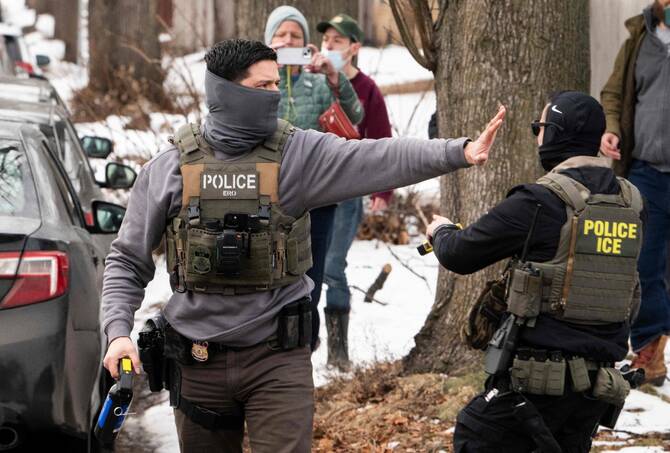
Federal immigration agents deployed to Minneapolis in December, and heavily armed officers wearing masks have been a common presence ever since.
“When we read that they’re nearby, we turn off the TV and it’s like, ‘Kids, don’t make noise, kids, be quiet,’” Abril said.
“They’re not even free to laugh.”
- No sleep -
It has all taken a toll on Abril, who barely sleeps.
“Sometimes I stay up until dawn,” she said.
The last time she stepped outside, she said, was December 3 — more than two months ago.
The curtains, meanwhile, have covered the windows for five weeks straight.
“I don’t even go out to take out the trash,” Abril told AFP.
With both Abril, a housekeeper, and her husband out of work because they are afraid to venture outdoors, a neighbor has helped them with groceries.
“As the head of the family, it’s something very, very difficult for me not to be able to do anything for them,” said Rigoberto.
Eventually, they know they will be able to step outside, “but things won’t be the same,” Rigoberto said.
“The fear will always remain.”
What does Abril miss the most?
“Going to church,” she said. “Taking the children for ice cream, maybe.”


