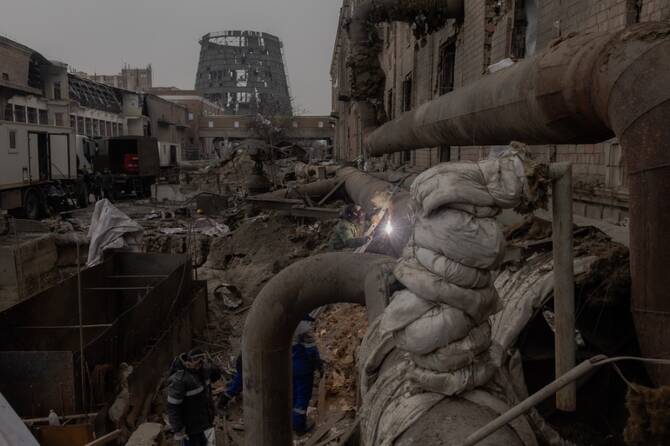
KYIV: A “massive attack” by Russian forces on Ukraine’s energy infrastructure has caused power outages across the country, the state grid operator said on Saturday.
Russia has pressed on with its invasion of Ukraine in recent days despite the two countries holding US-brokered talks to end the nearly four-year-long war.
Ukrainian officials have accused Moscow of deliberately targeting energy infrastructure, causing outages that have left hundreds of thousands of people without lighting or heating in temperatures well below zero.
“Russia is carrying out another massive attack on the Ukrainian power grid facilities,” grid operator Ukrenergo said on Saturday.
“Due to the damage caused by the enemy, emergency outages have been applied in most regions,” it said in a statement on Telegram.
“Currently, the attack is still ongoing. Restoration work will begin as soon as the security situation allows.”
Ukraine and Russia have held two rounds of US-mediated negotiations in Abu Dhabi since January.
Kyiv and Moscow have agreed to a major prisoner swap but have made no breakthrough on the issue of territory, a key sticking point in negotiations.
Moscow has accused Ukraine of orchestrating the shooting of a top military intelligence general in the Russian capital on Friday, leaving him wounded. Kyiv has not commented.

Russia hits Ukraine power grid with ‘massive attack’: operator
Short Url
https://arab.news/474fh
Russia hits Ukraine power grid with ‘massive attack’: operator
- Ukrainian officials have accused Moscow of deliberately targeting energy infrastructure, causing outages that have left hundreds of thousands of people without lighting or heating in temperatures well below zero
Zimbabwe opposition says constitutional ‘coup’ under way
- The accusations came after the cabinet approved amendments that would allow President Emmerson Mnangagwa to extend his term in office
HARARE: Leading Zimbabwe opposition figures accused the government Wednesday of a constitutional “coup” after the cabinet approved amendments that would allow President Emmerson Mnangagwa to extend his term in office.
Sweeping changes to the constitution accepted by the cabinet Tuesday include extending the presidential term to seven years and follow a decision by the ruling Zanu-PF that Mnangagwa should stay in office beyond the end of his second term in 2028.
The amendments will be presented to parliament, which is weighted in favor of the Zanu-PF, but the opposition insists they also need to be put to a national referendum.
“The process that is currently happening in Zimbabwe is a coup by the incumbent to extend his term of office against the will of the people,” opposition politician and fierce government critic Job Sikhala told AFP.
“We have got an incumbent who wants to railroad himself, using the tyrannical and dictatorial tendencies of his rule, into another two years to 2030,” he said.
He said his National Democratic Working Group had asked the African Union to intervene.
Mnangagwa came to power in 2017 in a military-backed coup that ousted Robert Mugabe, who ruled the southern African country for 37 years.
He was elected to a five-year term in 2018 and again in 2023 but has been accused of allowing rampant corruption to the benefit of the Zanu-PF — which has been in power since independence in 1980 — while eroding democratic rights.
Sikhala, a former lawmaker with the Citizens Coalition for Change (CCC) party, was arrested in South Africa last year for alleged possession of explosives. He says they were planted in his vehicle in an apparent assassination attempt.
“What is unfolding in Zimbabwe is not constitutional reform. It is a constitutional coup,” Jameson Timba, a CCC leader who has established a group called the Defend the Constitution Platform (DCP), said in a statement on X.
The president and his party are using “formal processes” such as cabinet decisions “to entrench power without the free and direct consent of the people,” he said.
Sweeping changes to the constitution accepted by the cabinet Tuesday include extending the presidential term to seven years and follow a decision by the ruling Zanu-PF that Mnangagwa should stay in office beyond the end of his second term in 2028.
The amendments will be presented to parliament, which is weighted in favor of the Zanu-PF, but the opposition insists they also need to be put to a national referendum.
“The process that is currently happening in Zimbabwe is a coup by the incumbent to extend his term of office against the will of the people,” opposition politician and fierce government critic Job Sikhala told AFP.
“We have got an incumbent who wants to railroad himself, using the tyrannical and dictatorial tendencies of his rule, into another two years to 2030,” he said.
He said his National Democratic Working Group had asked the African Union to intervene.
Mnangagwa came to power in 2017 in a military-backed coup that ousted Robert Mugabe, who ruled the southern African country for 37 years.
He was elected to a five-year term in 2018 and again in 2023 but has been accused of allowing rampant corruption to the benefit of the Zanu-PF — which has been in power since independence in 1980 — while eroding democratic rights.
Sikhala, a former lawmaker with the Citizens Coalition for Change (CCC) party, was arrested in South Africa last year for alleged possession of explosives. He says they were planted in his vehicle in an apparent assassination attempt.
“What is unfolding in Zimbabwe is not constitutional reform. It is a constitutional coup,” Jameson Timba, a CCC leader who has established a group called the Defend the Constitution Platform (DCP), said in a statement on X.
The president and his party are using “formal processes” such as cabinet decisions “to entrench power without the free and direct consent of the people,” he said.
© 2026 SAUDI RESEARCH & PUBLISHING COMPANY, All Rights Reserved And subject to Terms of Use Agreement.


